
 Tanks on the Battle field, Of WW2 Check it out Tanks on the Battle field, Of WW2 Check it out |


| Spartan |
 03/17/06 4:14pm 03/17/06 4:14pm
Post
#1
|
 Major  Group: Forum Member Posts: 668 Joined: January 19th 2006 From: Miami, Florida Member No.: 1545 Xfire: Cknife187  |
The Panzerkampfwagen IV (PzKpfw IV), more commonly referred to as the Panzer IV, was a tank developed by Nazi Germany and used extensively in WW2. It was designed initially as an infantry-support medium tank, to work in conjunction with the anti-tank crews. Later in the war, it was up-gunned and up-armored, and took over the tank-fighting role. The Panzer IV was the most common German tank of World War II, and was used as the base for many other fighting vehicles, such as tank destroyers and self-propelled antiaircraft guns. By the end of the war nearly 9000 had been built.
 Panzer III n 1936 german industry passed to develope a true battle tank using the experiences got with the previous panzers. Panzer III Ausf. E (Sd.Kfz. 141), armed with a 37mm L46 gun (muzzle speed of 762 m/s), appeared in less than a hundred (previous III models included) during the polish campaign. Circa 300 Panzer III were ready for French campaign, too few to fill the Panzerdivisionen's order of battle and so being often replaced by the light PzKpfw 38(t)s, 35(t)s and IIs; this last operation proved the "foolness" of using 37mm gun against the heavy armored tanks such as the Char B1-bis or the british Matildas. A handful of new Ausf. F, armed with 50mm L42 KwK 38 was tested in the final days of the campaign. Ausf. Fs and heavier armored Ausf. Gs formed the bulk of General Rommel's Afrika Korps when it landed in Libya on 28th February 1941 for reinforcing the Italian anti-tank defence. Experience on the field proved necessity of better tropicalization in both engine filters and turret ventilation.  Sherman M4 In March 1941 the U.S army decided it needed a new tank to replace the Grant M2A1. After looking at five different proposals the Sherman M4 was chosen. Production began early in 1942. The original armament was a 75mm gun capable of firing high explosive shells. Its 500hp engine had a maximum speed of 26mph. This was replaced by a 76mm high-velocity gun in February 1944. The tank's suspension was redesigned and improved by the beginning of 1945. Although inferior to the best German and Soviet tanks in armament and protection, it was superior in terms of reliability, serviceability and cost-effectiveness. The British army used the Sherman Tank at El Aleman in 1942 and by 1943 was the mainstay of Allied operations in Africa and Europe. No picture available. sry guys Like last time i want u guys to do a lil reaserch. --------------------  "Wars come and go, But my soldiers they stay eternal" - Tupac Shakur  |
   |

 
|
  |
Replies
| FeezyWeezy |
03/18/06 9:24pm
Post
#2
|
|
Major Group: Banned Posts: 609 Joined: January 14th 2006 From: Gone Member No.: 1533 |
Panzerkampfwagen VI Ausf. B / Tiger II
 Unlike Spartan noted before, the picture is a Köningstiger. The Panzerkampfwagen VI Ausf. B was a German heavy tank of the Second World War. Although heavily armed and armoured it was blighted by mechanical failures in action. It was also known as Sonderkraftfahrzeug 182 (Sd. Kfz. 182), or informally Tiger II, Königstiger or King Tiger in German and by the British as Royal Tiger. The Tiger II was partially derived from the Tiger I, and was intended to share many components with a planned Panther II. The design followed the same concept as the Tiger I, but was intended to be even more formidable. The Tiger II chassis supplied the basis for the Jagdtiger turretless tank destroyer. The Tiger II weighed about 68 tons, was protected by 185 mm of frontal armor, and was armed with the 88 mm KwK 43 L/71 gun. This was the most powerful gun carried by any WW2 tank. The very heavy armor and powerful, long-range gun gave the Tiger II the advantage against virtually all opposing tanks. This was especially true on the Western Front, where the British and US forces had almost no heavy tanks with which to oppose it. In a defensive position it was difficult to destroy. Offensively it performed with less success, and its performance was a great disappointment to Hitler when it first saw action. The Tiger II was developed late in the war and made in relatively small numbers (about 560 total). Like all German tanks, it had a gasoline engine. However, this same engine powered the much lighter Panther and Tiger I tanks. The Tiger II was under-powered, like many heavy tanks of WW2, and consumed a lot of fuel. The US "Super Pershing" T-26 was developed in response to the Tiger I and Tiger II. The Tiger II was widely photographed due to its large size and propaganda value.  There were two very similar designs for the tank, one from Henschel and one from Porsche. However, the turrets were both made and designed by Krupp for each design. Porsche had thought they would win the contract and manufactured 60 vehicles, although some sources state that only 50 were produced. Nonetheless, the Porsche design was beaten by Henschel. Among the reasons given for this were that the Porsche design used too much copper, but another reason is that it had a distinctive curved turret face. The shape of the turret face made it a shot trap. A shot trap is any part of a tank where a deflected shell is not deflected safely away from the tank but instead can be deflected so that it hits another part of the tank. The shot trap was located right under the mantelet, and if a shell hit there, it could jam the turret or if the round was powerful enough, it could possibly blow off the entire turret. Porsche specified a drivetrain whereby the engine generated electrical power and final drive was by electric motors rather than mechanical transmission. Although none of the Porsche versions were produced, approximately 60 turrets were fitted to the standard hull and saw action. The Porsche version of the tanks can be identified by the curved turret face, and a somewhat narrower turret with a bulge on the left side to accommodate the commander's cupola.  Captured King Tiger With the Third Reich hard pressed, the Tiger IIs were sent directly from the factories into combat. As a result of the abandonment of post-production testing and preliminary trials, the tanks had numerous technical issues. Notably, the steering control would often break down under the stress of the vehicle's weight. In addition, not only were the engines prone to overheating and failure, but they were also considered to be extremely fuel inefficient. This can be attributed to the fact that it used the 700hp Maybach engine of the far smaller Panther tank. The engine had to constantly run at full power just to get the tank moving. Henschel & Son's chief designer Erwin Adlers explained the "The breakdowns can be attributed to the fact that the Tiger II had to go straight into series production without the benefit of test results." The engine and drivetrain was overburdened by the weight and would have required more testing to weed out problems, a common problem among heavy tanks that pushed the limits of powerplants and transmissions. Overall, the Tiger II was a formidable tank in spite of its problems. The Tiger II's 88 mm armament could destroy most Allied AFVs at a range far outside the effective range of the enemy AFV's armament. Some notable uses for Panzer VI chassis Jagdtiger  It featured very heavy armor and a powerful 128 mm L/55 PaK44 gun capable of defeating any tank fielded in World War II, even at long ranges (+3500 meters) It had 250 mm armor on the front glacis, which made it invulnerable to any frontal fire. However, the Jagdtiger had no turret, and the main gun had a limited traverse of only 10 degrees. As a result, the entire vehicle had to turn to aim at enemy tanks. It suffered from the same maladies as the King Tiger: an underpowered engine, frequent breakdowns, and poor maneuverability. These problems, along with the lack of a turret, made it vulnerable to infantry with anti-tank weapons and allied air raids. When properly supported, the Jagdtiger had the potential to be a formidable opponent, especially at longer ranges. However, Jagdtigers were deployed in limited numbers due to the small production, further reduced by equipment shortages, low reliability, and gasoline shortages. About 20% were lost in combat; most were blown up because of mechanical breakdowns, or abandoned because of lack of spare tracks/gasoline in the desperate final stages of the war. The gun used a two part ammunition, which meant two loaders were used to insert the projectile and propelling charge separately. This resulted in slow rate of fire. The tremendous amount of smoke would often give away the position of the tank, in addition to momentarily blinding the crew.  150 Jadgtigers were ordered. About eighty were produced in total. Production figures vary depending on source and other factors such as if prototypes are included and if ones made after VE day are included. Totals range from about 77 to 85 produced from July 1944 to April of 1945. Approximately 48 from July 1944 to the end of December 1944; 36 from January to April 1945, serial numbers from 305001 to 305088 (such as examples from May 45, and pre-production prototypes, and whether incomplete chassis's count). Some sources say no more vehicles were completed after February. Towards the end some were lacking important equipment and could not be used operationally, or could not be deployed to units. Panzerkampfwagen VII Löwe  This is computer model of the Löwe, as there where none made. The Panzerkampfwagen VII Löwe (Lion) was a design for a superheavy tank created by Krupp for the Nazi German government during World War II. The project never left the drawing board, and was dropped in late 1942 in favor of the Panzer VIII Maus. The Löwe was designed in two variants: Leichter Löwe – crew of five, 1000-hp engine, weight of 76 tons, 100-mm frontal armor, rear-mounted turret, 105 mm L/70 high velocity gun and a coaxial machine gun, top speed 27 km/h. Schwerer Löwe – crew of five, 1000-hp engine, weight of 90 tons, 120-mm frontal armor, center-mounted turret, 105 mm L/70 high velocity gun and a coaxial machine gun, top speed 23 km/h. When shown the designs, German Chancellor Adolf Hitler ordered the Leichter Löwe dropped and the Schwerer Löwe re-designed with a 150-mm main gun, 140-mm frontal armor, and a top speed of 30 km/h. No prototype of either design was ever built. Some parts of the Schwerer Löwe design were used in the Königstiger, however, and that model proved to be expensive to produce and too large to fit across small bridges. Panzer VIII Maus  The Panzerkampfwagen VIII Maus (Sd.Kfz 205) is the heaviest tank with completed working prototypes of World War II. The basic design known as the VK70001/Porsche Type 2005 was suggested by Ferdinand Porsche to Adolf Hitler in June of 1942, who subsequently approved it. The design up to then had been the culmination of work done by Porsche who had won the contract for the heavy tank that March. Work on the design began in earnest; the first prototype, to be ready in 1943 was initially to receive the name Mammut (Mammoth). This was reportedly changed to Mäuschen (Mousie) in December of 1942 and finally Maus (Mouse) in February of 1943. The tank's hull was 10.1 metres long, 3.67 metres wide and 3.66 metres tall. Weighing about 188 tonnes (or about 207 short tons), the Maus's main armament was a 128 mm cannon with a coaxial 75 mm gun and steel armour ranging from 40-240 mm. A total of nine were in various stages of completion when the war ended with two completed. The Maus would have had a crew of either 5 or 6 and a total production of between 150 and 200 was planned for one version of it. The principal problem in development of the Maus was finding a powerful enough engine for its weight that could be carried in the tank. Though the design called for a maximum speed of 20 km/h, no engine was found that could power the prototype to more than 13 km/h under ideal conditions. The weight also made it impossible to cross most bridges. It could ford due to its size or submerge and use a snorkel. The Maus was relatively slow moving and logistically demanding, but could potentially have been a formidable weapon in certain defensive positions where extensive movement was not required. In an assault, it would have a level of usefulness most similar to British Infantry tanks which also sacrificed mobility for armor protection.  The initial plan for the Maus was for the prototype to have been completed by the summer of 1943, with monthly production scheduled to run at five vehicles per month after delivery of the prototype. The work on the Maus would be divided between Krupp, responsible for the chassis, armament and turret and Alkett, who would be responsible for final assembly. The Maus tank was originally designed to weigh approximately 100 tons and be armed with a 150mm main gun and a 20mm co-axial secondary gun. Other armament solutions were also looked at: various versions of 150mm, naval 127mm and 128 mm guns. Hitler himself insisted that the armament chosen should be a 128mm main gun with a coaxial 75mm gun. This decision was taken in January of 1943. By May 1943, a wooden mockup of the final Maus configuration was ready and presented to Hitler, who approved it for mass production and ordered a first series of 150. At this point, the estimated weight of the Maus was 188 tons. Development work on the Maus continued, but in October 1943 Hitler cancelled the order, which was followed in November by the order to stop development of the Maus altogether. Nevertheless, work continued and the first, turretless prototype, the V1 was assembled by Alkett in December 1943. Tests started the same month, with a mock turret fitted of the same weight as the real turret. The principal problem with the Maus that emerged from this test was its power-to-weight ratio. There was no engine powerful enough to give it anything like the 20 km/h demanded by the design specifications. The modified Daimler-Benz MB 509 engine used in the prototype was only able to move at 13 km/h and only under ideal conditions. The suspension system used by the Maus also had to be adjusted to enable it to take the tank's weight. Another issue found was that the Maus was simply too heavy to cross bridges. As a result an alternative system was developed, where the Maus would instead ford the rivers it needed to cross. Due to its size it could ford relatively deep streams, but for deeper ones it was to submerge and drive across the river bottom. Another Maus would supply power to it via cable until it reached the other side, and the crew receive air through a large snorkel, which would permit going down to 45 feet underwater. In March 1944 the second prototype, the V2 was delivered, which differed in many details from the V1 prototype. In Mid-1944, this V2 prototype was fitted with a powerplant and the first produced Maus turret. This turret was fitted with a 128mm KwK 44 L/55 gun, with coaxial 75mm KwK 44 L/36.5 gun and 7.92mm MG34 as secondary armament. The V1 prototype was supposed to be fitted with the second produced turret, but this never happened. By July 1944, Krupp was in the process of producing four more Maus hulls, but they were ordered to halt production and scrap these. Krupp stopped all work on it in August 1944. Meanwhile, the V2 prototype started tests in September 1944, fitted with a Daimler-Benz MB 517 diesel engine, new electric steering system and a Skoda Works designed running gear and tracks. There was as also a special railroad car made for transporting the Maus prototypes  Most of the life of the working Maus prototypes was in testing around Kummersdorf and at the proving grounds in Böblingen, but the V1 and V2 versions were also involved in one known mission in a combat area that ended in both tanks being over-run and captured by Soviet forces. One fully operational design and one with a dummy turret were ordered to flee the factory development complex at Kummersdorf to avoid advancing Soviet forces. A prototype with a dummy turret broke down several miles away from the factory and was abandoned. The second continued further and was reported also to have broken down, and then scuttled by the crew. Some sources state the second prototype was destroyed by enemy fire and not scuttled. One Maus tank is currently in the Kubinka Tank Museum in Russia, which consists of either the partially complete turret and hulls in the factory, or one turret and one hull from each of the two prototypes that attempted to flee, or some combination of the two. PzKpfw IX and PzKpfw X - The Paper Panzers 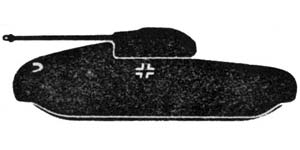 Panzer IX Panzer IX and Panzer X only existed as projects on drawing boards. Although, there is no real blueprints showing the realistic look of both vehicles. PzKpfw X was to be wider but lower than Maus and was to be surely armed with 88mm or even 128mm gun. Both designs were very advanced and modern including many features which can be found in modern tanks of today. According to the latest research it appears that those two modern looking tanks were not even considered by the designers but instead were propaganda sketches published in the "Signal" magazine in 1944, to misinform the Allies about the German tank development. 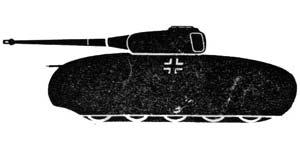 Panzer X -------------------- C'est pas l' histoire d'un jour
Qui rime avec amour, Plutôt un long séjour Mais pas: un "pour toujours" |
|
|
|
Posts in this topic
 Sparta Tanks on the Battle field 03/17/06 4:14pm
 FeezyWeezy [b]PzKpfw 1 / Panzerkampfwagen I / Panzer I
[b][u... 03/18/06 10:31am FeezyWeezy Ok I had my Breakfast and Coffee... time for Panze... 03/18/06 11:56am FeezyWeezy k, played some Barb and now it's time for the ... 03/18/06 2:15pm Sparta Iamma call u the history man dude 03/18/06 3:08pm FeezyWeezy Ok, played some with Blinky and his Finnish friend... 03/18/06 5:27pm FeezyWeezy [size=4][b][size=4]PzKpfw 6 / Panzerkampfwagen VI ... 03/18/06 7:01pm Sparta Tiger tank
After years of research for a heavy n... 03/18/06 8:15pm Sparta Thats my boy finding the shit i dont lol
:D :D ... 03/18/06 11:08pm Sparta Japanese Type 95
[color=#000000]The Japanese ... 03/19/06 12:20am FeezyWeezy Well its just crap that you find nice pictures and... 03/19/06 7:50am Sparta True :P 03/19/06 9:52am +KS+ Blinky Bill Man..., this topic is getting bigger and wider all... 03/19/06 11:37am
FeezyWeezy [b]PzKpfw 1 / Panzerkampfwagen I / Panzer I
[b][u... 03/18/06 10:31am FeezyWeezy Ok I had my Breakfast and Coffee... time for Panze... 03/18/06 11:56am FeezyWeezy k, played some Barb and now it's time for the ... 03/18/06 2:15pm Sparta Iamma call u the history man dude 03/18/06 3:08pm FeezyWeezy Ok, played some with Blinky and his Finnish friend... 03/18/06 5:27pm FeezyWeezy [size=4][b][size=4]PzKpfw 6 / Panzerkampfwagen VI ... 03/18/06 7:01pm Sparta Tiger tank
After years of research for a heavy n... 03/18/06 8:15pm Sparta Thats my boy finding the shit i dont lol
:D :D ... 03/18/06 11:08pm Sparta Japanese Type 95
[color=#000000]The Japanese ... 03/19/06 12:20am FeezyWeezy Well its just crap that you find nice pictures and... 03/19/06 7:50am Sparta True :P 03/19/06 9:52am +KS+ Blinky Bill Man..., this topic is getting bigger and wider all... 03/19/06 11:37am
 FeezyWeezy Man..., this topic is getting bigger and wider al... 03/19/06 12:29pm Sparta Hey dont forget ur buddy sparta 03/19/06 12:08pm +KS+ Blinky Bill This may go a little bit off topic but just had to... 03/20/06 5:38am Maj. H8Red that's it I'm buyin a friggin tank :P 03/20/06 12:05pm Sparta I call shotty hate :flm 03/20/06 1:05pm Hellfighter oh sure - lump in tank destroyers, assault guns, a... 03/20/06 5:27pm FeezyWeezy I'll do that tomorrow 03/20/06 5:48pm Sparta THE Brits
The 79th Armoured Division was a special... 03/20/06 6:37pm FeezyWeezy If u ask me The brits arent important in the 2nd ... 03/20/06 6:50pm Sparta Not battle wise they rock in that direction but ia... 03/20/06 7:00pm Sparta [b]M-22 Locust light Airborne tank
World War II st... 03/20/06 9:45pm Sparta Just for You Hellfighter!
Three Black Americ... 03/20/06 10:02pm Hellfighter Just for You Hellfighter!
.........
Hope ya ... 03/20/06 11:30pm Sparta For Hellfighter Bout Woman soldiers
As in World W... 03/21/06 4:46pm Hellfighter [u][b]For Hellfighter Bout Woman soldiers
[cente... 03/21/06 6:07pm Sparta Iam Sry I got a bit Off topic But I've returne... 03/21/06 5:46pm Sparta sent ya an Xfire friend invite there Hellfighter ;... 03/21/06 7:02pm Hellfighter sent ya an Xfire friend invite there Hellfighter ... 03/21/06 8:47pm Sparta Ok so I took a long Nap And well Guess the Ruskie ... 03/21/06 7:17pm Sparta Wow longest thread ever made by urs truely :mobrul... 03/21/06 8:34pm Sparta Gotta Please the Masses LOl
http://www.24hourmuse... 03/21/06 9:37pm Hellfighter ok Sparta-to help you out :P , here are some other... 03/22/06 3:07pm
FeezyWeezy Man..., this topic is getting bigger and wider al... 03/19/06 12:29pm Sparta Hey dont forget ur buddy sparta 03/19/06 12:08pm +KS+ Blinky Bill This may go a little bit off topic but just had to... 03/20/06 5:38am Maj. H8Red that's it I'm buyin a friggin tank :P 03/20/06 12:05pm Sparta I call shotty hate :flm 03/20/06 1:05pm Hellfighter oh sure - lump in tank destroyers, assault guns, a... 03/20/06 5:27pm FeezyWeezy I'll do that tomorrow 03/20/06 5:48pm Sparta THE Brits
The 79th Armoured Division was a special... 03/20/06 6:37pm FeezyWeezy If u ask me The brits arent important in the 2nd ... 03/20/06 6:50pm Sparta Not battle wise they rock in that direction but ia... 03/20/06 7:00pm Sparta [b]M-22 Locust light Airborne tank
World War II st... 03/20/06 9:45pm Sparta Just for You Hellfighter!
Three Black Americ... 03/20/06 10:02pm Hellfighter Just for You Hellfighter!
.........
Hope ya ... 03/20/06 11:30pm Sparta For Hellfighter Bout Woman soldiers
As in World W... 03/21/06 4:46pm Hellfighter [u][b]For Hellfighter Bout Woman soldiers
[cente... 03/21/06 6:07pm Sparta Iam Sry I got a bit Off topic But I've returne... 03/21/06 5:46pm Sparta sent ya an Xfire friend invite there Hellfighter ;... 03/21/06 7:02pm Hellfighter sent ya an Xfire friend invite there Hellfighter ... 03/21/06 8:47pm Sparta Ok so I took a long Nap And well Guess the Ruskie ... 03/21/06 7:17pm Sparta Wow longest thread ever made by urs truely :mobrul... 03/21/06 8:34pm Sparta Gotta Please the Masses LOl
http://www.24hourmuse... 03/21/06 9:37pm Hellfighter ok Sparta-to help you out :P , here are some other... 03/22/06 3:07pm |
1 User(s) are reading this topic (1 Guests and 0 Anonymous Users)
0 Members:


|
Lo-Fi Version | Time is now: 06/26/26 5:46pm |
Invision Power Board
© 2026 IPS, Inc.