Help - Search - Members - Calendar
Full Version: Notable People of WW2
{MOB} Forums > MOB Discussion Forum - PUBLIC > Miscellaneous/Off Topic
Pages: 1, 2
FeezyWeezy
Ok, time for another chapter of hostory facts. I'll start with some WW2 Aces.

Erich Hartmann

IPB Image


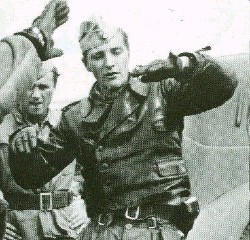
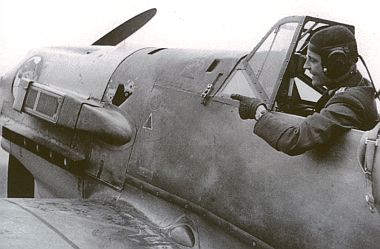
The highest scoring ace of all time was the great German Luftwaffe experte Erich Hartmann with 352 aerial kills. Flying Bf 109s (Me-109s) against the overmatched Soviet MiGs and Yaks for almost three years, he accumulated his unrivalled score. Hartmann claimed, that of all his accomplishments, he was proudest of the fact that he never lost a wingman. He is also reputed to have said. "Get close .. when he fills the entire windscreen ... then you can't possibly miss." Hartmann was born in 1922, in Weissach, Wurttemberg. At age 19 (1941), he joined the Luftwaffe and was posted to Jagdgeschwader 52 (JG 52) on the Eastern Front in October, 1942. He scored his first kill in November, and only achieved his second three months later. In the first half of 1943, he worked out some of the tactics which would prove so successful later on. If he was attacked from behind, he would send his wingman down low and out in front. Then he would get behind the enemy and fire a short, quick accurate burst, waiting "until the enemy aircraft filled the windscreen." He would normally content himself with one victory; he was willing to wait for another day. His natural talents began to tell: excellent eyesight, lightning reflexes, an aggressive spirit, and an ability to stay cool while in combat.

IPB Image
A Messerschmitt Bf 109G-6


Kursk


As JG 52 retreated along with German ground forces in 1943, Hartmann's score began to mount. The great Kursk offensive, Operation Zitadelle, began on July 5. The Luftwaffe planned to screen the Wehrmacht's panzers from the Soviet Il-2 Sturmoviks, armored tank-busting aircraft, armed with twin 37mm cannon. Hartmann's Staffel 7 of JG 52 moved up to Ugrim, only 14 kilometers behind the front. As the Panther and Tiger tanks moved up, Junkers Ju.52 transports flew in supplies. On the morning of the 5th, four of Staffel 7's pilots did not return, apparently their compasses misled them, due to extraordinary iron ore deposits in the area. Hartmann was promoted to Staffelkapitan on the spot. The offensive ground forward slowly on the 6th and 7th; obviously the Russians had dug in and prepared defensive lines in depth.
July 7, 1943


On the morning of July 7, 1943, sun rose over Ugrim in the northern Ukraine about 3AM. Staffel 7's Me.109 G10's lay scattered around, in the deep grass of the Ugrim airfield. Hartmann's personal plane, decorated with a large Roman numeral 'I' and the name Usch in a red heart. (Usch Paetch was his fiancee, whom he wrote to daily.) In the comfortable summer weather, the pilots slept in tents. On waking, Hartmann dressed in a gray shirt, blue-gray trousers, and gray shoes. He washed up and shaved in a small stream and ate breakfast, two eggs, cooked by a couple of Russian girls. He and the other three pilots in his Schwarm were assigned to cover an F.W.189 on a dawn reconnaissance mission.

Erich joked with his crew chief, 'Bimel' Merten, and strapped himself into the cockpit. At 3:04, the recon plane started and Hartmann set Messerschmitt's flaps and checked the fuel while Merten cranked the starter. The DB 605's twelve cylinders coughed, belched smoke, and then caught smoothly. His three comrades followed him to the take-off spot. He gunned the engine while stomping on the brakes. When he released them, his 109 shot forward and quickly reached 160 km/hour. He gently pulled back on the stick and was airborne; the other three followed him closely. They all banked left as they went through post-take-off routines: retract landing gear, close radiator flaps, ease back on the throttle, and check gauges, guns, and gunsight. They climbed to 1300 meters as they flew northeast and then swung southward, with the Fw 189 in view. The flight proceeded uneventfully and the recon plane headed for Ugrim. Hartmann's radio crackled with a report from Adler, the German forward spotting post; a group of ten to twenty Russian planes were headed west. Hartmann throttled up a bit, gained altitude, and turned his Schwarm toward the east without sighting anything for several minutes.

IPB Image
Drawing of Hartmann's Bf-109G Messerschmitt "Gustav" 6


Sturmoviks
Soon enough, many large Il-2's came into view. With its armor and rear gunner, the Sturmovik was a tough target. With the Sturmoviks closing head-on, Hartmann unhesitatingly ordered an attack. He dived down below them, picking up airspeed, then banked around and came up behind and beneath them, aiming for his target's vulnerable ventral oil radiator. The Il-2's flew straight on.


Hartmann's Bf 109 roared along, doing over 400 MPH; Hartmann streaked into a Sturmovik's blind spot. At 200 yards, its wingspan filled his gunsight ring; still he closed in to 150, then 100 yards before firing. He briefly triggered his 20mm cannon and his two 12mm machine guns, for about one and a half seconds, before his speed carried him in front of them. As other Bf 109s struck their targets, Hartmann glanced back and saw blue flames and black sooty smoke streaming from the Sturmovik's radiator. His twenty-second victory of the war.

Under the deadly attack of the Messerschmitts, the formation of Russian airplanes began to break up. Having regained altitude, Hartmann again zoomed down below the tail of an Il-2. He checked his own rear and stabilized his aircraft. This Russian pilot, alerted to the danger, spotted him and turned sharply to evade. The young blond ace matched the turn and instantly estimated the lead needed for a deflection shot. At 150 meters, he opened fire, and his bullets tore into the side of the Russian tank-buster. More blue flame and black smoke poured from his twenty-third victim's oil radiator.

As the remaining scattered Russian planes fled eastward, Hartmann radioed his Staffel to return to Ugrim. About 4AM, as they approached the field, Hartmann waggled his wings twice, indicating his two victories. On landing, Mertem and other ground crew gathered around him, offering congratulations. Hartmann walked to the operations tent to file his Gefechtsbericht, his after-action report. Early reports from the Adler posts already showed more Russian air activity than on the 5th or 6th. Four pilots sat in their planes, ready to take-off in less than a minute. Hartmann soon fell asleep by his own machine. But only briefly.
Two More Sorties


By 5:50, he was back in the air, leading a flight of 109s on a frei chase, and he soon found more Il-2s, escorted by fighters. The Messerchmitts attacked successfully, with Hartmann downing another Il-2 and an LaGG-3 fighter. Within an hour, he was back on the ground, with four victories for the day. Late that afternoon, he led the Staffel up again, to the northeast. They found a group of Soviet LaGG-3 fighters, which they engaged in a sprawling dogfight. It was over quickly and Hartmann had shot down three enemy fighters, making it seven for the day, his largest score so far.

IPB Image


Experte


He reached 50 by August of 1943. Within the month, he had reached 80, and was promoted to lead 9./JG52. Earlier in the war, 25 or 50 victories would have earned a German fighter pilot the Knight's Cross. By late 1943, Hartmann had to down 148 before he earned his Knight's Cross. By March 2, 1944, he had reached a total of 202, earning him the Oak Leaves. He was the fourth Luftwaffe fighter pilot to reach 250, the first to reach 300, and the only one to reach 350.

The Diamonds
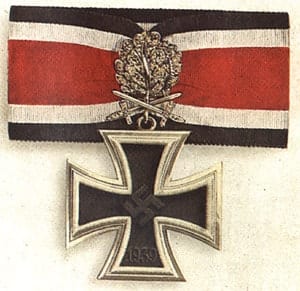
IPB Image


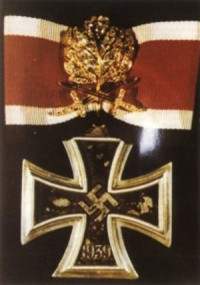
He was awarded the Third Reich's highest regularly awarded military decoration: The Knight's Cross to the Iron Cross with Oak Leaves, Swords and Diamonds.

To be accurate, the highest military decoration was "The Grand Cross to the Iron Cross." It was only awarded once to Hermann Göring. The second highest military decoration was "The Knight's Cross to the Iron Cross with Golden Oak Leaves, Swords and Diamonds" and was also awarded only once to the Stuka ace Hans-Ulrich Rudel. Thus, Hartmann's medal, "The Knight's Cross to the Iron Cross with Oak Leaves, Swords and Diamonds," was, to be precise, the third highest German military decoration through WW2, was awarded to 27 soldiers, 12 of whom were Luftwaffe pilots.

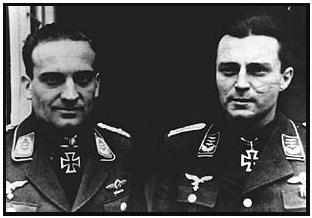
Near the end of WWII, in early May 1945, the Luftwaffe command ordered Hartmann, then Gruppenkommandeur of famous Jagdgeschwader 52, and his Commodore, Hermann Graf (another pilot, who had earned the "diamonds" to the Knight's Cross) to fly to the British sector. Both officers disregarded this order, because they felt responsible for Jagdgeschwader 52's pilots, ground crew, family members, and other civilians, who had joined the squadron, seeking protection against fierce aggression by the Czechs. The officers ordered the destruction of the unit's aircraft, and then the unit moved west in direction of territory already occupied by US troops. On May 8th, 1945, the soldiers and civilans surrendered to US troops in the region between Bavaria (German provence) and Czech border. But on May 17th, the US Army delivered all of these German troops and civilians to the Red Army. Like all others, Hartmann was then deported to Siberia, where he was sentenced to 50 years of hard labor. (Hartmann has since been rehabitated by Russian justice, which declared those sentences illegal in 1995.) The Soviets pressured him to support a build-up of an East German air force and tried to turn him into an undercover agent against the West. Hartmann refused, even though the Soviets threatened to kidnap and kill his wife and daughter, living in West Germany. Hartmann did not return to Germany until 1955, when the last German POWs were released along with the establishing of diplomatic relations between West Germany and the Soviet Union. In 1956, Hartmann joined the newly established West German Luftwaffe and contributed to the build-up of new fighter units. In 1959, he became the first commodore of Jagdgeschwader 71 "Richthofen." Erich Hartmann died in 1993.


http://wernerhartenstein.tripod.com/hartma...9;s%20grave.jpg
Hartmann's grave, Weil im Schönbuch near Stuttgart

Blinky
Ok, before Feezy explodes this forum with gigant information flood, I do this to get ahead of him.... laugh.gif

http://www.acesofww2.com/finland/Finland.htm

[url=http://hkkk.fi/~yrjola/war/faf/brewster/bw372_13_600w.jpg[/img][url]


Feezy will give more detailed story, btw this topic is my favourite subject.
FeezyWeezy

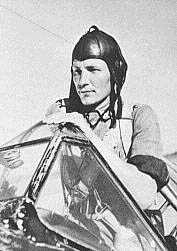
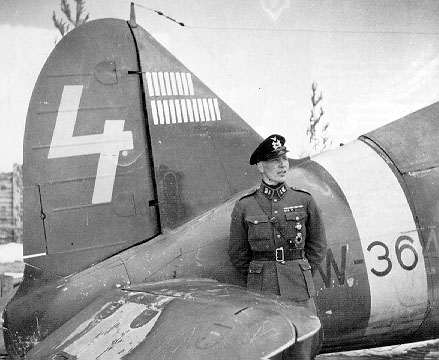
Eino Ilmari Juutilainen


IPB Image IPB Image

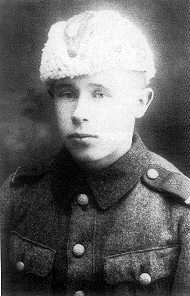
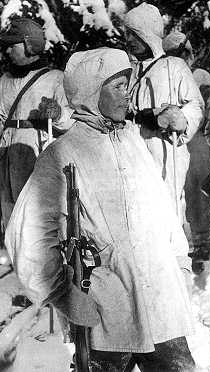
Finnish Ace Eino "Illu" Juutilainen scored 94 1/6 kills against the Russians, making him the top scoring Finnish Ace of WW2. He became one of only two Finnish aviators to be decorated with the Mannerheim Cross twice. During his 437 combat missions, Juutilainen scored victories against 22 different types of Soviet, British, and American built aircraft flown by the Russians; more remarkably, his aircraft was never hit by enemy fire. During World War 2, Finnish pilots destroyed 1,808 Russian aircraft in aerial combat and achieved an overall 7.5:1 "kill" ratio, all while never operating more than 150 fighters at one time.

IPB Image

Born on the 21 February 1914 at Lieksa, Finland, Eino "Illu" Juutilainen read the book by Manfred von Richthofen, "The Red Fighter Pilot" which made him dream about becoming a pilot. Juutilainen did his military service in Signal Corpsduring 1932-1933 and was trained as a telegraphist. After having fulfilled his compulsory service Juutilainen acquired a private pilote's licence from the Karhumaki Brothers' Flying School. Then, in 1935, he became an enlisted NCO in the Armed Forces. Finally, in 1936 he applied for an Air Force NCO pilot course. He was accepted and due to his pilot's licence and telegraphist's skill he was made the elder of the course. Juutilainen did very well, but he spent a lot of time in custody - 27 days in a four-month course. The reason was that as the elder he was responsible for the misdeeds of his course - mostly excessive drinking. Personally he earned only one week for flying too low. After the course was completed, "Illu" had to sit in the "jug" for another week to serve the custody ordered to him.

Juutilainen started his career as a NCO pilot in a Reconnaisance Squadron in Suur-Merijoki in May 1937. He was considered a good and reliable pilot, much liked by the officer-observers. He was married in the same year with Miss Anni Nurmi, and their first son was born in 1938. Sgt. Juutilainen was transferred to Sqn.24 to fly the Fokker D XXI's in March 1939. In a few weeks he became a good fighter pilot: his shooting skill was excellent. No wonder, hunting with dog and shotgun was his favourite hobby when the season was in. Juutilainen was fit as a professional athlete, he was also a teetotaller and non-smoker, staying like that during the whole of the war and also afterwards.


In the Winter War he flew as the wingman of the 3rd flight commander, Lt. Eino Luukkanen. He scored two proven victories. However, he fired his first angry shots with a pole-mounted Lewis gun from the ground against SB-2 bombers attacking the Immola Air Base on the 1st of December 1939. The 3rd Flight was commanded to defend the area NE of the lake Ladoga. There, at the front section Kollaa, was fighting Illu's brother, Lt. Aarne Juutilainen - a distinguished infantry company commander( a.k.a the "Terror of Morocco" because he had served in the French Foreign Legion in N. Africa).

The Fokker squadron carried out ground strafing raids on the ice covering the Bay of Viipuri against the Red Army columns the 1. to 12. March 1940. Those missions were hard for the Finnish fighter pilots because they really saw the lethal effect of their bullets. The enemy columns were initially without white camouflage clothing, and always marching in tight file formations. Shooting at aircraft was in a sense symbolic, a fighter pilot mostly did not see what happens to the crew of the victim aircraft. Illu did not feel good to see in his sighting scope how defenseless Red Army infantrymen flopped in the snow upon impact of his bullets. But he had to do his duty, the pilots knew that every enemy soldier left on the ice as casualty would relieve the pressure of the Finnish infantrymen defending the coastline. He flew eleven ground attack sorties. In the Winter War Juutilainen scored two confirmed victories. When the war against Soviet Union started again on 25 June 1941, Juutilainen was flying a Brewster in the 3st flight of LeLv 24(Sqn.24). The 3rd Flight became later known as the "Knight Flight" because of the three holders of the Mannerheim Cross serving in it.


IPB Image

Knight of the Mannerheim Cross.
Warrant Officer JUUTILAINEN Eino Ilmari recieved the Mannerheim cross at 26.04.42 and 28.06.44.
He was the 56'st person to recieve this special decoration. It was only awarded to 191 people.


In 1941 he scored 13 confirmed victories and in 1942 next 21 victories. In March 1943 Juutilainen was transferred to a new unit, Fighter Squadron 34, which was equipped with new Messerschmitt 109 G2 fighters. The Me with its 20 mm gun became his efficient tool and now he really began to excel. Less experienced or careless Soviet pilots had little chance when engaged by "Illu". Finally in 1943 he scored 'only' 19 victories, but the 1944 was most successful recording additional 40 kills! Illu shared von Richthofen's view: the task of a fighter pilot is to take his guns to an advantageous position in relation to the enemy and shoot him down. For Illu a fighter plane was a flying gun platform, nothing else. If Hasse Wind could be compared with Réné Fonck, so Illu Juutilainen was Georges Guynemer - the calculating tactician. A good example of this is what happened on early March 1944 . He attacked alone four La-5 led by Soviet Hero Medvetyev above Suulajärvi AB, despite low fuel.

IPB Image
Suulajärvi Airport, "Sussu"


He always looked back before opening fire, and if the enemy was approaching, he abandoned the target and prepared to meet the new challenge. Never was Juutilainen's fighter hit by enemy fighter fire during his 437 missions(Once, flying a crucially important reconnaisance mission in June 1944, he was very nearly shot down as the oil tank of his Me was holed by the enemy AA). Yet he was an aggressive pilot, but never foolhardy. He had good luck, too. In his memoirs he conveys the impression that he really enjoyed aerial dogfights when flying a BW or a MT, sometimes he even was dissatisfied as an unskillful enemy succumbed too easily. Illu Juutilainen had a matter-of-factly and professional attitude to war and fighting. He did not hate the enemy. For example on 14th March 1942 he shot up the engine of a MiG-3 at Karkijarvi, Eastern Carelia. The enemy pilot belly-landed on a bush-covered marsh. Juutilainen flew over to check, and saw the Soviet pilot standing at his MiG, waving his hand. The Finnish pilot made another pass and rocked his wings in salute before retreating.

Another time, on 23 September 1943 there was a hard battle over the Sepeleva Lighthouse, 10 Me's against a number of Yak-1, LaGG-3 and La-5. Juutilainen had shot down one of each kind and his 20mm ammo was spent as he was attacked by another La-5 at a low altitude. The Finnish pilot did his standard trick: he pulled his fighter into a tight climbing turn, and kept climbing and waiting until the over-eager enemy pilot would stall his fighter in an futile attept to pull the correct deflection. When the La-5 had stalled and dived to recover manouverability, Juutilainen was already 20 m behind his tail. Both fighters recovered from the dive at wavetops. Juutilainen fired at the enemy, saw holes appear in the fuselage of the La-5 but the 7.9 mm bullets had no other effect. Suddenly the La-5 pulled up, the Me followed but the pilot blacked out. As he recovered, he found himself wingtip to wingtip with the enemy. The two pilots looked each other in the eye. Juutilainen found the situation amusing, he smiled and waved his hand. The Soviet pilot responded and rocked his wings as a sign of truce. The Finnish pilot responed. Again the Soviet pilot waved his hand and flew his fighter below the Me toward Kronstadt. Juutilainen also turned toward Suulajarvi.


In July 1941 he saw his house in the Soviet-occupied town of Sortavala from the air, but as the Finnish troops took the town 24 hours later the retreating Soviets had burnt the house down, among many others. But Illu was not bitter. He told, chuckling, in an televised interview in 1997 : "It is war: if the enemy burns your house down, you go and burn one of the enemy's houses!" He did not burn down any houses, but shot down enemy aircraft. His official score is 94 confirmed victories, but he believes he shot down a total of 120 enemies.

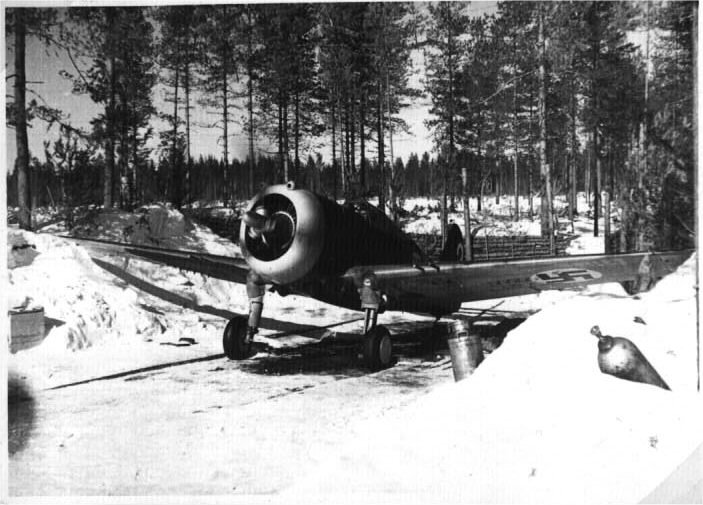
IPB Image
A Finnish Messersmith


He was decorated with the Mannerheim Cross twice, on 26 April 1942 and on 28 June 1944. He is one of the two pilots thus honoured(Hans Wind was the other one). Citation in 1942: "Flight Master Juutilainen has displayed exemplary bravery and indomitable battle spirit with excellent skill and resourcefulness in several air battles." In 1944 the citation was " Flight Master Juutilainen's offensive spirit and skill has earned him 73 victories, 15 of which during the present enemy offensive. This is in our circumstances a brilliant military achievement, taking into account that most of the victories have been gained in battle against numerically great enemy superiority".

Juutilainen was promoted as Sr. Sgt. on 31 December 1939 and less than one month later to the rank of Sergeant-Major. He reached the top of his military career on the 1 March 1941, as he became Flight Master(the rank is also known as Air Master Sergeant or Warrant Officer). Juutilainen concentrated on flying instead of career. He was offered a chance to study in the Cadet School and become a commissioned officer, but he declined, explaining that during the year spent in studies he would lose his touch in flying. Then any enemy could shoot him down before he would have relearned his skill.

IPB Image

Juutilainen loved flying and air battles, and being a husband and father of three sons did not slow him down the least. He was also an outdoorsman, his favourite hobbies were hunting and fishing. His character was extroverted and he was popular with the other pilots due to his witty humour and willingness to give advice. He was radiating vitality and self-confidence, which also rubbed on other pilots thus improving the general feeling in the unit. When "Illu" was asked after the war whether he ever feared, he said that he never felt fear, just urge for action.

What kind of a man becomes a good fighter pilot? "Eikka" Luukkanen has listed some characteristics:
- Physical: good eyesight, good physical condition, rapid reactions.
- Mental: excellent situational awareness, adventurousness.
He may have had his top ace Illu Juutilainen in mind when making that list. A good fighter pilot never really grows up, Luukkanen wrote. Illu was one of these happy men. Juutilainen scored the last kill of the Continuation War on 3.9.1944 when he shot down a Li-2 over the Karelian Isthmus.


After the war, In late September 1944 a rare visitor, Soviet Air Force Col.Lt. V.F. Golubev, the commander of 4.GIAP(Guards' Fighter Regiment) came to see the pilots of the Squadron 34 at Utti Air Base. According to the conditions of the ceasefire treaty Golubev's unit had been stationed for a while at Malmi, the airport of Helsinki. He decided to make use of the opportunity and meet the men he had fought against - with a risk to himself. When Illu Juutilainen was introduced to Golubev, the Soviet officer said nothing, just shook his hand longer than anybody elses. 60 years later "Illu" said in an interview that the greatest decoration a soldier can get is an acknowlegment given by his enemy.

In May 1947 Juutilainen resigned from the FAF service and bought an old DH Moth from the Air Force surplus stock. Then he had the plane repaired and entered in civilian register. Finally he hired a mechanic and became a self-employed pilot. He toured with his Moth and mechanic around Finland, offering ten-minute flights at rural fairs and small towns. There always were people who wanted to be flown around by the famous ex-fighter pilot, a double holder of the Mannerheim Cross, providing Illu and his family with income.

IPB Image
Ilmari Juutilainen in a Finnish F-18 Hornet

In February 1999, "Illu" Juutilainen 'took off for his last flight' without return... He was buried on the 13th March 1999. It's strange, but it's the anniversary of the day the Winter War ended in 1940...


http://www.saunalahti.fi/fta/finace01.htm
A interview with the man himself.


I wrote this together with our Finland expert Blinky.
Thank him for the info on the Mannerheim Cross and pointing out notable Finnish Aces.


Blinky
If anyone is a friend of books, here´s list of books for WW2 airwarfare. I personaly have read The War Diary of Helmut Lipfert, can recommend it.

http://www.naysayers.com/9jg52/books.html


QUOTE(+KS+ Blinky Bill @ 03/19/06 3:00pm) *

If anyone is a friend of books, here´s list of books for WW2 airwarfare. I personaly have read The War Diary of Helmut Lipfert, can recommend it.

http://www.naysayers.com/9jg52/books.html


Editing didn´t worked for some reason, so I had to quote myself. Here´s another good serie of books on WW2 Fighter Aces and their aircrafts:


http://www.ospreypublishing.com/list_by_series.php/ser=ACE
Spartan
THE INFAMOUS RED BARON!!!

I know He isnt a ww2 fighter pilot but he demands the honer!

Manfred von Richthofen was born in Schweidnitz, Germany in 1882. He was originally a cavalry officer in the German Army, but transferred to the German Army Air Service in May 1915. Initially an observer on reconnaissance flights over the Eastern Front, he became a fighter pilot on the Western Front in August 1916. He served under Oswald Boelcke and quickly became his star pupil.

By January 1917, Richthofen had shot down fifteen aircraft had been appointed commander of his own unit. He painted the fuselage of his Albatros D-III a bright red and was nicknamed the Red Baron. After the death of Oswald Boelcke and Max Immelmann, Richthofen became the most famous war ace in Germany. Richthofen was also well-known in Britain and became a hate-figure after Allied propaganda portrayed him as a man who enjoyed killing.

In June 1917, Richthofen was appointed commander of the German Flying Circus. Made up of Germany's top fighter pilots, this new unit was highly mobile and could be quickly sent to any part of the Western Front where it was most needed. Richthofen and his pilots achieved immediate success during the air war over Ypres during August and September. He also held strong opinions on aircraft design and was involved with Anton Fokker in the production of the Fokker D-VII.

Manfred von Richthofen was killed when he was was brought down by ground fire on 21st April 1918. Richthofen had been responsible for shooting down 80 allied aircraft, the highest score of any fighter pilot during the First World War.


IPB Image

The Red Baron was one of those heroes whose life seems almost scripted. Discipline, pride, hunting skills, and Teutonic patriotism all combined in this man, bringing him to the pinnacle of fame which long outlasted the man himself. "Curse you, Red Baron," cried Snoopy, the Mitty-esque canine ace of Charles Schultz' Peanuts comic strip. But Richthofen was no caricature, methodically claiming 80 aerial victories, before falling himself, in a Wagnerian finale.

IPB Image
Spartan
Maj. Richard I. Bong
Bong grew up on a farm near Poplar, Wisconsin. In May 1941, he enlisted in the U.S. Army Air Corps where one of his flight instructors was Barry Goldwater, the unsuccessful 1964 presidential candidate against Lyndon Johnson. Lieutenant Bong received his wings and commission in January 1942 and in October he was flying combat missions in the Southwest Pacific Theater. Flying Lockheed P-38s with the 49th Fighter Group, he scored his first "kills" in late December.

By April of 1944, Captain Bong had shot down 27 aircraft, surpassing Eddie Rickenbacker's American record of 26 credited victories during World War I. After extended leave in the U.S. Major Bong returned to New Guinea in September 1944 and continued flying during the Philippine campaign. There he ran his string to 40 victories in December 1944, the same month he received the Medal of Honor.

Bong's Medal of Honor citation stated that he flew combat missions despite his status as an "instructor". In fact, he was the P-38 standardization officer for 5th Fighter Command, there being no position for instructors in a war zone. His rank of major would have qualified him for a squadron but he always flew as a flight (four-plane) or element (two-plane) leader.

In January, 1945, the Allied air commander in the South West Pacific Area, General George Kenney sent the ace of aces home for good. Bong married his fiance' and participated in numerous PR activities, such as promoting the sale of war bonds. He then became a test pilot for jet fighters. On August 6, 1945, the same day the first atomic bomb was dropped on Hiroshima, Bong was killed in the crash of his P-80 Shooting Star shortly after takeoff from Lockheed Burbank airport.

Marjorie Bong remarried two more times but her last and most successful marriage, to Murray Drucker, allowed her to become a successful publisher of a magazine devoted to boxer dogs. After the death of her last husband she sold her home in Hollywood, California and had a new one built in Poplar, Wisconsin, where she was the driving force in creating the Bong WWII Heritage Center. During that time she also authored the book named "Memories" (1995 Drucker publications) that documented her life. She died of cancer in 2002 had her ashes interned next to her first husband Richard Bong; she is survived by two daughters.

Among Bong's decorations were the Medal of Honor, the Distinguished Service Cross, two Silver Stars, seven Distinguished Flying Crosses, and 15 Air Medals.


IPB Image

click on the underlined words for more info!


Joseph Stalin:
is the form usually used in English for the Russian name of Iosif Vissarionovich Stalin (Иосиф Виссарионович Сталин), born with the Georgian name Ioseb Dzhugashvili (Иосиф Джугашвили); (December 18 [O.S. December 6] 1878[1]March 5, 1953). He was the leader of the Soviet Union from the mid-1920s to his death in 1953. When he joined the Bolsheviks, he took on the name of "Stalin" (Сталин), which means "Man of Steel" in Russian. Stalin's rule was characterized by a strong cult of personality, an extreme concentration of power, and little concern for the harsh consequences of strict policies. Stalin attempted to suppress all opposition through a bureaucratic and arbitrary network of terror. Scholarly estimates of the death toll under Stalin's leadership vary widely, with the average numbers about 20 million [2] over a period of some twenty-three years. Nikita Khrushchev, Stalin's eventual successor, denounced his mass repressions and cult of personality in 1956, initiating the process of "de-Stalinization"[3] which later became part of the Sino-Soviet Split.

Stalin became general secretary of the Soviet Communist Party in 1921, and set about building a power base from there. Following the death of Vladimir Lenin, he prevailed over his rival Leon Trotsky in a power struggle during the 1920s. In the 1930s Stalin initiated the Great Purge, which reached its peak in 1937. Since many wealthier peasants resisted collectivization, the government under Stalin's leadership often resorted to violent repression against the "kulaks".

Stalin is generally considered to have molded the features that characterized the Soviet regime from the era of his rule to its collapse in 1991 — though Maoists, anti-revisionists and some others say he was actually the last legitimate socialist in the Soviet Union's history. Stalin's policies were based on Marxism-Leninism but are often now considered to represent a separate social system called Stalinism.

Stalin replaced the New Economic Policy (NEP) of the 1920s with five year plans in 1928 and collective farming at roughly the same time. Due largely to these policies, the Soviet Union was transformed from a predominantly peasant society to a major world industrial power by the end of the 1930s. A hard-won victory in World War II (the Great Patriotic War, 194145), made possible in part through the capacity for production that was the outcome of industrialization, laid the groundwork for the formation of the Warsaw Pact and established the USSR as one of the two major world powers, a position it maintained for nearly four decades following Stalin's death in 1953.


IPB Image


Slimshady
Well I would also like to mention my left nut. It was blown off during WWII by a german hand grenade, luckly my nut was so big the grenade only blown one of them off. Now that I only have one, the right nut had to take over the left nuts job along with it's own responibilties and it has grown to twice it's size.

Thank-you for letting me share my story.
Maj. H8Red
QUOTE(Slimshady @ 03/19/06 11:51pm) *

Well I would also like to mention my left nut. It was blown off during WWII by a german hand grenade, luckly my nut was so big the grenade only blown one of them off. Now that I only have one, the right nut had to take over the left nuts job along with it's own responibilties and it has grown to twice it's size.

Thank-you for letting me share my story.

LMFAO
Undertow
hysterical.gif
UNDEAD 1
i have to say its very interesting-can you find some notable tank commanders? what about erwin rommel? being from u.s. dont hear about notable nazi soldiers much.

also i love reading about kursk-i knew they had air support but i didnt know hartman was there-very interesting~!

FeezyWeezy
George Beurling "Buzz" "Screwball"

Our Canadian that wanted to go China,
fly for Finland but ended up in a UK Spitfire.


IPB Image


George Beurling was born in Verdun, Quebec in 1921. His parents had high hopes for George, wanting him to go to University and study medicine.

Mostly George wanted only to fly,

"Ever since I can remember, airplanes and to get up in them into the free sky had been the beginning and end of my thoughts and ambitions". This was borne out in his school marks, which were barely above passing. He had taken his first flight by age 9, and hung around LaSalle Road airport outside of Verdun every chance he got. He often made the chances, skipping school to watch airplanes and do odd jobs for the mechanics. When he was sent to his room he spent hours building model airplanes. He sold these creations and used the money to buy flying lessons. The only books he was interested in were about flying, especially tales about the WWI aces. He studied the tactics and aerial battles of WWI, discussing them and arguing with anyone who had the time. Other kids bullied him because of his obsession with flying, and when he was chased home one day his father bought boxing gloves and taught to fight. He also said, "George I don't want you to look for a fight, but I don't want you to run away."


His home life made a distinct impression on him and his personality. His father was a devout Presbyterian church goer, but something early in his adult life made him switch allegience to a stern Evangelical sect called the Exclusive Brethren. They had absolute faith in the Bible. For the Beurlings there were daily bible studies, frequent reading of the Scriptures and weekly attendance at church. The Brethren were dead set against pleasures of the flesh, or for that matter, most other pleasures. It took years before they got a radio, and tobacco and alcohol were shunned. To that end, George never did take up drinking, smoking or swearing.

Still, George managed to have fun in and around Verdun and on his relative's farm. He was athletic and became a good swimmer, although he didn't participate in team sports.

One day at the Verdun airport, one of the pilots offered to take him up for a spin in an airplane if he got his parent's permission. He rushed home and asked them. His mother jokingly said, "Sure George, you can go to the moon." He got his first flight and was totally hooked on flying. He first took the controls of an airplane when he was 12, and soloed in the winter of 1938. He saved up enough money to afford a weekly lesson, but it was too slow for him. He quit school in grade 9 and left home, taking a train to Gravenhurst, Ontario. There he got a job hauling air freight into the bush for mining companies. It was dull work, but he got many hours of flying time logged and was responsible for navigating as co-pilot, building up a great store of practical experience in "seat-of-the-pants" flying. After getting his pilots license he headed west to Vancouver hoping to get a commercial license. Then he planned to join the Chinese airforce flying against the Japanese invading Manchuria. Beurling tried everything that came along his way that had anything to do with flying. In Edmonton he joined a flying competition that included several RCAF pilots. He won the event. He was anything but humble on receiving the prize. He told the crowd that if the pilots from the RCAF was the best Canada could do, then they were in trouble. Several years later when he was rejected by the RCAF, he attributed the rejection to his comments in Edmonton, and carried a chip on his shoulder for the rest of his life.


Beurling often claimed that the WWI German ace, Ernst Udet, taught him how aerial combat maneouvers. However, it simply wasn't true. In the mid-thirties Udet was in California flying as a stunt pilot in Holleywood, but he had left for Germany and the newly founded Luftwaffe by the time Beurling was flying. While trying to get to China George snuck into the U.S.A. on a tramp steamer and was caught. He was thrown into jail for two months and then released. By then WWII was on and George went into the first RCAF recruiting post and presented himself for duty, but his poor academic record got him booted out of the recruiting station. He took this to be a personal slight because he had made remarks against RCAF pilots in Edmonton. However, the RCAF at the time were very small, under equipped in aircraft and at the time were accepting only pilots with good educations. These men founded the core of the British Commonwealth Air Training Plan, teaching others to fly for combat.


As the Russians and Fins were in battle against each other he decided to head to Europe and join the Finnish airforce fighting against the Russians. The Finnish embassy in Montreal insisted on his parents permission as he was still only 18. His parents refused to give it.

Determined to get into the fighting he signed onto a munitions ship, the Valparaiso going to England, a sign of real despiration. The trip over was very hazardous as the German U-Boats were highly active in the north Atlantic, sinking ships at will. Once in Glasgow he went to the RAF recruiting office. They were impressed with his flying abilities, but told him that they would need a birth certificate before they would sign him. Unfortunately, George hadn't brought his birth certificate along. Off back across the Atlantic he went for the document, surviving a direct torpedo hit on his ship. And then back again to England. This time the English signed him immediately.
The Channel Front
IPB Image
[url="http://hedgehoghollow.com/buzz/bbspit.html"]"Buzz" Beurling's Spitfire
The photo shown is creditied to "Cecil Brown, Beurling family."[/url]


Beurling was sent to a large training school in the north of England for a short time, as he was already a licensed pilot. The next stage of training a fighter pilot was to an Operational Training School (OTS) flying Supermarine Spitfires. He studied under the ace Ginger Lacy, who was eventually renowned for shooting down 30 Germans, including the Heinkel 111 bomber that had hit Buckingham Palace.

Beurling got his first taste of warfare while on leave to London. During an air raid he was astounded by seeing a little girl playing with a doll while bombs fell nearby and shrapnel screamed through the air. Rushing to her, he saw her arm had been blown off, and she was in shock. He scooped her up and carried her to an aid station. Another girl was pinned in a basement room while water from a ruptured main filled it. A doctor hurriedly amputated her leg and carried her to safety. These incidents hardened the naive Beurling. Up to then he had thought that the war was a great adventure for those who could fly.

In the final stages of fighter training he astounded instructors with his air-to-air gunnery, consistently scoring direct hits on the droge targets. Ginger Lacy offered him a commission on the spot, but perhaps distrusting officers, or more likely due a lack of self confidence, he turned it down. He announced that he preferred to live with the Sargeant Pilots. Once posted to 403 Sqdn, RCAF he was again offered a commission, and he again turned it down. He apparently felt that he had more in common with the NCOs and enlisted men on the base than with the officers. He was quite popular with the fitters and riggers that looked after his aircraft, as he took an interest in the aircraft and their work. He would take them up in the squadron hack, a Miles Magister, for aerobatic displays. He also occasionally joined them in pubs, although he drank only soft drinks, and their quarters for bull sessions afterwards.


His fitter, George Demare, tells of an incident when he flew with Beurling.


My excitement began with a routine takeoff followed by our buzzing of a rugby game in progress. Down over the goal posts we flew, causing the startled players to hug the ground, then up over the other goal posts and away. Next we swooped down over a herd of cattle, then over a potato field so low we had to climb to clear the hedge at the far end. More excitement was provided by flying between two trees with inches to spare. Following those low-level escapades, it was up into the skies with a spiral climb, then a variety of loops, turns, stalls, and spins. For the grand finale Beurling took us into a power dive - straight down at a horrendous speed. Alas! the ground was so near I abandoned all hope. Then less than 100 feet from the ground Beurling executed a vertical hairpin turn and we were skybound again. After a few more aerial manoeuvres we came in for a smooth landing. When I emerged smiling, Beurling patted my shoulder and said "Good flying!"

These activities gained him his first nickname "Buzz".


His commanding officer placed him in the Tail-End-Charlie position. At this time the British were still flying in a flight of 4 aircraft, with three flying in a V, and with one aircraft flying behind and slightly above the others. This pilot was to weave back and forth inside the V watching for the enemy behind them. It was nearly impossible to maintain this position, while weaving and looking out for enemy aircraft. The Tail-End-Charlie frequently did not make it back to base as the Germans attacked him first. It was a seriously flawed tactic that the English eventually abandoned, but it cost many pilots their lives. The Germans used a loose finger-four formation, with two planes flying as a pair. They could see behind each other and attack targets as well. One day in March, 1942 on a sweep over northern France in Spitfire Vs, George recalled: "we were in the air, our tails in the sun, vulnerable to attack, when I reported Huns." However, nothing was visible. He was told to maintain radio silence! "Five minutes later we got bounced and I got shot." Disregarding instructions he pulled out of formation with three Focke-Wulf 190s on his tail. His engine hood was shot away, a shell splinter grazed his ribs and he figured himself for dead meat, when he got an idea. He dropped his landing gear and flaps, slowing instantly, and the Germans overshot him. Now being in a poor position they sped away to their base. On returning to base he lit into his commanding officer in front of everyone. While justified, it showed poor discipline on his part. Shortly after he was transferred to 41 Squadron, RAF.

He had more problems with his new commanding officer, but he downed his first German. At 24,000 ft over Calais, five FW-190s attacked him while in the Tail-End-Charley position. Cannon shells slammed into his wings knocking out his own cannons. Again, cunning saved his hide. He pulled straight up into the sun, the FW-190s followed and shot past him, as they had more speed, having just pulled out of a dive. As they climbed past him, he lined up on the middle plane and fired his four 0.303 Browning machine guns. A German aircraft exploded, tearing off the wings and splitting the fusilage. Back on the ground he was chewed out for breaking formation! Beurling responded

"Six of us broke formation, five Jerries and I". Yet again, two days later, over Calais he was in the Tail-End-Charlie position when he spotted a flight of 190s below them and heading their way. The rest of the flight ignored his warnings, as usual. This time he didn't wait to be on the receiving end of the German's cannons. He peeled out of formation and dove on the Germans, scoring a perfect deflection shot on the lead plane. It fell away smoking and crashed into the sea. Once again he was reprimanded for disobeying orders by leaving formation. Disgusted with the crass stupidity of his commanding officers, he offered to take the place of a married pilot who didn't relish being posted to Malta, and was promptly granted permission to leave.

IPB Image


Getting to Malta was problematic, as the Germans and Italians were trying to cut it off and pound it to pieces. Any ship getting within range of Axis bombers flying from Sicily were in grave danger and German U-boats prowled the waters. The 16 new Spitfire Mk Vs and their pilots destined for Malta were shipped in the aircraft carrier HMS Eagle. When they were within flying range of Malta (600 miles) the pilots were given instructions on the heading and approximate distance to the island and flew off the deck of the Eagle. This was difficult to do as the Spitfire was never designed for this. The technicians onboard Eagle put wedges in the flaps to hold them at 50% (Spitfires had only 2 flap settings, full up and full down), then the pilots had to rev their engines to the max while standing on their brakes. The deck officer waited until the Eagle rose on a wave and signalled them off. Once off the deck the Spitfire would drop close to the ocean before flying. Once altitude was gained, the pilots dropped flaps all the way, the wedges fell out and then retracted their flaps. The Germans did their best to confuse the new pilots by giving false instructions in English, but most pilots were not fooled by this ruse. Beurling had just landed in his brand new Spitfire, when the cockpit hood was whipped back, the groundcrew pulled him out and another pilot climbed into the cockpit. As soon as it was refueled and armed it roared off to confront an inbound flight of Axis fighters and bombers. He had landed in the middle of an air raid. Many Spitfires were destroyed on the ground before they had a chance to get into the fight.

IPB Image IPB Image
Allied Spitfires on the defense. Malta being bombed.

His commanding officer of 249 Squadron RAF on Malta was S/L Stanley Grant, with FL Laddie Lucas his flight commander. He proved to be a good judge of character. He said of George,

"Beurling was untidy, with a shock of fair, touseled hair above penetrating blue eyes. He smiled a lot and the smile came straight out of those striking eyes. His sallow complexion was in keeping with his part Scandinavian ancestry. He was high strung, brash and outspoken. He was a rebel, yes; but I suspected that his rebelliousness came from some mistaken feeling of inferiority. I judged that what Beurling needed most was not to be smacked down but to be encouraged. His ego mattered very much to him, and from what he told me of his treatment in England, a deliberate attempt had been made to assassinate it. I made him a promise that I would give him my trust and that if he abused it he would be on the next aircraft out of Malta. When I said all this those startling blue eyes peered incredulously at me as if to say that, after all his past experience of human relations, he didn't believe it. He was soon to find out that a basis for confidence and mutual trust did exist. He never once let me down."

He arrived at the height of the siege of Malta by the German Luftwaffe and Italian Regia Aeronautica. They were pounding the island night and day to blast it into submission. Malta was the perfect location to stage interception raids on Axis ships trying to reinforce General Rommel in North Africa. Their main airbase, Takali Field, was a shambles. There was a small shack for an ops room, the revetments for aircraft were made of broken rock and sandbags, and slit trenches abounded. It was blinding white and hot as hades in the day. Every morning the operational pilots would have to go out and sit in their aircraft on 1 minute notice. As the sun rose higher the all metal fighters heated up like ovens, with a scantily clad pilot sweating in it. IPB Image
A German photo of Takali Airfield

"On the 12th I got my first real feel of Malta action when Raoul Daddo-Langlois - "Daddy Longlegs" - and Berkeley-Hill, Jack Rae and I were sent up to intercept 15 Me 109s. The enemy planes split us and Berkeley-Hill and I found ourselves alone. About four Jerries jumped B-H, and I pulled up sharply under one and blew his tail off. He went down vertically. Nobody saw him hit the deck, but Berkeley-Hill had seen my burst hit so I was credited with a damaged."

"In those moments of combat I proved to myself that I had the stuff to match flying and shooting with the gentlemen from Sicily. That's what I wanted to find out. As we walked away from our Spits, Daddy Longlegs grinned and said: "Good show, Beurling!" I felt swell."

During the following lull in fighting Beurling made copious notes in a black book that he carried with him. In it, he made detailed calculations on the angles, speeds and shots that he had made and missed so he could work out how to hit the target the next time. He developed a set of equations that he committed to memory that allowed him to perfect the art of the deflection shot. Deflection shooting was difficult at that time as the Spitfire V had only a ring and bead for an aiming device. Learning how to lead a plane so your shells hit the same space as the aircraft did at the same time was tricky to learn. Many never did, but he mastered it.


On July 6 he got to put into practice what he had learned when 8 Spits were sent to intercept 3 Italian Cant bombers heading for Malta. They were escorted by no less than 30 Macchi 200 fighters. Beurling led the assault diving straight through the Macchi formations and pulling up to fire on a big, Cant bomber. His first burst hit the pilot blowing off his head, the second took out an engine. Despite the damage, it made it back to base in Sicily flown by the bomber aimer/observer. Beurling turned quickly and fired directly into an Italian fighter, knocking it down in flames. He lined up another Italian fighter but it dove sharply to get away. Beurling followed all the way from 20,000 feet to 5,000. The Italian had no choice but to pull up and George caught him square in his sights. The Macchi blew up. Later the same day he led an attack on 2 Junkers Ju-88s escorted by 20 Bf-109s. A wild dogfight broke out and 2 German fighter pilots headed right for Beurling. He circled tightly and caught a 109 with a long burst from 800 yards and at a nearly impossible angle. He hit the fuel tanks and it went down in flames. In one day he increased his kill to 5 and became an ace. Back at base the other pilots snubbed him by not throwing an acknowledgement party of his ace status. He was only interested in attacking Germans. He admitted that he was a loner, but Lucas explained to him in simple, direct language that if he didn't fly as a team, he would be posted into the desert at some even more God-awful post than Malta. George flew with his wingman as well as he was able, however, over Malta most dogfights ended up being a single Spitfire against many enemy aircraft. It was on Malta that he received his second nickname, "Screwball". Lucas recounts,


Beurling pulled up a chair. He sat there, bent over this moving mass of activity, his eyes riveted on it, preparing for the kill. Every few minutes he would slowly lift his foot, taking particular care not to frighten the multitude, pause and - thump! Down would go his flying boot to crush another hundred or so flies to death. Those bright eyes sparkled with delight at the extent of the destruction. Each time he stamped his foot to swell the total destroyed, a satisfied transatlantic voice would be heard to mutter "the goddam screwballs!"

So George Beurling became "Screwball" to 249, to Malta and to the world. It was an endearing appellation. It suited him exactly. What's more he like it. It helped his ego. It made him feel he was now regarded as an established member of the team. He felt the gaze beginning to be focused on him. At last he was a figure in his own right....

George took to hunting the ubiquitous lizards around Takali airfield with his .38 pistol. He would go out alone and stand motionless waiting for a lizard to get within a prescribed range where he estimated they were roughly the size of a German fighter at 250 yards. This was his preferred range for firing. He often hit the lizards with a single bullet. He was completely focussed on being the best fighter pilot that he could be.

Malta was a hectic station, with frequent, large scale raids by Germans and Italians. But the AA gunners on Malta quickly became the most proficient in the world with the constant practice they had. Many Axis aircraft were knocked down by the islands ground defences, as well as the Spitfires. By July 11 he had shot down two Bf-109s, three Macchi 202s, had a probable kill on a 109 and damaged a Junkers 88 bomber.

IPB Image
Malta Anti-Air Guns.

His markmanship had become a legend. He once reported he had fired 5 cannon shells into the cockpit of an enemy plane. Allied soldiers found the plane with 5 cannon holes in the cockpit. A fellow Spitfire pilot said of Beurling,

"He was so successful for many reasons, but the two most important were his eyesight and his knack for deflection shooting. He used to report sighting of aircraft many seconds before others saw them, and he knew whether he hit them in the front, centre or rear of their airplane and he usually used minimum ammunition."


Lucas stated,

"He had an instinctive feel for an aircraft. He quickly got to know its characteristics and extremes - and the importance of doing so. He wasn't a wild pilot who went in for all sorts of hair-raising manoeuvres, throwing his aircraft all over the sky. Not at all. George Beurling was one of the most accurate pilots I ever saw. A pair of sensitive hands gave his flying a smoothness unusual in a wartime fighter pilot ... This acute sensitivity told him that a Spitfire was only a fine gun platform if it was flown precisely. He therefore set out to make himself the master of the airplane. He never let it fly him."

He never shot haphazardly at an aircraft that was too far away. He liked to fire from about 250 yards with several short, hard bursts. That was usually enough.


On July 14 he ended up on the receiving end of some German lead. Three Bf-109s and 2 Italian Reggiane 2001 fighter/bombers jumped him. He turned towards the Italians figuring they could do less damage to him, as they were not equipped with cannons, but his aircraft was shot up pretty bad. Back at base he counted 23 holes in his aircraft. He got even a while later downing his first Reggiane and damaging a Ju-88. Beurling waxed hot and cold on his Italian opponents. In a 1943 interview he referred to the Italians as "ice-cream merchants", saying:

"The Eyeties are comparatively easy to shoot down. Oh, they're brave enough. In fact, I think the Eyeties have more courage than the Germans, but their tactics aren't so good. They are very good gliders, but they try to do clever acrobatics and looping. But they will stick it even if things are going against them, whereas the Jerries will run."

On July 27 Beurling dealt the Italians a hard blow by killing their leading ace, Captain Furio Niclot and shooting down his wingman, Serg. Magg. Faliero Gelli. Together they had knocked down 8 Spitfires over Malta. Gelli never saw him coming, he hit the wingman's radiator and engine sending him down to crash on an island. He was captured and made a prisoner and thus survived the war. Niclot was killed outright seconds later. Beurling was lining up on a third Macchi when two Bf-109s came up after him. He peeled off and attacked the Germans, hitting the leader in the fuel tanks and sending him down in flames. He was on a roll. He landed, refueled and went back up to attack four Bf-109s. He shot down one in flames and received credit for a damaged plane that limped out of the fight smoking badly. For his amazing day's work he received the Distinguished Flying Medal.

IPB Image
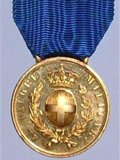
Distinguished Flying Medal


Near the end of July he shot down another Bf-109, and his superior officers finally had to promote him to an officer and ordered him to accept. The press were anxious to interview him, and it wouldn't do to have the top fighter pilot in Malta be a Sergeant Pilot. So he became a Pilot Officer, much to his disgust. He, and many of the surviving pilots, were exhausted by the physical demands of fighter combat, stress, heat, poor nutrition and a form of dysentery they called "the Dog". Beurling had lost 50 lbs since arriving in Malta, the Germans and Italians were close to shutting down the island by cutting off it's food supplies. He was bed ridden for a week, but managed to drag himself into the air to battle the Messerschmitts that circled Malta. Several flights of Bf-109s jumped him. He managed a short burst that brought down a German, but his comrades shot Beurling's plane to pieces. He crash landed in a field because his parachute was too loose for him to jump out. By the end of August he collected a shared victory over a Ju-88 that had been separated from it's fighter escort.

He was again bed-ridden for several weeks due to continued weakness from the poor quality food. In the middle of September he took a plane up but got it badly shot up by a German. He took revenge a few days later when he attacked 18 German fighters. One blew up when he hit the oxygen bottles, another fell away smoking and a third went down in flames. Then came October. The Axis powers pulled out all of the stops to crush Malta. It was a vicious battle, half of Beurling's squad was shot down in one week. His only close friend, a fellow Quebecer, was killed. After that he had no more friends, it was easier that way.


The air war over Malta became a real grudge match. Pilots on both sides were shot in the air while they hung from their parachuts, or while they floated in the water. Several Italians who landed on Malta were tortured and killed before the British troops could capture them. Little sympathy was shown by either side towards their opponents.

By the 14th of October Beurling had shot down 5 more German planes, three in one day. He should have been awarded the VC for that effort. Three flights of Spitfires scrambled to intercept 95 Axis planes. Beurling spotted them first, but his radio died and he couldn't contact the others. He piled into the Axis formations, damaging a Junkers 88, and downing 2 Bf-109s. Going home he came across a damaged Ju-88 and shot it down. Actually the huge enemy formations worked in his favour, as the large number of German and Italian fighters couldn't attack him all at once. They either got in each other's way or no one attacked him. Like Bishop he adopted the fast sneak attack and a quick withdrawal method. He could usually count on damaging or downing the first aircraft he attacked, and he got out with the resulting confusion. Then he could circle and pick off stragglers or wait for a favourable chance to attack again. His last fight over Malta was, as usual, spectacular. He led 8 Spitfires in an attack on 8 Ju-88 bombers and 50 fighters. He cut out a bomber and shot it down, but the rear gunner hit him in a finger and forearm. He attacked and damaged a 109 in front of him, but two behind him shredded his tail and wings with cannon fire. He dove fast for the water, losing the Germans. Coming out of the dive he spotted a 109 below him and shot it down. But that attracted attention from more Germans.

"I'd been so intent on the guy in my sights and on Willie's tail that I'd forgotten I had a tail of my own."

"Just as I shot Willie's pal down, a Messerschmitt nailed me from behind, right in the belly of the Spit. A chunk of shell smashed into my right heel. Another went between my left arm and body, nicking me in the elbow and ribs. Shrapnel spattered into my left leg. The controls were blasted. The throttle was jammed wide open and there I was in a full-power spin, on my way down from around 18,000 feet. I threw the hood away and tried to get out, but the spin was forcing me back into the seat. "That is it," I said to myself. "This is what it's like when you're going to die."

I didn't panic. If anything, I was resigned to it. What the hell, this was the way I'd always wanted to go. Then I snapped out of it and began to struggle again.

The engine was streaming flame but I managed to wriggle out of the cockpit and onto the port wing from which I could bail into the inside of the spin. I was down to 2,000 feet. At about 1,000 I managed to slip off. Before I dared pull the ripcord I must have been around 500. The chute opened with a crack like a cannon shell and I found myself floating gently down, the damnedest experience in contrasts I'll ever have.

I caught my breath, pulled off a glove and dropped it to get some idea of the distance between me and the sea. A breeze caught it and the glove went up past my face. I laughed like a fool, then tugged off my flying boots and dropped them. Just as I did I hit the water.

He was rescued shortly after by a launch from shore. When they got there he was floating in blood-stained water babbling about the bible that his mother had given him. The rescue squad searched his pockets and found it. He was patched up as well as they could on Malta and spent some time in hospital before being sent back to Britain.

The flight back was in a Liberator bomber converted to a transport. The nineteen passengers rode in the bomb bay and fusilage without seats. George flew along with fellow Canadian ace "Billy the Kid" Williams and fighter pilot A.H. Donaldson. The aircraft ran into a ferocious thunder storm near Gibralter. Low on gas there was no alternate landing strip so, with poor visibility the pilot forced the bomber down. He couldn't control the plane well enough on descent into Gibralter and missed two thirds of the runway. The aircraft touched down too late and the pilot tried to pull back up. With the engines at full throttle but not generating enough power yet they crashed into the water. Beurling said afterwards that he could tell from the way the plane behaved that it was going to stall so he opened the emergency door and jumped just as the plane hit the water. He managed to swim the 160 yds to shore, despite a heavy cast on his foot. Only Donaldson, Beurling and another passenger survived. Beurling was hospitalized with shock and an infection in his wounded heel.

IPB Image

He was sent back to rest in Canada and Prime Minister Mackenzie King milked his presence with a "photo-op" and nearly messed everything up by being late. Beurling was worn out after a 21 hour flight across the Atlantic.

IPB Image

The next day he was given a hero's welcome parade through Verdun and Montreal. People lined the parade route despite a cold, slashing rain. Nearly 10,000 people packed the Verdun arena to see their hometown hero. The CBC sent an announcer to broadcast the whole spectacle to the rest of Canada. Being big about it, AC deNiverville, the senior officer for the RCAF No. 3 Training Command admitted that they made a mistake in not taking Beurling when he applied.

IPB Image

"This is one of the mistakes that the RCAF has made, and let us hope we will not make many more like that. We owe, the Royal Air Force a debt for being wiser than we were and readily accepting him."


It was then George's turn on the podium. He spoke for just over four minutes. Opening with

"This is no place for me, I'm a fighter pilot, not a speech maker." He continued, apologising for not always looking excited to be in Victory Loan Drives, but he was exhausted, bewildered and excited. He had gone in a few weeks from desperate, kill-or-be-killed battle to an overwhelming, adoring public. He was undoubtedly suffering from battle fatigue.


The persona that George put forward for the public and the press was that of a hard-hearted, professional killer. He made statements like this on dog-fighting:

"I wonder if he is going to blow or fry. There is no time for any other kind of thought. There is always someone on your tail and you have to be pretty sharp. There is no time to loiter around. You have to be hard-hearted too. You must blaze away whenever you are in a position to get his oxygen bottles or gas tanks." He gave a press interview that has been retained in the National Archives of Canada. In it he described a horrifying scene that, according to his brother David, haunted him in nightmares for years. In it he is attacking an Italian fighter aircraft.


From Brian Nolan's book Hero, he quotes:

"I came right up underneath his tail. I was going faster than he was; about fifty yards behind. I was tending to overshoot. I weaved off to the right, and he looked out to his left. I weaved to the left and he looked out to his right. So, he still didn't know I was there. About this time I closed up to about thirty yards, and I was on his portside coming in at about a fifteen-degree angle. Well, twenty-five to thirty yards in the air looks as if you're right on top of him because there is no background, no perspective there and it looks pretty close. I could see all the details in his face because he turned and looked at me just as I had a bead on him. One of my can shells caught him in the face and blew his head right off. The body slumped and the slipstream caught the neck, the stub of the neck, and the blood streamed down the side of the cockpit. It was a great sight anyway. The red blood down the white fusilage. I must say it gives you a feeling of satisfaction when you actually blow their brains out."


He was undernourished after the starvation diet on Malta, and his wound in his heel festered. He was secretly admitted to the Royal Victoria Hospital for several weeks. He was allowed out only for his twenty-second birthday so he could enjoy his mother's chocolate cake.

Following a full physical recuperation, although one foot was permanently shorter than the other, he was sent to help sell war bonds all across Canada. He made appearances at flight training schools, army camps and factories. He promoted Victory Bonds and enlistment. But he was a poor public speaker and he resented the boring work. When asked by a reporter about it he snapped "if I were ever asked to do that again I'd tell them to go to hell or else ask for a commission on the bonds I sold". In March, 1943 he was near the end of the bond drive in Vancouver. It was there he met Diana Whittall, the daughter of a respected Vancouver family. They dated, and went out swimming while he was there. They would marry 14 months later.

By the spring of 1943 he was fit for duty. He griped that the RCAF was pressuring the RAF into transferring him, however, it turned out that he applied for the transfer with a letter to AC deNiverville.


[color="#800080"][/color]
The rest of the GREAT story about one hack of a Canadian Ace.

Lord Lipton
wow guys. way to do your research.
FeezyWeezy
I'm sorry to putt this person here, between all the Ace's but as this Topic is about the famous..
This guy is famous....infamous.


Josef Mengele
"Todesengel " "Beppo"

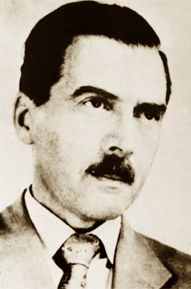
IPB Image
Josef Mengele, M.D., Ph.D.
March 16, 1911 – February 7, 1979


Mengele was born in Günzburg, Bavaria, eldest of three sons of Karl Mengele (1881–1959), a well-to-do industrialist, and his wife Walburga (d.1946). He had two younger brothers, Karl (1912–1949) and Alois (1914–1974). In 1926, Mengele was diagnosed with osteomyelitis, a bacterial infection of bone and bone marrow which causes inflammation and can lead to a reduction of blood supply to the bone. He studied medicine and anthropology at the University of Munich, the University of Vienna and the University of Bonn. At Munich he obtained a doctorate in Anthropology (Ph.D.) in 1935 with a dissertation on racial differences in the structure of the lower jaw, supervised by Prof. Theodor Mollison. After his exams he went to Frankfurt, working as an assistant to Otmar von Verschuer at the Frankfurt University Institute of Hereditary Biology and Racial Hygiene. In 1938 he obtained a doctorate in medicine (M.D.) with a dissertation called "Familial Research on Cleft Lip, Palate and Jaw". The Universities of Munich and Frankfurt revoked his degrees in 1964.

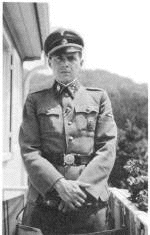
IPB Image IPB Image
Mengele in SS-Hauptsturmführer Uniform


In 1932, at the age of 21, Mengele joined the Stahlhelm, Bund der Frontsoldaten (Steel Helmet, League of Front Soldiers); this organization was incorporated into the SA (Sturmabteilung) in 1933, but resigned shortly thereafter, alluding to health problems. He applied for Nazi party membership in 1937 and in 1938 he joined the SS (Schutzstaffel). In 1939, Mengele married his first wife, Irene Schoenbein. From 1938 to 1939 he served for six months with a specially trained Gebirgsjäger regiment. In 1940 he was placed in the reserve medical corps, following which he served with a Waffen-SS unit, the multi-national SS-Division (mot.) Wiking. In 1942 he was wounded at the Russian front and was pronounced medically unfit for combat, and promoted to the rank of SS-Hauptsturmführer (Captain).

IPB Image
Famous Schutzstaffel image

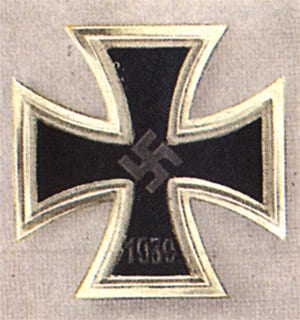
Mengele also received an Iron Cross first class and an Iron Cross second class for bravery in combat. His Iron Cross first class was awarded after then SS-Ostuf. Mengele, under enemy fire, pulled two panzer crewmen out of a burning tank, thus saving their lives. His other awards include the Wound Badge, and the Medal for the Care of the German People.

IPB Image
Iron Cross first class


His next assignment was at Auschwitz, where he replaced another doctor who had fallen ill. On May 24, 1943 he became medical officer of Auschwitz-Birkenau's so-called gypsy camp. In August 1944, this camp was liquidated and all its inmates gassed. Subsequently Mengele became Chief Medical Officer of the main infirmary camp at Birkenau. He was not, though, the Chief Medical Officer of Auschwitz - superior to him was SS-Standortarzt (garrison physician) Eduard Wirths.

It was during his 21-month stay at Auschwitz that Mengele achieved infamy, and it is for this period that he was later referred to as the "Angel of Death". Mengele was usually part of the medical delegation which met incoming prisoners, determining which would be retained for work and experimentation, and which would be sent immediately to the gas chambers.

IPB Image
Prisoners at Auschwitz

Mengele had a fascination with twins; beginning in 1943, twins were selected and placed in special barracks. Most of the children selected for these experiments came from the Roma being held at Auschwitz. Almost all of Mengele's experiments were of dubious scientific value, ignoring the lack of ethics involved, including attempts to change eye color by injecting chemicals into children's eyes, various amputations and other brutal surgeries, and in at least one case attempting to create an artificial conjoined twin by sewing the veins in two twins together; this operation was not successful and only caused the hands of the children to become badly infected. Another dubious experiment that he purportedly conducted involved submerging subjects into boiling cauldrons of water so as to see how much heat the human body could take before death. Subjects of Mengele's experiments were almost always killed afterward for dissection, if they survived the experiment itself.

http://www.romnews.com/b/Mengele.jpg
http://auschwitz.dk/Mengele/1149c050.jpg
http://www.zwoje-scrolls.com/zwoje20/r1.jpg

For More Docters that did experiments at people.
This maybe explains the previous photo's, and what activities caused them.

Rena Kornreich Gelissen's account of her time in Auschwitz details certain experiments performed on female prisoners around October 1943. During roll calls Dr. Mengele would show up to perform a "special work detail" selection, which fooled some into thinking that this would be a relief from the otherwise hard labor they were performing. In actuality Mengele would experiment on the chosen girls, performing sterilization and shock treatments. Most of the victims died either due the experiment or later infections.

Mengele also had several Jewish medical helpers. They were given the task of dissecting bodies and finding the causes of death.


IPB Image

Mengele also had an interest in dwarfs, founding the Lilliput Troupe, seven of whose ten members were dwarfs. He often called them "his dwarf family" and experimented on them frequently. He was fascinated by their structure, why they had smaller limbs yet a normal-sized trunk. They seemed vital to his research and he had them treated specially — they were allowed to keep their clothes, scarves and accessories they had from their home. Mengele even gave them make-up to wear on more than one occasion.

Mengele left Auschwitz and went to Gross-Rosen concentration camp. In April 1945, he fled westward disguised as a member of the regular German infantry. He was captured as a POW and held near Nuremberg. He was released by the Allies, who had no idea that he was in their midst. After hiding as a farm labourer in Upper Bavaria, Mengele departed for Argentina in 1949, where many other fleeing Nazi officials had also sought refuge. Josef Mengele practiced medicine in Buenos Aires in the 1950s and "had a reputation as a specialist in abortions," which were illegal at the time. Mengele was arrested after he killed a girl in his abortion clinic, but an Argentine judge released him. Mengele divorced his wife Irene, and in 1958 married his brother Karl's widow, Martha. She and her son moved to Argentina to join Mengele for a time, although both returned to Europe only a few years later.

IPB Image IPB Image
Mengele in the 60's and in 1971.

His family at home backed him financially and he prospered in the 1950s, first operating a toy-workshop and later as an associate in a small pharmaceutical enterprise. After this short period, however, Mengele lived rather poorly. In 1959 he fled to Altos, Paraguay when his address was discovered by Nazi-hunters. Martha never managed to adjust to her new life and left him. Mengele later moved south to Hohenau and then from late 1960s he lived in the São Paulo region of Brazil until his death in 1979, when he suffered a stroke while swimming at a beach near Embu, Brazil and drowned.

Despite international efforts to track him down, he was never apprehended and lived for 35 years hiding under various aliases. Adolf Eichmann's capture and trial by Israel prompted Mengele's fears and frequent movements, and Mossad tracked him for a time, but Israel's efforts were directed towards normalizing relations with Paraguay and fighting enemies closer to home. He was not tracked down by Nazi hunters until June 6, 1985, when his body was found and identified after a combined effort of American, West German and South American authorities. In 1992, DNA tests (forensic tests) confirmed his identity.


IPB Image
Simon Wiesenthal, the famous Nazi Hunter
http://news.bbc.co.uk/1/hi/uk/581109.stm


Mengele has a daughter born to an Australian woman of German lineage after a liaison between the two when the woman, aged 23, visited the German Colony Colonia Independencia in Paraguay in mid-1960 along with her mother and brother. In September 1960, Mengele decided that capture by the Israelis was inevitable as long as he stayed in Paraguay. He resolved to begin a new life elsewhere. The choice was Brazil. "The strong change in my surroundings will definitely be mirrored in my writings," he wrote in a diary. For a month there were no diary entries, and then he wrote, "So much happened in this time." Later this was determined to mean the discovery that he was to be the father of a second child, whom he knew he would never see. Mengele wrote, "For a certain reason that I cannot explain, I cannot write about it." His child was born four weeks premature in Melbourne, Australia on March 10, 1961. Her name was recorded as "Marion" on her birth certificate, but was changed when she was adopted privately in August of that year.
UNDEAD 1
VERY interesting cant wait forthe next!
FeezyWeezy
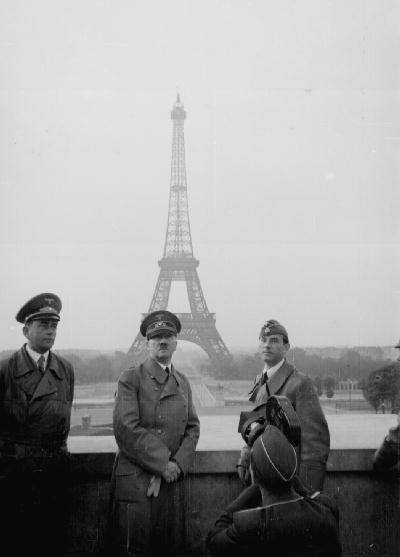
Albert Speer
The "Good" Nazi


IPB Image
Albert Speer March 19, 1905 – September 1, 1981

Albert Speer was born Berthold Konrad Hermann Albert Speer in Mannheim, Germany, the second of three sons.

Although Speer was an architect, he originally wanted to become a mathematician when he was young, he ended up following in the footsteps of his father and grandfather and studied architecture. He began his architectural studies at the Karlsruhe Institute of Technology; his decision to study locally instead of at one of the more prestigious institutes was dictated by the inflation of 1923. In 1924 when the inflation had stabilised, Speer transferred his studies to the more esteemed Munich Institute of Technology. In 1925 he transferred again, this time to the Berlin Institute of Technology. It was there that he was under the tutelage of Heinrich Tessenow, Speer had a high regard for Tessenow and when he passed his exams in 1927 he became Tessenow's assistant. His duties as assistant involved teaching seminar classes three days a week. Although Tessenow himself never agreed with Nazism, a number of his students did, and it was they who persuaded Speer to attend a Nazi Party rally in a Berlin beer-hall in December 1930.

Speer claims to have been apolitical as a young man; nevertheless, he did attend the rally. He was surprised to find Hitler dressed in a neat blue suit, rather than the brown uniform seen on Nazi Party posters. Speer claimed to have been quite affected, not only with Hitler's proposed solutions to the threat of communism and his renunciation of the Treaty of Versailles, but also with the man himself. Several weeks later he attended another rally, though this one was presided over by Joseph Goebbels. Speer was disturbed by the way he had whipped the crowd into a frenzy, playing on their hopes. Although Goebbels' performance offended Speer, he could not shake the impressions Hitler made on him. The next day he joined the Nazi Party as member number 474,481. In this same year (1931) he married Margarete Weber

IPB Image
Speer and family

He met and fell in love with Margarete Weber, a lovely open minded girl. After a period couple and after completing studies they got married without the blessing of the Speer family as his fiancee was not of the same class but later things sorted out anyway.

IPB Image
Margarete Weber and Albert Speer

Speer's first major commission as a Party member came in 1932 when Karl Hanke (whose villa Speer previously worked on) recommended him to Goebbels to help renovate the new District Headquarters in Berlin, and, later, to renovate Goebbels' Propaganda Ministry. Goebbels was impressed with his work and recommended him to Hitler, who assigned him to help Paul Troost renovate the Chancellery in Berlin. Speer's most notable work on this assignment was the addition of the famous balcony from which Hitler often presented himself to crowds that assembled below. Speer subsequently became a prominent member of Hitler's inner circle and a very close friend to him, winning a special place with Hitler that was unique amongst the Nazi leadership. Hitler, according to Speer, was very contemptuous towards anybody he viewed as part of the bureaucracy, and prized fellow artists like Speer whom he felt a certain kinship with, especially as Hitler himself had previously entertained architectural ambitions.

IPB Image
Speer and Hitler making plans for new constructions. Together they shared the passion for architecture and became close friends both professionally and private.

When Troost died in 1934, Speer was chosen to replace him as the Party's chief architect. One of his first commissions after promotion was perhaps the most familiar of his designs: the Zeppelintribune, the Nuremberg parade grounds seen in Leni Riefenstahl's propaganda masterpiece, Triumph of the Will. In his autobiography, Speer claimed that, upon seeing the original design, he made a derogatory remark to the effect that the parade ground would resemble a "rifle club" meet. He was then challenged to create a new design.

IPB Image
The Zeppelintribune

The grounds were based on ancient Doric architecture of the Pergamon Altar in Anatolia, but magnified to an enormous scale, capable of holding two hundred and forty thousand people. At the 1934 Party rally on the parade grounds, Speer surrounded the site with one hundred and thirty anti-aircraft searchlights. This created the effect of a "cathedral of light," (which referenced columns) or, as it was called by British Ambassador Sir Neville Henderson, a "cathedral of ice".

IPB Image
1934 Party rally

Nuremberg was also to be the site of many more official Nazi buildings, most of which were never built; for example, the German Stadium would have held another four hundred thousand spectators as the site of the Aryan Games, a proposed replacement for the Olympic Games. While planning these buildings, Speer invented the theory of "ruin value." According to this theory, enthusiastically supported by Hitler, all new buildings would be constructed in such a way that they would leave aesthetically pleasing ruins thousands of years in the future. Such ruins would be a testament to the greatness of the Third Reich, just as ancient Greek or Roman ruins were symbols of the greatness of their civilizations.

In 1937 Speer designed the German Pavilion for the 1937 international exposition in Paris. Speer's work was located directly across from the Soviet Pavilion and was designed to represent a massive defense against the onslaught of communism. Both pavilions were awarded gold medals for their designs.

IPB Image
German Pavilion, Paris - 1937

Speer was also directed to make plans to rebuild Berlin, which was to become the capital of a "Greater Germany" — Welthauptstadt Germania. The first step in these plans was the Olympic Stadium for the 1936 Summer Olympics, designed by Werner March. Speer also designed the new Reichs Chancellery, which included a vast hall designed to be twice as long as the Hall of Mirrors in the Palace of Versailles. Hitler wanted him to build a third, even larger Chancellery, although it was never begun. The second Chancellery was damaged by the Battle of Berlin in 1945 and was eventually demolished by the Soviet occupiers after the war.

IPB Image
Reichs Chancellery - Destroyed on purpose after the war by the allies.

Almost none of the other buildings planned for Berlin were ever built. Berlin was to be reorganized along a central three-mile-(five km) long avenue. At the north end, Speer planned to build the Volkshalle — an enormous domed building, based on St. Peter's Basilica in Rome. The dome of the building would have been impractically large; it would be over seven hundred feet (over two hundred meters) high and eight hundred feet (three hundred meters) in diameter, sixteen times larger than the dome of St. Peter's. At the southern end of the avenue would be an arch based on the Arc de Triomphe in Paris, but again, much larger; it would be almost four hundred feet (120 m) high, and the Arc de Triomphe would have been able to fit inside its opening. The outbreak of World War II in 1939 led to the abandonment of these plans.

IPB Image
The model of the arch Speer made for Hitlers 50th birthday.

During his involvement in the rebuilding of Berlin, he was allegedly responsible for the forced evictions of Jews from their houses to make room for his grand plans, and for re-housing German citizens affected by this work. He was also listed as being present at the 1943 Posen Conference, a charge Speer later contested by saying that he had in fact left early.

Speer did have an architectural rival: Hermann Giesler, whom Hitler also favored. There were frequent clashes between the two in regard to architectural matters and in closeness to Hitler.

Hitler was always a strong supporter of Speer, in part because of Hitler's own frustrated artistic and architectural visions. A strong affinity developed between Hitler and the ambitious young architect early in their professional relationship. For Speer, serving as architect for the head of the German state and being given virtual carte blanche as to expenses, presented a tremendous opportunity. For Hitler, Speer seemed to be capable of translating Hitler's grandiose visions into tangible designs which expressed what Hitler felt were National Socialist principles.

IPB Image
Adolf Hitler visits Paris with architect Albert Speer (left) June 23, 1940

After Minister of Armaments and War Production Fritz Todt was killed in an airplane crash in 1942, Hitler appointed Speer as his successor in all of his posts. Hitler's affinity for Speer and the architect's efficiency and avoidance of party squabbling are believed to have been considerations in Speer's promotion. In his autobiography, Speer recounts that the power-hungry but lazy Hermann Göring raced to Hitler's headquarters upon word of Todt's death, hoping to claim the office. Hitler instead presented Göring with the fait accompli of Speer's appointment.

Faced with this new responsibility, Speer tried to put the German economy on a war footing comparable to that of the Allied nations, but found himself incessantly hindered by party politics and lack of cooperation from the Nazi hierarchy. Nevertheless, by slowly centralizing almost all industry control and cutting through the dense bureaucracy, he succeeded in multiplying war production four times over the next two and a half years, with it actually reaching its peak in 1944 during the height of the Allied strategic bombing campaign. Another big hurdle in his way was the Nazi policy excluding women from factory work, a serious hindrance in war production and a problem unknown to Germany's enemies, who all made full use of the female workforce. To fill this gap, Speer made heavy use of foreign labor, a considerable portion of it forced labor.

Speer was considered one of the more "rational" members of the Nazi hierarchy, in contrast to the raging Hitler, grotesque Göring, fanatical Goebbels, and perverse Himmler. Speer's name was found on the list of members of a post-Hitler government envisioned by the July 20 plot to kill Hitler. However, the list had an annotation "if possible" by his name, which Speer credits with helping save his life from the extensive purges that followed the scheme's failure. By his own account, Speer considered assassinating Hitler in 1945 by releasing poison gas into the air intake vent on the Führerbunker, but backed down for a number of reasons. Independent evidence for this is sparse. Some credit his revelation of this plan at the Nuremberg trials as being pivotal in sparing him the death sentence, which the Soviets had pushed for.

IPB Image
Albert Speer at the Nuremberg trials

Hitler continued to consider Speer trustworthy, though this trust waned near the war's end as Speer, at considerable risk, campaigned clandestinely to prevent the implementation of Hitler's scorched earth policy on both German soil and occupied territories. Speer worked in association with General Gotthard Heinrici, whose troops fighting in the east retreated to the American-held lines and surrendered there instead of following Hitler's orders to make what would have been a suicidal effort to hold off the Soviets from Berlin.

Speer even confessed to Hitler shortly before the dictator's suicide that he had disobeyed, and indeed actively hindered, Hitler's "scorched-earth" decree. According to Speer's autobiography, Speer visited the Führerbunker towards the end and stated gently but bluntly to Hitler that the war was lost and expressed his opposition to the systematic destruction of Germany while reaffirming his affection and faith in Hitler. This conversation, it is said, brought Hitler to tears. In disfavor, Speer was excluded from the new cabinet Hitler outlined in his final political testament, where Speer was to be replaced by his subordinate, Karl-Otto Saur.

SOUND FRAGMENT:
http://www.bbc.co.uk/bbcfour/audiointerviews/profilepages/speera1.shtml

PHOTOS:
http://hatemonitor.csusb.edu/images/dartmouth/ALbertSpeerNurembergTrial.jpg
http://hatemonitor.csusb.edu/images/dartmouth/NurembergTrial_Jan5.jpg
http://perso.wanadoo.fr/d-d.natanson/nuremberg.jpg


Immediately after the war, there seemed to be little indication that Speer would be charged with war crimes. Speer traveled unprotected and openly participated in the so-called Flensburg government for weeks, in the presence of Allied officers. Upon request, he actually held a series of widely-attended lectures for officials of the Allied occupying powers on various topics, including the mistakes made by the Nazi government in industrial and economic affairs (although he never during these lectures spoke about slave labor) and the effectiveness of the Allied strategic bombing campaigns. Some journalists and spectators even expected that Speer would be appointed by the occupying powers to help restore Germany's economy. However, any such speculation ended when, after one of these lectures, he was arrested and sent to Nuremberg for trial. At the Nuremberg trials after the war Speer was one of the few officials to express remorse and plead guilty, but was sentenced to 20 years' imprisonment in Spandau Prison, West Berlin, largely for his use of slave labor. At the trials, the prosecution introduced as evidence a photograph of Speer visiting the Mauthausen concentration camp, where he is clearly shown surrounded by emaciated prisoners. The prosecution claimed this proved Speer was well aware of the Holocaust. However, Speer held that he was only given a "V.I.P." tour of the concentration camp, meaning he was never shown the more vile side of the camp's purpose.

According to interviews after his imprisonment, as well as his memoirs, Speer adopted a "see no evil" attitude towards the Nazi atrocities. For example, through one of his friends, Karl Hanke, he learned of Auschwitz and the large number of deaths taking place there. He then purposely avoided visiting the camp or trying to get more information on what was taking place. In his autobiography, he claims that he had no direct involvement or knowledge of the Holocaust, although he faults himself for blinding himself to its existence. He certainly was aware, at least, of harsh conditions for the slave labor and some critics believe that his books understate his role in the atrocities of the era. Newly released documents suggest that Speer knew a lot more about the atrocities than he was telling, but hard evidence for that remains very thin.

One problem with assessments of Speer's complicity in the Holocaust comes from his status in post-war Germany - he became a symbol for people who were involved with the Nazi regime yet did not have (or claimed not to have had) any part in the regime's atrocities. Even today, German historians such as Joachim Fest tend to have a high opinion of him, while non-German historians take a lower view.

(Speer created) a market for people who said "believe me, I didn't know anything about (the Holocaust). Just look at the Führer's friend, he didn't know about it either."

IPB Image
The Spandau Diaries, by Albert Speer

http://www.dataphone.se/~ms/speer/more.htm
A site with more books about Speer, and his work.

His time in prison, painstakingly documented in his secret prison diary which was later released as The Spandau Diaries, was described as consisting mainly of a mind-numbing and pedantically enforced daily routine, incessant petty personal rivalry between the seven prisoners, a pervasive and bloated prison bureaucracy, and the passing of many false hopes of premature release. After some time Speer, and most of the others, had established secret lines of communication to the outside world via sympathetic prison staff. Speer made full use of this by, amongst other things, writing innumerable letters to his family (which were restricted to one outgoing page per month under official regulation) and even having money spent on his behalf from a special bank account for a variety of benign purposes.

Speer, as recounted in his diary, made a deliberate effort to make as productive use of his time as possible. In the first decade, this took the form of putting on paper the first draft of his tell-all memoirs, an act Speer considered to be his "duty" to history and his people, he being the sole surviving member of Hitler's inner circle and in possession of knowledge and a degree of objectivity that no other had. As the prison directors both forbade the writing of a memoir and recorded each sheet of paper given to the prisoners, he wrote much of his memoir secretly on toilet paper, tobacco wrappings, and any other material he could get his hands on, and then had the pages systematically smuggled out.

All the while Speer devoted much of his energy and time towards reading books from the prison library, which was organized by fellow prisoner and ex-Grand Admiral Erich Raeder. Speer was, more so than the others, a voracious reader and he completed well over 500 books in the first three years alone. His tastes ranged from Greek drama to famous plays to architectural books and journals, partly from which he collected information for a book he intended to write on the history and function of windows in architecture.

Later, Speer took to the prison garden for enjoyment and work. Heretofore the garden was divided up into small personal plots for each prisoner with the produce of the garden being used in the prison kitchen. When regulations began to slacken in this regard, Speer was allowed to build an ambitious garden, complete with a meandering path, rock garden, and a wide variety of flowers. The garden was even, humorously, centered around a "north-south axis", which was to be the core design element of Speer and Hitler's new Berlin. Speer then took up a "walking tour of the world" by ordering geography and travel books from the local library and walking laps in the prison garden visualizing his journey. Meticulously calculating every metre traveled, he began in northern Germany, went through the Balkans, Persia, India, and Siberia, then crossed the Bering Strait and continued southwards, finally ending his sentence in central Mexico.

His release from prison in 1966 was a world-wide media event. He then revised and published the several semi-autobiographical books he had begun in prison. His books, most notably Inside the Third Reich and The Spandau Diaries, which were secretly written during his incarceration and systematically smuggled out, provide a unique and personal look into the personalities of the Nazi era and have become much valued by historians. Speer died of a cerebral hemorrhage in London, England, on September 1, 1981 exactly 42 years after World War II began.

Albert Speer and Henry King at Heidelberg in July 1981
http://www.lauferfilm.com/king/


Another nice Image:
http://www.fpp.co.uk/Irving/photos/Speer/image1.html
http://www.knerger.de/Die_Personen/politik...litiker_25.html


Speer's son, also named Albert, became a successful architect in his own right, and was responsible for the design of Expo 2000 (the world exposition that took place in Hanover in the year 2000), design of the Shanghai International Automobile City and the Beijing Olympic complex. His daughter Hilde Schramm became a noted left-wing parliamentarian

UNDEAD 1
where do you find this info?

anyway you can do rommel?

FeezyWeezy
Erwin Johannes Eugen Rommel
"Wüstenfuchs"

IPB Image

Rommel was born in Heidenheim, approximately 45 kilometres from Ulm, in the state of Württemberg. He was baptised on the November 17, 1891. He was the second son of a Protestant Headmaster of the secondary school at Aalen, Erwin Rommel the elder and Helene von Luz, a daughter of a prominent local dignitary. The couple also had three more children, two sons, Karl and Gerhard, and a daughter, Helene. Later recalling his childhood, Rommel (The Desert Fox) wrote that "my early years passed very happily". At the age of fourteen, Rommel and a friend built a full-scale glider that was able to fly, although not very far. Young Erwin considered becoming an engineer; however, on his father's insistence, he joined the local 124th Württemberg Infantry Regiment as an officer cadet in 1910 and, shortly after, was sent to the Officer Cadet School in Danzig.

IPB Image
Officer Cadet Rommel

While at Cadet School, early in 1911, Rommel met his future wife, Lucie Maria Mollin. He graduated in November 1911 and was commissioned as a Lieutenant January 1912. Rommel and Lucie married in 1916, and in 1928, they had a son, Manfred, who would later become the mayor of Stuttgart. Scholars Bierman and Smith argue that, during this time, Rommel also had an affair with Walburga Stemmer in 1912 and that relationship produced a daughter named Gertrud.

IPB Image
Manfred Rommel at age, 15.

http://www.firstworldwar.com/features/graphics/ironcrosses.jpg
A Iron Cross awarded in 1914. Note that there is no hooked cross in the centre.

IPB Image
Erwin Rommel, 1917

During World War I, Rommel served in France, as well as on the Romanian and Italian fronts, during which time he was wounded three times and awarded the Iron Cross — First and Second Class. Rommel became the youngest recipient of Prussia's highest medal, the Pour le Mérite, an honour traditionally reserved for generals only and which he received after fighting in the mountains of west Slovenia – Battle of the Isonzo – Soca front. The award came as a result specifically from the Battle of Longarone, and the capture of Mount Matajur, Slovenia, and its defenders, numbering 150 Italian officers, 7000 men and 81 artillery guns. His batallion also played a key role in the decisive victory of the Central Powers over the Italian Army at the Battle of Caporetto.

After the war Rommel held battalion commands, and was instructor at the Dresden Infantry School from 1929-1933 and the Potsdam War Academy from 1935 to 1938. Rommel's war diaries, Infanterie greift an published in 1937, became a highly regarded military textbook, and also attracted the attention of Adolf Hitler, who placed him in charge of the training of the Hitler Jugend that same year, all the while retaining his place at Potsdam. In 1937 it was rumoured that Rommel travelled to the United States where he studied tactics used by Confederate General Nathan Bedford Forrest. In the town of Clifton, Tennessee there is a log book at the Russ Hotel with his and several other German signatures, though this has never been verified. The similarity between Rommel and Forrest can be seen in his tactics used in North Africa. In 1938, Rommel, now a colonel, was appointed commandant of the War Academy at Wiener Neustadt. Here Rommel started his follow up to Infanterie greift an, Panzer greift an . Rommel was removed after a short time; however, he was placed in command of Adolf Hitler's personal protection battalion Führer-Begleitbattalion.

IPB Image
Infanterie greift an - by E. Rommel

In the autumn of 1938 Hitler selected Rommel to be in charge of the Wehrmacht unit assigned to protect him during his visits to occupied Czechoslovakia. Just prior to the invasion of Poland he was promoted to Major General and made commander of the Führer-Begleitbattalion, responsible for the safety of Adolf Hitler's mobile headquarters during the campaign.

In 1940, only three months before the invasion of France, Rommel was given command of the 7th Panzer Division, later nicknamed Gespenster-Division (the "Ghost Division", due to the speed and surprise it was consistently able to achieve, to the point that even the German High Command lost track of where it was), for Fall Gelb ("Case Yellow"), the invasion of France and the Low Countries. Remarkably, this was Rommel's first command of a Panzer unit. He showed considerable skill in this operation, repulsing a counter-attack by the BEF (British Expeditionary Force) at Arras. 7th Panzer was one of the first German units to reach the English Channel (on 10 June) and would capture the vital port of Cherbourg (19 June). As a reward Rommel was promoted and appointed commander of the 5th Light Division (later reorganized and redesignated as the 21st Panzer) and of the 15th Panzer Division, which were sent to Libya in early 1941 to aid the defeated and demoralized Italian troops, forming the Deutsches Afrika Korps. It was in Africa where Rommel achieved his greatest fame as a commander.

IPB Image

Erwin Rommel at the front with his Africa Corps
http://www.vahistory.org/WWII/nara/ww060.jpg


Rommel spent most of 1941 building his organization and re-forming the shattered Italian units, who had suffered a string of defeats at the hands of British Commonwealth forces under Major General Richard O'Connor. An offensive pushed the Allied forces back out of Libya, but it stalled a relatively short way into Egypt, and the important port of Tobruk, although surrounded, was still held by Allied forces under an Australian General, Leslie Morshead. The Allied Commander-in-Chief, General Archibald Wavell made two unsuccessful attempts to relieve Tobruk (Operation Brevity and Operation Battleaxe).

IPB Image
Erwin Rommel and Major General Stefan Frolich.

Following the costly failure of Battleaxe, Wavell was relieved by Commander-in-Chief India, General Claude Auchinleck. Auchinleck launched a major offensive to relieve Tobruk (Operation Crusader) which eventually succeeded. During the confusion caused by the Crusader operation, Rommel and his staff several times ended up behind Allied lines. On one occasion he visited a New Zealand Army field hospital, which was still under Allied control. "[Rommel] inquired if anything was needed, promised the British [sic] medical supplies and drove off unhindered." (General Fritz Bayerlein, The Rommel Papers, chapter 8.)

Crusader was a defeat for Rommel. After several weeks of fighting Rommel ordered the withdrawal of all his forces from the area around Tobruk (December 7, 1941) and retreated back towards El Agheila. The Allies followed, attempting to cut off the retreating troops as they had done in 1940 but Rommel launched a counter-attack on January 20, 1942 and mauled the Allied forces. The Afrika Korps retook Benghazi and the Allies pulled back to the Tobruk area and commenced building defensive positions.

In the early summer of 1942 (May 24, 1942) Rommel's army attacked. In a classic blitzkrieg, Rommel outflanked the Allies at Gazala, surrounded and reduced the strongpoint at Bir Hakeim and forced the Allies to quickly retreat, in the so-called "Gazala Gallop", to avoid being completely cut off. Tobruk, isolated and alone, was now all that stood between the Afrika Korps and Egypt. On 21 June 1942, after a swift, coordinated and fierce combined arms assault, the city surrendered along with its 33,000 defenders. Only at the fall of Singapore, earlier that year, had more British Commonwealth troops been captured. Allied forces were comprehensively beaten. Within weeks they had been pushed back far into Egypt.

IPB Image
"Wüstenfuchs"

Rommel's offensive was eventually stopped at the small railway town of El Alamein, just sixty miles from Alexandria. The First Battle of El Alamein was lost by Rommel due to a combination of supply problems (created by RAF and Royal Navy interdiction, assisted by Ultra) and improved Allied tactics. Although the Allied forces had their backs to the wall, they were close to their supplies and had fresh troops on hand to reinforce her positions. Auchinleck's tactics of continually attacking the weaker Italian forces during the battle forced Rommel to use the Afrika Korps in a "fire brigade" role and gave Auchinleck the initiative. Rommel tried again to break through Allied lines during the Battle of Alam Halfa. He was decisively stopped by the newly arrived Allied commander, Lieutenant General Bernard Montgomery, who had achieved overwhelming material superiority.

With Allied forces from Malta interdicting his supplies at sea, and the massive distances they had to cover in the desert, Rommel could not hold the El Alamein position forever. Still, it took a large set piece battle, the Second Battle of El Alamein, to force his troops back. After the defeat at El Alamein, despite urgings from Hitler and Mussolini, Rommel's forces did not again stand and fight until they had entered Tunisia. Even then, their first battle was not against the British Commonwealth's Eighth Army, but against the U.S. II Corps. Rommel inflicted a sharp reversal on the American forces at the Battle of the Kasserine Pass.

IPB Image IPB Image
El Alamein grave memorial.

Turning once again to face the British Commonwealth forces in the old French border defences of the Mareth Line, Rommel could only delay the inevitable. Ultra was a major factor that led to the defeat of his forces. He left Africa after falling ill, and the men of his former command eventually became prisoners of war.

Some historians contrast Rommel's withdrawal of his army back to Tunisia against Hitler's dreams of much greater success than even his capture of Tobruk (in sharp contrast to the fate suffered by the German 6th Army at the Battle of Stalingrad under the command of Friedrich Paulus which stood its ground and was annihilated).

Some sources state that during this period, there was a failed Allied attempt to capture Rommel from his headquarters, 250 miles behind enemy lines.

IPB Image
The Famous Atlantic Wall

Back in Germany, Rommel was for some time virtually "unemployed". However, when the tide of war shifted against Germany, Hitler made Rommel the commander of Army Group B, responsible for defending the French coast against a possible Allied invasion. Dismayed with the situation he found, the slow building pace and realizing he had just months before an invasion, Rommel invigorated the whole fortification effort along the Atlantic coast, under his direction work was significantly sped up, millions of mines laid, and thousands of tank traps and obstacles were set up on beaches and throughout the countryside.

After his battles in Africa, Rommel concluded that any offensive movements would be impossible due to the overwhelming Allied air superiority. He argued that the tank forces should be dispersed in small units and kept in heavily fortified positions located as close to the front as possible, so they wouldn't have to move far and en masse when the invasion started. He wanted the invasion stopped right on the beaches. However his commander, Gerd von Rundstedt, felt that there was no way to stop the invasion near the beaches due to the equally overwhelming firepower of the Royal Navy. He felt the tanks should be formed into large units well inland near Paris, where they could allow the Allies to extend into France and then be cut off. When asked to pick a plan, Hitler then vacillated and placed them in the middle, far enough to be useless to Rommel, not far enough to watch the fight for von Rundstedt. Rommel's plan nearly came to fruition anyway.

IPB Image
Inspection of the Atlantic Wall

During D-Day several tank units, notably the 12th SS Panzer Division, were close enough to the beaches to potentially create serious havoc. Hitler refused however to release the panzer reserves as he believed the Normandy landings were a diversion. Hitler and the German High Command expected the main allied assault in the Pas de Calais, thanks to the success of a secret allied deception campaign (Operation Fortitude). Facing only small scale German attacks, the allies quickly secured the beachhead.

http://outbreakmore.bravepages.com/outbreakmore.htm
Erwin Rommel in his staff car.

On July 17, 1944 Rommel's staff car was strafed by an RCAF Spitfire, and he was hospitalized with major head injuries. In the meantime, after the failed July 20 Plot against Adolf Hitler a major crackdown was conducted throughout the Wehrmacht. As the investigation proceeded, numerous connections started appearing that tied Rommel with the conspiracy, in which many of his closest aides were deeply involved. At the same time, local Nazi party officials reported on Rommel's extensive and scornful criticism of Nazi leadership during the time he was hospitalized. Bormann was certain of Rommel's involvement, Goebbels was not.

The true extent of Rommel's knowledge of, or involvement with, the plot is still unclear. After the war, however, his wife maintained that Rommel had been against the plot as it was carried out. It has been stated that Rommel wanted to avoid giving future generations of Germans the perception that the war was lost because of a backstab, the infamous Dolchstoßlegende, as it was commonly believed by some Germans following WWI. Instead, he favored a coup where Hitler would be taken alive and made to stand trial before the public.

Due to Rommel's popularity with the German people, Hitler gave him an option to commit suicide with cyanide or face a humiliating sham trial before Roland Freisler's "People's Court" and the murder of his family and staff. Rommel ended his own life on October 14, 1944, and was buried with full military honours. After the war his diary was published as The Rommel Papers. He is the only member of the Third Reich
establishment to have a museum dedicated to his person and his career. His grave can be found in Herrlingen, a short distance west of Ulm.


UNDEAD 1
thank you ,its always been unclear to me how he died or should i say the circumstances surrounding his death.the allies are lucky hitler didnt listen to him fully.

gen paulas?

Undertow
Alright, Feezy. Give me some history on Hans Joachim-Marseille.
FeezyWeezy
Hans Joachim Marseille
"Der Stern von Afrika"


IPB Image


Hans Joachim Marseille, a young German fighter pilot, was the most amazing, unique, and lethal ace of World War 2. A non-conformist and brilliant innovator, he developed his own personal training program and combat tactics, and achieved amazing results, including 17 victories in one day, and an average lethality ratio of just 15 gun rounds per victory. Marseille was described by Adolf Galland, the most senior German ace, with these words : "He was the unrivaled virtuoso among the fighter pilots of World War 2. His achievements were previously considered impossible."

Marseille, who later became one of the ten most highly decorated German pilots of World War 2 and was nicknamed "The Star of Africa" by the German propaganda, ("Jochen" by his friends), had a very unpromising and problematic start. At age 20 he graduated the Luftwaffe's fighter pilot school just in time to participate in the Battle Of Britain in the summer of 1940. He initially served in fighter wing 52 under Johannes Steinhoff (176 victories). In his third combat sortie he shot down a Spitfire and by the end of the Battle Of Britain he had seven victories, but he was also shot down four times, and his behavior on the ground got him into trouble. A charming person, he had such busy night life that sometimes he was too tired to be allowed to fly the next morning. He also loved American Jazz music, which was very politically incorrect in the Nazi military. As a result, he was transferred to another unit as a punishment for "Insubordination". His new unit, fighter wing 27, was relocated in April 1941 to the hot desert of North Africa, where he quickly achieved two more victories but was also shot down again and still had disciplinary problems.

Luckily for him, his new Wing Commander, Eduard Neumann, recognized that there might be a hidden potential in the unusual young pilot and helped him get on the right track. With his problems on the ground finally over, Marseille began to deeply analyze his combat activity, and started to improve his abilities as a fighter pilot with an intense self-training program, both physical and professional, that he developed for himself.


Marseille's self-training program:

Vision - Marseille decided to adapt his eyes to the powerful desert sun and the dry desert atmosphere and to adapt his body to the desert's conditions. He stopped wearing sun glasses, deliberately exposed his eyes to the desert sun, and shifted from alcohol to milk. He also noticed that in the intensely lit dry desert atmosphere, aircraft can be detected from greater distances than over Europe and deduced that hiding and surprise are less practical over the desert than in the cloudy sky over Europe.


G-Force - Marseille worked endlessly to strengthen his abdominal and leg muscles in order to enhance his ability to sustain higher G-Force and for longer durations during dogfights better than the average fighter pilot. G-Force is the enormous centrifugal force experienced when a fighter aircraft makes sharp turns during dogfight. The modern G-suit that helps pilots sustain it was not yet invented in World War 2.


Aerobatics - Marseille used every opportunity to perform breathtaking aerobatics. In addition to free entertainment to his friends on the ground, this also gave him an outstanding control and confidence in extremely maneuvering his Messerschmitt 109 aircraft.


Marksmanship - Marseille spent his unused ammunition practicing firing at ground objects and trained a lot not just in plain strafing but also in high deflection shooting while in a sharp turn, which is much harder.


Intelligence - he began to read every possible intelligence information he could find in order to maximize his knowledge and understanding of the enemy.


Tactics - That's where Marseille marked himself as a great innovator of air warfare, and he kept improving. He claimed that in the perfect visual conditions over the desert, large formations are in a visual disadvantage against highly maneuvering single aircraft. He preferred to fight alone, with a single wingman providing warnings from a safe distance. He claimed that when fighting alone in a short range dogfight, he could quickly fire at anything he saw, while the attacked formation's pilots were confused, hesitated, and switched to a defensive position that further increased the lone attacker's chances. He also claimed that fighting alone eliminates the high risk of firing at or colliding with a wingman in such extreme maneuvering. Marseille said that in such conditions, there's a lower chance and too little time for the usual chase attack method, and preferred to use high angle deflection firing from short range while making a sharp turn. In doing so, he never used his gun sight and instead fired a very short burst at the passing target in the split second when its leading edge, its propeller, disappeared from his eyes behind his aircraft's nose. He calculated that when firing a short burst at this position, his gun rounds will hit the target's engine and cockpit, and he trained in this unorthodox aiming method on his friends (without firing) many times and perfected his ability to use it. He deduced that over the desert, a fighter pilot can become "invisible" only by extreme maneuvers at close range, and that the intensity of the maneuvering was more important than the speed of flying.

The Hans Joachim Marseille that emerged from this self-training program was a fighter pilot with superior abilities. He saw enemy aircraft before others did and from greater distances, he could sustain higher G-Force and for longer durations, he made unbelievably sharp turns and generally achieved better performance with the Me-109 than others. He greatly outmaneuvered his enemies, nullifying the significant numerical advantage they had, often becoming "invisible" to the enemy pilots by maneuvering so fast, and using his high-deflection short range firing method he achieved an amazing record of lethality, shooting down enemy aircraft with just 15 gun rounds on average.


The Star Of Africa

IPB Image
Marseille adding kills to his tail.

He first demonstrated his new abilities on Sept. 24, 1941. During a fighter sweep, he suddenly broke formation and hurried to a direction where no one saw anything. When the formation caught up with him, he already shot down a bomber. Later the same day, his formation of six Me-109s met a formation of 16 Hurricanes. Marseille and his wingman were ordered to provide cover to the other four Me-109s which attacked the Hurricanes, but after three Hurricanes were shot down, Marseille told his wingman to cover him and attacked a formation of four Hurricanes. He dived at them, leveled at their altitude, and shot down two Hurricanes in a single burst while in a sharp turn. He then dived below the Hurricanes to gather some speed again, and then climbed back to them and shot down a third Hurricane. At that stage, the two formations disengaged each other, but Marseille climbed alone to a higher altitude and later dived at the retreating Hurricanes and shot down a 4th Hurricane, his 5th victory that day, and only then flew alone back to base. "I believe now I got it" he said to a friend.

IPB Image


This was the beginning of his amazing series of dogfight victories, which lasted a year until his death in an accident. His most "classic" combat, by some analysts, was on June 6, 1942 at noon. While in a bomber escort mission, he saw a formation of 16 P-40 Tomahawk fighter and ground attack aircraft, but initially remained with his formation, escorting the German bombers. After ten minutes, he left his formation with the escorted bombers and flew alone to attack the 16 Tomahawks, but his faithful wingman followed him. Marseille climbed above a tight formation of four, then dived at them. From a range of just 200ft he selected his first victim and turned at him. From a very short range of just 150ft he fired and shot it down. He then pulled up, turned, and dived at his 2nd victim, shooting it down from a range of 150ft. The others began to dive, but Marseille dived at them, turned at his 3rd victim and shot it down at altitude of about 3500ft (1km). He passed thru the smoke from his 3rd victim and leveled at low altitude, and then climbed again. He then dived again, at his 4th victim. He fired from just 100ft, but his guns didn't fire, so he fired his machine guns from very short range and passed thru the debris from his 4th victim. At the moment he hit his 4th victim, his 3rd victim hit the ground after falling 3500ft, approximately 15 seconds between victories, an indication of Marseille's speed. The remaining Tomahawks were now all at very low altitude. He leveled at them and quickly closed distance. He found himself beside one of the Tomahawks, he turned at him and fired, hitting his 5th victim in the engine and the cockpit. He climbed again, watched the remaining Tomahawks, selected a target, dived, levelled, and fired, and passed just above his 6th victim. He then climbed to his wingman which observed the battle from 7500ft above, and then, short of fuel and ammunition, flew back to base.

IPB Image
ME-109's in the African dessert.

In 11 minutes of combat, fighting practically alone against a large enemy formation, he shot down six victims, five of them in the first six minutes. He was the only attacker in the battle, and not a single round was fired at him. The surviving Tomahawk pilots said in their debriefing that they were attacked "by a numerically superior German formation which made one formation attack at them, shot down six of their friends, and disengaged". In a post-war analysis of this dogfight these pilots testified the same.

The 22 years old Hans Joachim Marseille became a star, and he kept improving with experience. On Sept. 1, 1942, a month before his death, he shot down 17 enemies in one day, including 8 victories in 10 minutes, in his 2nd sortie that day. During this month he shot down 54 enemy aircraft. Already the youngest Captain in the German Air Force, he was promoted to Major. He taught his methods to his friends, but none of them was able to match his level of achievements in using these methods.

IPB Image
Marseille trying to explain some of his methods.

On Sept. 26, he shot down his last victims, making a total of 158 confirmed air victories. He received a new Me-109 aircraft but refused to replace his faithful aircraft. His status was such that only an order by Fieldmarshal Kesselring, the supreme commander of the German forces in the southern front, convinced him three days later to use the new aircraft.

The next morning, Sept. 30, 1942, he flew his 382nd combat mission, a fighter sweep over British territory. They met no enemies, and turned back towards the German lines. Marseille then had a technical problem. His new aircraft's engine cooling system failed, the engine caught fire, and his cockpit was full of smoke. Encouraged by his fellows, Marseille flew his burning new Me-109 three more minutes until he was again over German held territory. He then turned his aircraft upside down, jettisoned the canopy, and then released himself and fell outside of the burning fighter. Bailing out is not always safe, and Marseille was hit in the chest by the rudder of his Me-109 and lost consciousness, so he did not open his parachute, and fell down to the ground and died. Already highly decorated, he was posthumously awarded the highest German medal, the Knights Cross with Oak leaves, Swords, and Diamonds. Only 9 other German aces were awarded this medal. On his grave, his comrades wrote his name and rank, and added just one word: undefeated.

Kills: 158 154 Fighter aircraft 4 Bomber aircraft


8 victories in 10 minutes, 17 victories in one day, 54 victories in one month.
Average lethality ratio of just 15 rounds per victory.


Awarded Iron Cross 2nd Class, September 1940
Awarded Iron Cross 1st Class, Fall 1940
Awarded German Cross in Gold, 24 November, 1941
Awarded Knight's Cross, 22 February, 1942
Awarded Knight's Cross with Oak Leaves, 6 June, 1942
Awarded Knight's Cross with Oak Leaves and Swords, 18 June, 1942
Awarded Italian Medaglia d' Oro al Valor Militare, 6 August, 1942
Awarded Knight's Cross with Oak Leaves, Swords, and Diamonds, 3 September, 1942

German Cross in Gold
http://www.snyderstreasures.com/images/ger...manCrossFCU.jpg

IPB Image
Medaglia d'Oro al Valor Militare.


Leutnant - 1 July, 1941
Oberleutnant - April, 1942
Hauptmann - 3 September, 1942
Youngest Captain in the Luftwaffe.

IPB Image

Some stories:

With the Messerschmitt's left wingtip pointed vertically toward the bluish-green bay below, the hapless Hurricane fighter stands virtually motionless in front of the young Berliner's windscreen. Through the heavy metal framed canopy of the Messerschmitt Bf-109F-4, the British Hurricane with its yellow, blue, white, and red centered cockade remains clearly recognizable against the crystal blue, cloudless North African sky. Pulling back on the stick, the G forces increase and the gut-wrenching turn tightens. The German pilot's body feels as though several hundred extra pounds have been saddled around him as the high G turn presses his body firmly into his seat. From underneath his black leather and mesh flight helmet, beads of sweat roll down the German's face, burning his eyes as they remain open and fixed on the revi-optical gun sight. 3G, 3.5G, 4G. The strain increases and the young man's arm starts to weaken and grow fatigued. Tired, numb, and aching from a mission already full of air combat, there are no distractions allowed; he mustn't let his quarry get away.

A quick, cursory look inside and a firm but positive input with right rudder, Jochen, as he is known by his friends, corrects the aircraft's slight skid. Throttle full aft and maximum power, more pull on the stick and the Messerschmitt starts to gain rapidly on the brown and tan camouflaged British fighter.

The Bf-109 begins to shudder under the ever increasing strain of the battle as the airspeed rapidly bleeds off from 300 knots indicated airspeed down to 140 knots. The tan colored Messerschmitt with the sky blue underside responds like the thoroughbred she is. Physics demands the Messerschmitt's nose to drop as the airspeed and corresponding lift falls away. Defying this law of nature, Jochen aggressively applies full top rudder with his heavy, fleece lined leather flying boot and the 109 now hangs precariously between stall and slow flight. A slight indication of stall warning and between 140 and 130 knots indicated airspeed, there is a large metallic clang that momentarily distracts the German pilot as the leading edge slats automatically slam into the extended position. This aeronautical feature increases wing camber and simultaneously decreases stall speed and decreases the British pilot's chances of survival.

Like an artist working and molding clay to create the perfect masterpiece, the 22 year old German pilot works his aircraft as an extension of his own body. Sweat pours down his back underneath his black leather flight jacket. There is a definite cold chill in the cockpit at his altitude made even more noticeable by the cool winter sun hanging high and listless in the Libyan sky. The webbed shoulder harnesses bite into his neck and stings as the sweat creeps into the raw and irritated skin. He is suddenly aware of the additional weight of the flight helmet on his head as the crushing forces of high G maneuvering continue to take hold of his thin and nearly frail body. These minor distractions however, no longer affect the German ace. He has been here before and the only thing that now matters is another victory.

IPB Image

Looking over his left shoulder, the RAF pilot sees the tan Messerschmitt with white wing tips perched ominously off his left hind quarter. The white propeller spinner housing the deadly 20 mm cannon and the twin 7.9 mm machine guns on the nose slowly pulling lead and setting up for the proper firing position. Fear completely grips the British pilot for he now realizes it is no rookie pilot on his tail. Every evasive maneuver attempted has been flawlessly matched and countered by the German pilot who at the same time has been able to close the distance between the two adversaries with every turn. This is definitely an expert he is fighting today! With his fate evidently sealed, the ruddy faced Englishman, paralyzed with fear, takes a final look over his left shoulder to see the Messerschmitt approaching firing position. . .

As Jochen's Messerschmitt closes in, the Hurricane begins to disappear beneath the nose of the German warbird. Young Jochen cocks his head slightly to the left and bites down on his lower lip. His large brown eyes see only the space in time where he calculates his deadly ordinance and the enemy plane will meet. It is time. FIRE!!!!

The brown leather gloved index finger closes firmly around the red firing trigger and the control column shakes violently in his right hand. The cockpit immediately fills with the acrid smell of cordite as more than thirty pounds of steel per second of 7.9 mm machine gun and 20 mm cannon shells hurtle toward the Hurricane in beautiful yellow colored tracer arcs. A quick two-second burst and the German rolls his aircraft inverted and dives down and away, certain his aim was true.

One thousand feet above the melee, the young Berliner's wingman watches the action in amazement, awe, and a certain amount of disbelief. As if by magical forces guiding Jochen's ammunition, the shells and the Hurricane meet in deadly unison. With perfect timing and precision accuracy, the bullets and cannon shells first strike the Hurricane's engine with fantastic, dazzling sparks, immediately rendering it a furnace of uncontrollable fire. Angry orange and red tongues of flame lap hungrily from the engine, belching sickening black and gray smoke extending more than 100 feet behind the stricken airplane. The damage, just beginning, gets worse as the shells quickly walk their way back along the fuselage to the cockpit. The destruction there is swift and complete, reducing the once proud British fighter pilot to a bloody, lifeless form inside the burning cockpit of his winged tomb.

"Horrido Jochen!!", exclaims his wingman.

"Hast du den aufschlag gesehen?"

"Jawohl Jochen!"

Within seconds, the 7500 pound Hurricane, a sheet of flaming metal, thunders vertically into the ocean near the Libyan harbor of Tobruk. As German fighter ace Hans-Joachim Marseille turns for home, a total of four, oily black spills are left fouling the otherwise beautiful ocean surface, marking the graves of four British fighter pilots that will be mourned by family and squadron members alike yet celebrated as four more victory marks on the rudder of German fighter ace Hans-Joachim Marseille, known throughout Germany as "The Star of Africa," who is to become the most successful of all German fighter pilots in the North African theater.

http://www.warbirdsresourcegroup.org/LRG/hanstate.html

IPB Image

FeezyWeezy

Simo Häyhä
"Valkoinen Kuolema"

IPB Image
December 17, 1905 – April 1, 2002

He was born in the small town of Rautjärvi near the present-day border with Russia. His parents where Juho and Katriina Häyhä. Häyhä was a small man, only 160 cm tall. He went to a public school and even though he had the smarts for further education, he decided to become a farmer like his father.

In 1925, Häyhä started his compulsory military training in the Finnish Army from which he received an honorable discharge as a corporal. As a civilian again, he was transferred into the "suojeluskunta" in his hometown. This was the Finnish equivalent of the National Guard or Militia, established for the country's protection after Finland had gained independence from Russia on Dec. 6th, 1917. Here Häyhä underwent extensive training and target shooting, and also participated in many rifle competitions. His rifle was an old Russian Mosin-Nagant bolt action in 7.62x53R, the M91.
In the end of the 1920's he found himself placed fifth in a sharpshooting competition. That prompted him to start seriously practicing the art. His friends decided to see what he can do: he placed 16 shots in a small target 150 meters away in one minute. Word started to spread of the farmer boy and his phenomenal ability.


In autumn 1939, as tension between Finland and the Soviet Union grew, Finnish reservists were called up for an extra period of training. This was when Häyhä was introduced to his main weapon, an originally Russian Mosin-Nagant M28. He was also an accurate shot with the Suomi K31 Submachine gun .

As the Winter War began, Simo Häyhä was called upon to go to war, and he knew that he would be fighting for a good cause - to try to stop the Russians from taking his farm, hometown, and country. At the beginning of the war, the Russians mounted massive attacks. But it turned out that most of their troops were very inexperienced. Coming from different parts of the large USSR, they often spoke different languages, a fact that added to the confusion. Their attacks were mostly along roads, while the Finns were spread out in the surrounding terrain.

IPB Image

Häyhä was stationed in the Kollaa area north of Lake Ladoga with 34 Infantry Regiment. The winter of 1939-40 was to become a very cold one with a lot of snow and temperatures mostly between -20 to -40 Celsius. Dressed in a white snow camouflage suit, Häyhä would disappear into the snowy surroundings. Just before Christmas, on December 21st, Häyhä made a personal record by killing 25 enemies in one day. By Christmas evening 1939, Häyhä had 138 confirmed kills.

Häyhä's equipment for a day in the field was his warm winter uniform, white snowsuit, large mitts, 50 to 60 rounds of ammo, rifle, knife, a few hand-grenades, and some dry food and sugar cubes.

After Christmas 1939, as the number of confirmed kills started to mount, a Russian sniper killed several Finnish soldiers, among them 3 officers. Häyha was send out and hunt the sniper. So started Häyhä's first sniper duel. The Russian belonged to the Red Army's 56 Infantry Division, and was even a Communist Party member. He was equipped with a Mosin-Nagant M91 rifle with a 3x scope. Häyha prevered a scopeless riffle as that would make his small frame a advantage. A scope forced the sniper to lift his head up too much, providing a good target, and Häyhä was more than happy with his good old Spitz.

The Russian sniper had made one sure kill that day, and now he was waiting for another target to show itself. The sun was setting, he was tired and rose to his knees. Häyhä, who had been waiting patiently, saw the sun reflecting in the Russian's scope lens. The distance was about 450 meters. Häyhä had been ordered to try to eliminate the Russian sniper, and he did not fail. His bullet struck the Russian in the head, killing him instantly. Häyhä could have used a scope-equipped rifle, but he liked the open sights because he was used to them and he was able to keep his head lower and present a lower profile and target.

In February 1940 a Swedish businessman decided to donate to the Finnish army a special edition of the SAKO infantry rifle M/28-30, nicknamed Pystykorva, the Spitz, after the shape of its iron sight. It was to be given to the best sniper of the IV Army Corps. In a ceremony at the local military headquarters the freshly promoted Sergeant Major Häyhä, with 216 kills, was awarded the weapon.

IPB Image

The Russians sustained heavy losses during the Winter War. The Finns often used what was called "Motti"-tactics. This meant that on certain stretches of the front they would evade the attacking Russians and let them through the lines. Then the Finns would join from opposite sides and attack the enemy from the back. In the so-called "General Motti" action in late February 1940, the Russians lost 310 officers and several thousand men. During the battles, Russian soldiers being turned around by Finnish gunfire, were seen running, incoherently screaming "Belaja smert" (= "White Death"). The war had now been drawing attention abroad, and volunteers were arriving from several countries.

In early March Häyhä was assigned to a partisan unit that was to take back an important position at Ulismaajärvi from the enemy. But on March 2, 1940, the Russians started a large offensive with enormous firepower of artillery, tanks, infantry, and aircraft. It continued for several days. On March 6, by noontime, the Finns had sustained heavy losses. While covering his fleeing fellow soldiers, after 40 kills by his own count, Häyhä was shot from 20 meter square in the jaw, and lost consciousness. He was evacuated from the area by a Finnish patrol and was taken to hospital by train. Häyhä's war had ended. He woke up from a coma on March 13th, 1940, the day peace was declared. It was concluded that the bullet that struck Häyhä was explosive. Large quantities of this ammunition were later found in enemy possession.

March 13th the war was over. Nobody had heard from Häyhä until a notice that Simo Häyhä had died from his injuries. One of his relatives, Aarre Häyhä, was fetching the post, when he met a friend who condolenced him over the loss. Aarre replied:
"Nonsense, I just got a letter from him from the hospital. There he is, growing fat."
"That can't be, I read it in the paper!"
"So did Simo, that's why he wrote me. 'Call off the funeral, there's no corpse!'"


In April a medal of honour was conceived, one that would be awarded to the most achieved people who had served on the front, the Kollaa Cross. The first cross was given to Marshal Carl Gustaf Emil Mannerheim, the second to President Kallio, the third to a Colonel Antero Svensson. The fourth went to Simo Häyhä.

In August 28th 1940 Häyhä was, by an order of Mannerheim, promoted from Sergeant Major to Second Lieutenant in a jump unheard of before or after in Finnish military history.

In 1941 he wanted to join in on the Continuation War, but his injury was deemed too serious to allow him to fight. His head count would never increase from the over 500 confirmed ones he had scored over those three winter months. Häyhä killed at least 505 Red Army soldiers by sniping them one by one.The unofficial Finnish frontline figure from the battle field of Kollaa places the number of Häyhä's sniper kills at 542.
But his kill where made up by both Sniper and Submachine Gun kills, as he had over a 100 confirmed SMG kills.


It's the largest count recorded in military history, and even the runner-ups with over 400 kills scored theirs over a much longer period than three months. For all intents and purposes, Simo Häyhä is the greatest sniper to have ever lived.

Simo Häyhä passed away the 1st of April, 2002 in Hamina at the age of 96.


IPB Image
Simo Häyhä signing his book in 2000.

In 1998 Häyhä wrote a book. The book "Valkoinen Kuolema" (=White Death) is a non-fiction work about one man's struggle to protect his home and country against an outside aggressor. It is also a book about self-determination and the bravery of one small nation against incredible odds. It describes a young man's road to becoming one of the major snipers of World War II. The book (ISBN 952-5170-05-5), published by Revontuli of Finland, is written in a casual, easy to read style. Unfortunately for most readers, it is written in Finnish and, unless translated, unavailable.

IPB Image

When being asked how he had become such a good shot, his answer was short:
"Practice."

About his record he has been noted to say:
"I did what I was told to as well as I could."


IPB Image
7,62 mm Military Rifle M/28-30, "Suojeluskuntain Pystykorva"

Nickname "Suojeluskuntain pystykorva" ("Spitz of Civil Guard") came from same origin as with infantry rifle M/27 of Finnish military. Shape of upwards pointing protective brackets located both sides of front sight blade reminded ears of popular Finnish dog breed. The same nickname was also used from M/28 rifle.


The Finnish stand at Kollaa is often referred to as "The miracle of Kollaa," as the Finnish action here was most heroic. The Finnish forces in the region were under the command of Major General Uiluo Tuompo and they faced the 9th and 14th Soviet Armies. At one point the Finns at Kollaa were facing 12 divisions, some 160,000 men. The Red Army losses in this arena were staggering as the brave Finns took their toll on the communist invaders. There have been those that called the Finnish defense of this key region "fanatical", and it was in the Kollaa area were the famous battle of "Killer Hill" took place with 32 Finns battling 4,000 Soviet soldiers. These were the hunting grounds of Simo Häyhä and it should be noted that even against massive odds the Kollaa positions were still in Finnish hands at the end of the war (March 1940).

Mattila, Häyhä's farm, ended up 1.5km on the wrong side of the border. 430 000 people in Finland were left without a home, among them Häyhä and his family. Although the Russians had gained 10% of the Finnish territory, it came at a high price. They had lost one million men in the short conflict. "We gained 22,000 square miles of territory. Just enough land to bury our dead", a Russian General later remarked.

The Soviet army which invaded Finland in late 1939, massed approximately 1,500,000 troops. By the time peace was declared in March of 1940, Russia had managed to steal 22,000 square miles of Finnish territory. For it they paid an extraordinarily high price. The Soviets lost 1,000,000 of those men, killed by Finn soldiers or by the harsh winter. They also lost 1000 aircraft and 2,300 tanks. For their efforts they managed to wrest away the homes and property of some 420,000 Finnish nationals, but at a price of 40 Russian soldiers killed for every Finnish soldier killed. 25,000 Finns died as a result of this conflict with another 55,000 wounded. The message is clear. Large aggressors may win the war, but they generally lose the battle. This war cost them dearly. Hitler, seeing how "small" Finland stood up to the Russian bear, decided to invade the Soviet Union as a result of the failing of her Army. In a twist of fate, Death on a major scale was then visited upon Russia for her transgressions, and likewise on Germany for hers.

http://www.mosinnagant.net/finland/simohayha.asp
http://guns.connect.fi/gow/hayha.html

Personal note: Häyhä is the best sniper of the second world war. Some might point to the all famous Vasili Zaitsev or Major König. Häyha made over 500 kills during 3 winter months, while Zaitsev took out killed 225 soldiers and officers of the Wehrmacht and other Axis armies, including 11 snipers.
The duel between Zaitsev and Major Heinz Thorvald Major is depicted in the fictionalized film Enemy at the Gates. There is a substancial chance that the duel was pure propaganda. Some sources claim that Zaitsev's performance was not unique and that an unknown Soviet soldier, identified only as Zikan, also killed 224 German soldiers by 20 November.


http://notesofasniper.com/ Book about Zaitsev.

There is alot of rumors and myths around Mr. Zaitsev and the fact that Häyhä used a non-scoped M/28-30, made over 500 kills in 3 months and stayed so shy after this all... makes him a true hero.
The best sniper that ever walked earths soil.


If there are any flaws in the text that I have to be credited personaly. The complete piece is a gathering of a total of 6 pieces. Parts have been totaly retypt and parts can be wrong.

- FeezyWeezy, 22 march, 2006, 04:00

UNDEAD 1
WHOS NEXT? im addicted now! how about a german sniper.
Spartan
Theres little I can Say for those german Snipers

Matthias Hetzenauer was a German sniper during World War II who allegedly shot 345 enemy soldiers, mostly Russian. He served in the same 3rd mountain (Gebirgsjager) division as Josef "Sepp" Allerberger who is recognized as the second most prolific German WW II sniper with 257 kills. Due to the strict rules of accountability in the Wehrmacht and the fact that some time in 1944 German snipers had to start their tally over again at zero due to administrative reasons from higher up, their actual number of kills were considerably higher - most likely as high as double their listed score.

Feezy Can find this guys picture since i couldnt

Stickman
I have read that the in the German air force in both world wars, individual pilots were celebrated much more than in the allied air forces. The allies were more "team oriented". As glory was heaped upon german aces, german tactics often were based on the squadron providing backup for one or two leading aces, allowing them to boost their scores.
Also, German standards for confirming kills were less strict on the German side. With the pilots getting decorations for racking up high kill numbers, and the great propaganda value of such kill scores, it was to nobodies advantage to question kill claims too closely.

This is why the top german pilots numbers of kills are so much higher than the top scores of aces of other nations.

Comments, Feezy? Or anyone else?
FeezyWeezy
Its time for a group of people which are related to MY nickname: Fuzzy Wuzzy is how I name my love. She calls me Feezy Weezy in return.

Fuzzy Wuzzy

Fuzzy Wuzzy Angels

IPB Image

The Fuzzy Wuzzy Angels are a group of Papua New Guinean people who, during World War II, assisted and escorted injured Australian troops down the Kokoda trail. The term Fuzzy Wuzzy had come into use during the eighteenth century and referred to the frizzy hair of the Papuans.

In the year 1942, during the Pacific invasion, the Japanese had built up a force of 13,500 in the Gona region of Papua with the intention of invading Port Moresby, they would use this as a front to invade Australia. The key to the offensive was an overland track across the Owen Stanley Ranges. The track ranged from the small village of Buna on the north coast of Papua and went up the slopes through Gorari and Oivi to Kokoda. The track was approximately 100 miles long, folded into a series of ridges, rising higher and to 7,000 feet and then declining again to 3,000 feet. It was covered in thick jungle, short trees and tall trees tangled with vines.

On the 29th of August, the Japanese task force broke through the Australian line forcing them to retreat further back to Templeton's Crossing. Eventually, they were forced to retreat to the shipping port of Myola.

The native people to Papua New Guinea were blissfully unaware of the Pacific war around them until it reached their own homes. They had lived a traditional life, with only occasional contact with Australian patrol officers. The Australians soon occupied these villages. As the fighting came closer, most villagers "went bush" to camps away from the main tracks. While they were away, Australian and Japanese troops wrecked many huts and, when villages were occupied by the Japanese, Allied aircraft bombed and strafed them. Hungry soldiers raided the village crops and shot their pigs. With villages wrecked by the two armies, and dead often lying in the vicinity, the villages were no longer habitable and were not reoccupied after the battle. New villages had to be constructed nearby.

IPB Image

A group of natives called the Fuzzy Wuzzy Angels carried injured Australian soldiers to ADS (Advanced dressing Stations) and often escorted them to military hospitals. They often used fabric sheets stretched over bamboo poles to carry them to safety. Eight natives were assigned to a stretcher and escorted the injured to safety, often under heavy Japanese gunfire.

600 Australian lives were lost in the campaign. This would have been much larger had it not be for the help of the Fuzzy Wuzzy Angels. As one Australian digger has noted:

"They carried stretchers over seemingly impassable barriers, with the patient reasonably comfortable. The care they give to the patient is magnificent. If night finds the stretcher still on the track, they will find a level spot and build a shelter over the patient. They will make him as comfortable as possible fetch him water and feed him if food is available, regardless of their own needs. They sleep four each side of the stretcher and if the patient moves or requires any attention during the night, this is given instantly. These were the deeds of the "Fuzzy Wuzzy Angels"-for us! "

No known injured soldier that was still alive was ever abandoned by the Fuzzy Wuzzy Angels. Even during heavy combat.

IPB Image

After the battle for Kokoda ended, many villagers continued working for the Allies, carrying supplies and building tracks, bridges and huts. Others joined the Papuan Infantry Battalion or the New Guinea Infantry Battalion. Gradually life returned to normal after the war but the friendship between the people of Australia and Papua New Guinea has continued to this day.

IPB Image

There is a famous poem by Sapper Bert Beros which illustrates the heroism shown by the Fuzzy Wuzzy Angels:

Fuzzy Wuzzy Angels

Many a mother in Australia
when the busy day is done
Sends a prayer to the Almighty
for the keeping of her son
Asking that an angel guide him
and bring him safely back
Now we see those prayers are answered
on the Owen Stanley Track


For they haven't any halos
only holes slashed in their ears
And their faces worked by tattoos
with scratch pins in their hair
Bringing back the badly wounded
just as steady as a horse
Using leaves to keep the rain off
and as gentle as a nurse


Slow and careful in the bad places
on the awful mountain track
The look upon their faces
would make you think Christ was black
Not a move to hurt the wounded
as they treat him like a saint
It's a picture worth recording
that an artist's yet to paint


Many a lad will see his mother
and husbands see their wives
Just because the fuzzy wuzzy
carried them to save their lives
From mortar bombs and machine gun fire
or chance surprise attacks
To the safety and the care of doctors
at the bottom of the track


May the mothers of Australia
when they offer up a prayer
Mention those impromptu angels
with their fuzzy wuzzy hair.


NOW SOMETHING TOTALY DIFRENT


Fuzzy Wuzzy was a bear
Fuzzy Wuzzy had no hair
Fuzzy Wuzzy wasn't fuzzy, was he?


This Childrens rhyme has nothign to do with the Fuzzy Wuzzy Angels.

The Beja people were one of two broad multi-tribal groupings supporting the Mahdi, and were divided into three tribes. One of these, the Hadendoa, was nomadic along Sudan's Red Sea coast and provided a large number of cavalry and mounted infantry(called jehadiya). They carried breech-loaded rifles, and many of them had acquired military experience in the Egyptian army.

IPB ImageIPB Image
People from the Beja Tribe.

The name "Fuzzy Wuzzy" may be purely English in origin, or it may incorporate some sort of Arabic pun (possibly based on ghazi, "warrior"). It alludes to their butter-matted hair which gave them a "frizzy" look. This represents a rather weak attempt at humor on the part of British imperial troops, which had learned to respect the Hadendoa on the battlefield.

Few today are aware of the nineteenth-century Sudanese origins of this familiar nursery rhyme. The first line, "...was a bear" translates roughly as "The Hadendoa warriors gave us (British) a great deal of trouble." The second line is odd as the "Fuzzy Wuzzy" were in fact well-known for their full heads of wooly hair

The Fuzzy Wuzzy Fallacy is a name for a wargaming theory coined by Richard Hamblen in the September 1976 of the Avalon Hill General wargaming magazine, loosely based on historical records of battles between the British and the Sudanese Mahdi. The Fuzzy Wuzzy Fallacy states that a single soldier with 2× firepower or attack strength does not equal to two soldiers with 1× firepower or attack strength. Instead, the soldier with 2× firepower actually worth root 2 of the 1× soldier, if either soldier can be killed in a single hit.

As a result, tactics and strategy designed around this theory emphasize greater numbers and time, which the speed and mobility of the units in action can effect.

IPB Image
My Fuzzy Wuzzy

FeezyWeezy
QUOTE(Stickman @ 03/23/06 4:48am) *
I have read that the in the German air force in both world wars, individual pilots were celebrated much more than in the allied air forces. The allies were more "team oriented". As glory was heaped upon german aces, german tactics often were based on the squadron providing backup for one or two leading aces, allowing them to boost their scores.
Also, German standards for confirming kills were less strict on the German side. With the pilots getting decorations for racking up high kill numbers, and the great propaganda value of such kill scores, it was to nobodies advantage to question kill claims too closely.

This is why the top german pilots numbers of kills are so much higher than the top scores of aces of other nations.

Comments, Feezy? Or anyone else?


Allied tactics where mainly focused towards bombing strategic areas and protect the bombers with fighter. After '42 germany was mainly focused on repeling the bombers, and german fighters where send in in small amounts at a time, breaking up formations and making kills.
If you look at the amount of allied fighters, you'll see that the list is HUGE, loads of 5 till 20 kill aces.
Axis pilots to my opinion where better trained. The confirmed kills are AIR TO AIR only, and allies mainly picked off planes when they where on the ground. I will have to do some aditional research on the victory calculation.

FeezyWeezy
Operation Windsor, Carpiquet Aerodrome.


Battle for Carpiquet Airfield
Painted in 1946 by Orville Fisher (1911–1999)

IPB Image
The 7th Canadian Infantry Brigade at Carpiquet airfield on July 4, 1944. Orville Fisher, an official war artist serving in the Canadian Army, used the image of a destroyed, but still standing, aircraft hangar to symbolize this determined, but ultimately unsuccessful, effort.


http://archives.cbc.ca/IDC-1-71-221-1119-1..._war/carpiquet/
A CBC Radio Broadcast about Carpiquet

http://aerostories.free.fr/events/torture/carpiquet.JPG
A Airial Photo of Carpiquet Aerodrome

http://www.canadianbattleofnormandyfoundat...es/authie-1.jpg
Monument at the Carpiquet airfield

http://www.caen.aeroport.fr/
Official site of Modern Caen-Carpiquet

Operation Windsor was launched on July 4th, 1944 and it became known to the Canadians that fought in it as the Battle of Carpiquet. Major-General Rod Keller's 3d Division was given a simple enough task: capture Carpiquet airport. It was held by only 150 boys from Kurt Meyer's 12th SS, but the Canadians had no illusions. Operation Windsor would demand four battalions - Brigadier Ken Blackader's 8th Brigade plus the Royal Winnipeg Rifles for a separate attack on the south side of the field. Tanks of the Fort Garry Horse, engineer assault vehicles, a flame-throwing Crocodile tank and all the artillery the division could muster would back the attack.

In the event, it seemed little enough. At dawn, the Canadians rose, crossed the start line and walked into fields of waist-high wheat. Suddenly, their rolling artillery barrage seemed to stop forward. Some Canadians never lived to learn that the Germans had dumped their shells on the Canadian barrage line; they probably died thinking they were killed by their own side. The rest kept going, pausing only to mark the bodies of dead and wounded with a symbol hat soon sprouted quickly on the field - a bayoneted rifle jabbed into the dirt.

At Carpiquet village, survivors from the North Shores and the Chaudieres waged pitiless warfare in the ruins. For the North Shores, it was the bloodiest day of the campaign: 132 casualties, 46 of them dead. "That first night alone," the padre of the North Shores wrote, "we buried 40 of our boys. You could fancy the wheat field had once been just like any wheat field back home. Now it was torn with shell holes and everywhere you could see the pale upturned faces of the dead." On the opposite side of Carpiquet airfield, the Royal Winnipeg Rifles fared even worse. For them, there was no cover at all. Pillboxes and concrete bunkers, built long before by the Luftwaffe, allowed the Germans to sweep the approaches. Guns and tanks blasted the attackers and when Captain Alec Christian of the Fort Garry Horse brought his squadron forward, half of his tanks were destroyed. At dusk, the remnants of the battalion were ordered back.

At Carpiquet, a village on the outskirts of Caen, France, the 3rd Canadian Division, under Major-General Rod Keller, is engaged in the drive to the first major objective of the Allied invasion of Normandy.The target today is an airport defended by a small but formidable force: 150 soldiers from the 12th SS Panzer Division, commanded by Brigadeführer Kurt Meyer.

The force assembled for Operation WINDSOR includes battalions from the North Shore Regiment, the Régiment de la Chaudière, the Queen's Own Rifles of Canada and the Royal Winnipeg Rifles, plus The Fort Garry Horse mounted in Sherman tanks, military engineers with assault vehicles, a flame-throwing Crocodile tank, and all the artillery the division can muster.The North Shores, the Chaudières and the Queen's Own will secure the village. The Royal Winnipeg Rifles and The Fort Garry Horse will attack from the south and take the airfield itself. The infantry will advance under the protection of a rolling artillery barrage.

The operation begins at dawn and continues all day and all night. When the Germany artillery scores a direct hit on the Canadian barrage line, the infantry keep going without covering fire. The North Shores, Chaudières and Queen's Own fight a vicious battle in the ruins of Carpiquet. For the North Shore Regiment, with 132 casualties including 46 dead, it is the bloodiest day of the entire Normandy campaign. The Royal Winnipeg Rifles, under Lieutenant- Colonel J. M. Meldram, make two full-scale attacks across flat, open country, driven back both times by the constant fire from the pillboxes and concrete bunkers built by the Luftwaffe to defend the airfield. When Captain Alec Christian of The Fort Garry Horse brings his squadron forward to help, half his tanks are destroyed.

After a dreadful night of German bombardment and counterattacks, the Canadians in Carpiquet find themselves more or less victorious-at a price: of the 2000 men engaged in the battle, 371 are casualties, including more than 100 dead.

IPB Image
Photos such as this one would have been used during the planning stages of the operation.
Notice the significant amount of bomb damage visible in this photo.


IPB Image


Operation Windsor to seize Carpiquet airfield - is very interesting; the Canadians committed a very reinforced brigade, complete with battleship support, to seize a small area held by only 150 Germans. Amazingly, the Canadians failed to seize the entire airfield and suffered 4-1 casualties.
It took 5 days to take Carpiquet Aerodome. The 3rd Canadian Division suffered massive loses.


IPB Image
church of Saint-Martin, Carpiquet


A piece from CanHistory about Normandy.

A little over a mile to the east of Caen on the main highway connecting Caen with Bayeux the village of Carpiquet sits astride ground several metres higher than the surrounding countryside. Below it to the south was the plain on which the Carpiquet airfield is located. We drove through the village which showed not a trace of the almost total destruction that made it as deadly a killing ground as any other acre of ground in the beachhead or elsewhere in the war. We lingered for only a few minutes since there was nothing Alex could point out to me that would help in describing the fierce fighting that swirled in and around the village. We rode around the west perimeter of the airfield to the administration buildings at the east end. The area around these buildings had been the Queen's Own Rifles' objective, while the hangars at the south end were the focal point of the Royal Winnipeg Rifles attention. It was the Chaudieres job to take out the hangars at the north end close to the village limits.

Battlefield intelligence, as it so often happened, was faulty or inadequate in Normandy. The Regiments of 8th Brigade were to soon find this out as they prepared to mount a concerted attack against enemy positions scattered all over the airfield. As Alex mentioned, they were told not to expect too much opposition because there was supposed to be little out there in the naked field that would hold them up. How wrong! How bloody wrong! There was a hell of a lot more out there in the open space of the airfield, and in and around the hangars and control buildings than what our Intelligence people picked up from interrogating prisoners. There had to be at least two dozen hull-down tanks with
their powerful 88mm guns covering every square foot of the ground over which the forth-coming attack had to traverse. There were also a few towed 88s and 75s in position around the hangars. As for manpower, here again were the 12th S.S. Hitler Youth manning the tanks, the big guns, the MG nests and the hundreds of individual rifle positions. Also, there was a huge concrete bunker directly behind the control buildings that could shelter an entire company under even the heaviest bombing delivered by our Lancasters. Not too much to worry about?
Like hell, there wasn't!


IPB Image
Canadian "Royal Winnipeg Rifles" at a Carpiquet Bunker.

For the better of a week 8th Brigade fought the battle of its life at Carpi-quet airfield. It was only after Caen was taken that resistance slackened and the airfield finally taken on July 9th after a stiff artillery bombardment and a combined assault by tanks of the Fort Garry Horse and two companies of the Queen's Own. Alex was amongst those in that intrepid group that crossed the naked airfield under heavy fire to wrest it from the tenacious enemy.

IPB Image
Allied soldier with German HY Prisoner

IPB Image
12.SS-Panzer-Division Logo


IPB Image

In 1943 the 12 SS Hitlerjugend Panzer Division was formed. Mainly from boys born in 1926 who'd been in the Hitlerjugend previously. The division trained in Belgium more specifically in Beverloo. Many NCOs and Officers from the 1 SS Leibstandarte Adolf Hitler (LAH), they were combat veterans with knowledge in successful tactics and training. The training was hard for the teenagers, the LAH NCOs didn't know how to properly train younger soldiers and often pushed them past their limits. However in doing this the 12th SS became one of the hardest units in the German forces.

IPB Image
http://www.servicepub.com/pictures.htm


On 6 June 1944, the Western Allies launched Operation Overlord, the invasion of Normandy. The HJ, along with the 21.Panzer-Division, was the closest armoured unit to the landing beaches. Due to Hitler's authorisation being required to release the panzer units, the HJ was not ordered to the front until 1430 on 6 June. The division's advance to the areas near Sword and Juno Beaches was severely hampered by incessant allied Jabo (fighter-bomber) attacks. Forward elements of the HJ finally reached their assembly area near Evrecy at 2200 on 6 June.

On 7 June, SS-Standartenführer Kurt Meyer's ("Panzermeyer") SS-Panzergrenadier-Regiment 25, along with the II./Abteilung from SS-Obersturmbannfuhrer Max Wunsche's SS-Panzer-Regiment 12, were supported by artillery and ordered to crush advancing Canadian infantry and armour and drive through to the coast, still only a few miles away. In Meyers words they were to "throw the little fish into the sea". Although they destroyed many Canadian tanks and overran a company of the North Nova Scotia Highlanders in Authie, the attack failed to break through the advancing Canadians. Meyer had relied on the shock value of the rapid attacks that had served his units so well on the Eastern front but here in Normandy, as both sides were to discover, effective scouting was a key element to an attack. The 25 Regiment had been forced to launch their attack into the flank of the Canadian advance a full hour before Meyer initially planned to strike.

Without support from other units on his own flanks and no reconnaissance information with which to plan his attack it was initially very successful but rapidly lost its momentum. The North Novas in Authie bought time for the other companies of their regiment to establish defensive positions. The Sherbrooke Fusiliers lost over 25 Sherman tanks to the Panzer IV tanks and anti tank guns of 12th SS in the opening minutes of the counterattack. The 12 SS managed to push the portion of the Canadian spearhead they attacked back two miles but the remaining North Nova Scotia Highlanders, without artillery support or any armour halted the 25th regiment and established a firm defence.

According to accounts from Canadian prisoners who survived the events, the youth of the Hitler Jugend were frustrated and mad with rage and there were numerous incidences of North Nova prisoners being shot, bludgeoned to death and even run over with a truck while they were being marched along a road. Battle casualties for the day on both sides were virtually even. Both forces suffered approximately 80 killed and around 175 wounded or captured. It was a hard and bloody fight to a draw.

Meyer set up his command post in the Abbey Ardennes, whose towers provided an excellent view of the countryside. In the early evening of June 7th, as he planned the regiment's next moves, a further 18 Canadians were interrogated and then executed on the grounds of Abbey. In all over 100 Canadians from several regiments are documented as having been killed after surrendering to the 12SS. Meyer's regiment was deployed near the villages of Authie and Buron, in positions covering the vital Carpiquet Aerodrome. Forced to stay in place to contain the North Nova's brigade they were unavailable the next day to support the 26th Regiment in its attacks. They would remain on the same ground until driven off in vicious hand to hand fighting with the Highland Light Infantry of Canada on July 8th.

On 8 June, SS-Panzergrenadier-Regiment 26 under command of SS-Obersturmbannfuhrer Wilhelm Mohnke arrived on the battlefield. Meyers attack had pushed back one part of the Canadian advance but another brigade had occupied a group of small villages two miles into the German line. They crossed behind Meyer's regiment and the 26th took up positions to their west. After planning and positioning the regiment for a powerful thrust the 26th launched an attack towards Norrey-en-Bessin. Their orders were to drive over the Canadians and force a deep wedge between them and the British division to the west. Again, no reconnaissance of the Canadian positions was done and this time the youth of the 12th SS infantry would wade into a maelstrom of defensive fire from firmly established defensive positions.

The attack, launched at 0330 hours some 8 hours after Meyer's battle ended, had little initial success. The various companies in the attacking 12th SS failed to co-ordinate their moves towards the Canadians and despite heavy casualties during repeated attempts by the infantry, Canadian artillery and supporting heavy machine guns of the Cameron Highlanders of Ottawa took a heavy toll of each attacking company of SS troops. On the Canadian left where fighting initially began, extremely brave actions on the part of the German infantry managed to push the Winnipeg Rifles out of Norrey in vicious fighting but the attack stalled when the successes could not be followed up.

On the Canadian right, over 1,000 12 SS attacked the 250 Canadian troops defending their village areas just as the fight around Norrey was ending. Able to switch defensive fire onto the new threat, artillery, tank and heavy machine gun fire broke up the attacks and killing and wounding many infantry of 12 SS and destroying 8 Panthers of Wunche's supporting panzer company. In some cases the attacking companies broke off their attacks but others pressed in despite casualties only to be forced back by intense small arms fire from the Canadian infantry. When Monke's bloodied companies were withdrawn from their attacks on the other villages near Norrey, the Canadians were sitting in a firm position well within the critical area near Caen and the Carpiquet airfield. Again both sides had suffered serious losses. Again many Canadian prisoners were executed after their surrender. The SS-Aufklärungs-Abteilung 12(reconnaissance battalion) under SS-Sturmbannführer Gerhard Bremer participated in the attacks on June 8th and they were responsible for the after the battle killing of over a dozen Canadian troops. Bremer himself is reported to have been directly involved. The 2nd Battalion of the Monke's 26th Regiment murdered a further 20 some odd men, most from the Winnipeg Rifles in Norrey. Before their capture the men who defended Norrey had inflicted numerous casualties on the 2nd Battalion but the bodies of the murdered Canadians were found well away from the village.

Following the battle SS-Aufklärungs-Abteilung 12 deployed to the west of Mohnke's regiment, and by the evening of 8 June the division, having failed in its assignment to drive the Canadians into the sea, they had effectively halted the units of the 3rd Canadian Infantry Division in the Allied advance on Caen. These Canadian units were the only ones in the entire D-Day effort that managed to reach their assigned objectives.

Despite the ferocity and local successes of the 12th SS counterattacks, the Division failed to fulfil its orders to throw the attacking allies back into the sea. Once British troops had moved up to the positions now firmly held by the troops of the 3rd Canadian Infantry Division that faced the 12th SS, the British dug in and established a firm line of defence from which they could launch future attacks. The allies were firmly on the continent to stay. The panzer army that contained the 12SS and the 21st Army Group they opposed, settled into a bitter series of battles that would finally lead to the liberation of Normandy

UNDEAD 1
HOW COME THERES NOT A MAP FOR THIS BATTLE! do you work for the history channel? hehe.
FeezyWeezy
Well maybe Bob and I can make a map about this one day tongue.gif I'd love to
I don't work for history channel. I don't know if I would like to either.

"War does not determine who is right - only who is left."
- Bertrand Russell

"In war, there are no unwounded soldiers."
- Jose Narosky

War isnt fun, talking about it isnt great.
Forget about War, Enjoy peace aslong it lasts.

FeezyWeezy
QUOTE(Stickman @ 03/23/06 5:48am) *
I have read that the in the German air force in both world wars, individual pilots were celebrated much more than in the allied air forces. The allies were more "team oriented". As glory was heaped upon german aces, german tactics often were based on the squadron providing backup for one or two leading aces, allowing them to boost their scores.
Also, German standards for confirming kills were less strict on the German side. With the pilots getting decorations for racking up high kill numbers, and the great propaganda value of such kill scores, it was to nobodies advantage to question kill claims too closely.

This is why the top german pilots numbers of kills are so much higher than the top scores of aces of other nations.

Comments, Feezy? Or anyone else?


Many publications of past times openly disputed the many 100-plus victories claimed by Luftwaffe aces. Since Britain's James "Johnnie" Johnson had scored but 38 victories during the war on the Western Front along with American Richard Bong's 40 in the Pacific, Erich Hartmann's 352 was thought to be Nazi propaganda. It was reasoned early on that the 100-plus scores included damaged and probables given by a liberal system. Some even went so far as to say that the numbers were points awarded by some Luftwaffe scoring system.

It is puzzling that no one in the 1950s-60s was casting doubt on Japan's aces' scores. Saburo Sakai's 64 and Hiroyoshi Nishizawa's 103 were never questioned. Sakai's book about his combat experiences, Samurai, vividly depicted most of these kills from his war time flight logs. It was reasoned that since aces that survived many years of the war against a numerically superior enemy would have ample opportunity to score. Japan's pilots never rotated out of combat except for brief relaxation periods or hospital stays for wounds received. Of course there were figures claiming that the top 35 Luftwaffe scorers had amassed 6,848 kills where the Japanese aces seem modest by comparison. Partly due to the flammability of Japanese planes, not many aces survived to score more.

Allied pilots almost to a man were taken out of combat and posted to flight schools or given organizational duties after a certain number of missions were flown. Guys like Bong did fudge at times while on training flights in battle areas to shoot down aircraft that "threatened the flight." If he'd been sent to non-combatant areas to train men he would have scored less, of course.

The Japanese and German pilots had no such luxury. Both systems in place in the 1930s aimed at producing a few excellent pilots. By contrast Allied thinking was to produce a lot of very good pilots and give them very good or excellent equipment. By rate of attrition the latter theory would triumph as more men were fed into the training systems. Japan and Germany seemed to count on a finite number of individuals with long, rigorous training bounded by very high goals.

So we know what worked to win the war. On the other hand, these very circumstances allowed skilled aces to excel in scoring. Most of the high scorers flew and fought for several years. Sakai's score was cut short when in mid-1942 he was severely wounded. He had over two years of recuperation. In Germany it was the same. Pilots were needed for as long as the war would last.

During WWI Germany's von Richtofen's 80 victories were not later questioned nor were Britain's Billy Bishop's 72. There were far fewer planes in the air at any time since far fewer even existed. Perhaps the ratio between the top scorers on each side was not relatively lopsided. At any rate the opportunity to encounter enemy aircraft was much lower than WWII.

In WWI a rigorous two-part claim system dictated that the enemy aircraft be found on the ground after destruction and that the kill be witnessed by air or ground personnel. Obviously when ships crashed behind enemy lines confirmation was impossible. During the first three-fourths of the war the Germans were favored by the geography of things. By WWII a witness was still absolutely required for a claim to be awarded. German gun cameras were not widespread.

As we skip back to WWII we note that most Allied pilots flew 100-150 missions generally before being rotated to non-combatant duties. Dick Bong scored his 40 during 146 missions over 400 hours. Thunderbolt ace, Bob Johnson, tallied 28 after just 91 missions. German pilots by luck and skill survived many more missions forced by the necessity of their country's survival attempt.

American bomber crews were relegated to 25 missions for their tours before going home. The average plane and crew lasted just 15 missions before being shot down so the odds weren't with them. But a growing number did make their 25 after long-range fighter escort became common.

Germany was fighting on two fronts early on. In the West several pilots excelled in the African desert against British and American enemies. A stand-out was Hans Marseille with 158 victories (151 NA- NorthArfica/7 in Battle of Britain WF- Western front) scored in 382 missions. But since we cannot determine on how many of these missions he or any pilot actually met enemy aircraft we must draw ratios from total missions flown and total victories produced. Before he struck the tail bailing out of his Bf 109G and died in September 1942 he'd been fighting for just two years. When the African campaign closed Marseille's group JG 27 went to the Eastern Front. It stands to reason that he could have doubled the number there if he'd survived. The point is that many did survive.

Now we must confront the meat of the large claims. This was the state of affairs on the Russian Front itself. Most aces that ended up there had begun their scoring in the Battle of Britain, like Marseille, with a few even commencing in the Spanish Civil War. When the Luftwaffe entered the area it was easy pickings. This statement is not meant to diminish any ace's score. Many American aces in Europe figured their counterparts in the Pacific had it easier with so many flammable Japanese planes to shoot at. Too many variables make serious comparison valid. But when German fighters and bombers opened up operations the Red Air Force was a sorry outfit. The quality of pilots and equipment was deplorable. Early Soviet aircraft were outdated, poorly armed and armored and had dubious maneuverability. Couple this with unskilled pilots and we have a formula for disaster. The formula was a windfall for Luftwaffe pilots however. Their onslaught resulted in escalating kill totals for pilots that were just "good" much less excellent.

This was a target rich environment at first until the Red planes' ranks were decimated. While things did not go as well in the long term on the ground the Luftwaffe rarely failed to stay ahead in the aerial kill-to-loss ratios. Stalin drew in his manufacturing facilities as a squid retracts its wounded tentacles. East of the Ural mountains plants were set up to manufacture weapons for the Soviet forces, which were out of range of Luftwaffe bombers.

With a full-bore effort to modernize the Russian aircraft types better planes soon debuted to blunt the German war lance. Were they superior to Bf 109s and FW 190s? This opens an endless debate. Certainly they were produced in vast numbers as the Americans did their planes. Both the USA and USSR had immense natural resources within their national borders and exploited the fact.

LaGGs, Yaks, Ilyushins and MiGs were assembled like so many Big Macs at the lunch rush. They swarmed en masse at the fronts to counter the Luftwaffe. But the elements of the big picture were still favoring the German ace. Relative to the time line of the war, the German aces were at the zenith of their strength. They enjoyed sufficient serviceable aircraft and spare parts and possessed the crucial ingredient—experience. It is quite detached to sit over half century hence and state that Luftwaffe aces rapidly escalated their scores. They did, but the intricate details of battles, living conditions and service of planes in the harsh conditions must be recognized. It was not a flight sim experience of safely knocking down several Russian planes a day. Much fighting was over and behind moving battle lines that dictated a sad end if a plane made a forced landing or a bail out was needed. The danger was present from the large numbers of Red fighters and the constant threat of anonymous ground fire.

As stated earlier, the typical American pilot was in a combat arena for usually about a year to make his tour. Missions were long and not scheduled every day so the opportunity to encounter enemies to shoot at were reduced. The defenders, on the other hand, had short defensive missions and often flew several sorties a day for years.

In Russia even the offensive missions were of short duration due to the forward location of most combatant airfields in relation to the ground action. So, again, multiple missions could be flown in the span of a day. We can conclude that the Luftwaffe had their cake and ate it too with the best circumstances of encountering targets no matter how the war was going in the East or West.

So we are left with the math. How many kills did a pilot achieve versus the number of missions flown? This does not take into account any marksmanship or rounds expended per kill as most of this is unknown save for rare cases. We can develop a kill ratio by this method keeping in mind the wild card factor of missions flown where no contact was made. This is regrettable but necessary since those figures do not exist. Certain pilots probably have better KRs, Kill Ratios, than stated but we'll never know.

The premier ace Erich Hartmann accumulated 352 kills (K), over a staggering 1,425 missions (M), and made his combat debut (CD) in October 1942 producing a kill ratio (KR) of 4.05. All victories were Eastern Front (EF). Note that any ratio less that Hartmann's 4.05 is better.

We divide the number of missions flown by the number of kills credited for our kill ratio. Hartmann got a kill on average every four missions. That's our formula.
Click here or on the image below to open a table showing how some top, well-known Luftwaffe pilots rank:

The total number of victories does not mean the KR was high. Many were actually better than Hartmann. He excelled due to high number of missions flown. Others with the best KRs had fewer kills and missions flown but scored better in the ratio. Here are the best showing kills and kill ratios only:

Relative to kill ratio, Marseille at 2.42 KR ranks 17th and Hartmann at 4.05 KR is only 70th with Galland at 4.09 KR being 72nd.

Only a handful of fighter pilots flew 1,000 or more sorties. Hartmann's 1,425 is the highest found recorded. It seems to correlate that more missions equals more total kills with all else on a par. The best baseball players play in more games and have more at-bats to amass high totals. By the same token, other players hit the ball in a higher ratio to times at bat but have played in less games so totals are lower. So it was in the Luftwaffe during World War II.

The few superb could not make up for the many average that were rushed through pilot training in Japan and Germany later on. Starting off the war with a "few good men" system never allowed them to balance things out. The few that excelled were highly talented and lucky either by surviving or being immersed in target rich arenas of combat.

The reader can be the judge of whether all these claims are valid. Over 200 aces claim 60 or more. We know that confirmation is not always 100 percent. All nation's pilots have over estimated kills in heated battles. Some "probables" land and fly again. Some "damaged" crash and burn. The area where most of these victories occurred is Russia and numbers have never been honestly established nor have simple production figures for all aircraft come forth. It is natural that the closed society of Russia in WWII would not publish that they lost so many planes on such and such dates all the while boasting of high production amounts. Basically by not saying much they are actually saying, "we built a lot of planes but didn't lose that many."

Official Soviet figures state that over 36,000 IL-2s alone were built. Published figures for Yak, LaGG and others planes would make at least 100,000. Then with all the rest of the types we know of, a great many more aircraft were constructed. Is over 6,000 kills possible amongst the top 35 Luftwaffe aces against the Red Air Force? Absolutely.

This was the method of counting kills:
A kill divides by a number of pilots, and each pilot gets a part of a kill (0.25 , 0.33 , 0.5 and so on). And, of course, no-fractional figures are for individual kills.


Or:
Any kill (individual or shared) counts as individual. Also, it was easy for a pilot to confirm any his claim. Many probable kills counted as sure kills.


Hellfighter
QUOTE(UNDEAD 1 @ 03/25/06 5:46pm) *
HOW COME THERES NOT A MAP FOR THIS BATTLE! ..... hehe.

lol, that was my exact thought too.
I'm actually playing a company level strategy game on Operation Epsom, it was a huge British offensive... when you see the numbers of units involved in the attack you can only imagine the ruthless tenacity of the German defenders to be able to stem such Allied tides of men and armour......

Hey Feezy... can you do something on the Tukegee Airmen with their stellar performance of providing fighter cover for bombers in Europe.
UNDEAD 1
HEY HELL,for your info- about 8 years ago i was working at a bar in fort lauderdale and served the last remaining tusk airman (i think ) they were doing a memorial for south florida and his daughter and him flew in . i almost feel a little responsible for it because there was an argument between him and the city rep (whoever the hell he was) and i settled the situation down and poured some good ones-they almost came to blows! hehe ,he was tuff!
FeezyWeezy
I will do Gen. Paulas, Tukegee Airmen and some german snipers.
But first I want to add this guy as he was a true division of his own. (shame that there was not much about his Biography..)

Hans-Ulrich Rudel

IPB Image

http://www.geocities.com/la_censura3/Perso...lrich_Rudel.JPG


Rudel was born to a Protestant minister in Konradswaldau (Silesia), Germany (it became part of Poland after 1945). After a limited education, he joined the German Luftwaffe in 1936 as an officer cadet. He was initially trained as a reconnaissance observer pilot, primarily because of his poor educational background. When war broke out in 1939 he was in the reconnaissance wing of the Luftwaffe, and spent the Polish Campaign as a Lieutenant flying long-range missions. He earned the Iron Cross Second Class on October 11, 1939. He was then admitted to dive-bombing Stuka training in May 1940, and after completing it, was assigned to a Stuka wing near Stuttgart. Rudel spent the French campaign as an Oberleutnant, however, in a non-combat role. Although he took part in the invasion of Crete, it was also in a non-combat role.

IPB Image
Junkers Ju87 "Stuka"

Rudel flew his first combat mission on June 23, 1941, with the German invasion of the Soviet Union. His piloting skills earned the Iron Cross First Class on July 18, 1941. On September 23 1941, Rudel sank the Soviet battleship Marat during an air attack on Kronstadt harbour in the Leningrad area.

In total, Rudel flew about 2,530 combat missions (a world record), during which time he destroyed almost 2,000 ground targets (among them claiming 519 tanks, 70 landing boats and more than 150 anti-air and anti-tank defenses), as well as a battleship, two cruisers, a destroyer and 13 planes. He was shot down or force-landed 32 times (several times behind enemy lines), always somehow managing to escape capture despite Stalin himself having a 100,000 ruble bounty placed on his head. The vast majority of his missions were piloting the various models of the Junkers Ju87 bomber though by the end of the war he was flying the ground-attack variant of the FW190.

IPB Image
Ritterkreuzes des Eisernen Kreuzes mit dem Goldenem Eichenlaub mit Schwertern und Brillanten.
Knight's Iron Cross with Golden Oak Leaves, Swords and Diamonds.


He went on to become the most highly decorated combatant in Germany, earning by early 1945 the German Cross in Gold, the Pilots and Observer's Badge with Diamonds, the Close Combat Clasp with 2000 sorties in Diamonds, and the only holder of Knight's Cross of the Iron Cross with Golden Oak Leaves, Swords, and Diamonds. In February, 1945, he was wounded in the right thigh by anti-aircraft fire; the leg was later amputated, although he returned to combat duties with an artificial limb. Eventually, he surrendered to American forces in May, 1945. He moved to Argentina in 1948.

After the war Rudel became a close friend and confidante of the Argentine president Juan Peron. Rudel wrote a book titled In Spite of Everything, and memoirs book titled Stuka Pilot which supported most of the Nazi policy. Even without a leg, he remained an active sportsman, playing tennis, skiing and even climbing the highest peak in the Americas, Aconcagua (6,959 metres (22,831 feet)), as well as three times up the highest volcano on Earth, Llullay-Yacu in the Argentine Andes (6,920 meters). Rudel's input was also used during development of A-10 attack craft.

IPB Image
Hans-Ulrich Rudel with Ernst Gadermann,
Hans-Ulrich Rudel's rear gunner in his Junkers Ju 87 Stuka dive bomber after the death of Henschel in 1944.


Rudel returned to West Germany in 1953 and joined the German Reich Party. He was a successful businessman in post-war Germany. He died in Rosenheim in 1982, and was buried in Dornhausen.

After the War.

IPB Image
Rudel with President Strössner, Paraguay.

Rudel was extremely fortunate to avoid capture by the Soviets, who had put a 100,000 ruble bounty on his head, payable dead or alive. Many other pilots who had the misfortune of being captured by the Soviets, or who were handed over to them by the Americans later, during the Summer of 45, suffered up to 11 years of forced labor in the Siberian gulags after the war. Hundreds of thousands of German soldiers, from generals to privates, died in post-war captivity behind the Iron Curtain. There has never been a complete accounting, and many are still listed by the modern German government as MIAs.

Joined former members of Focke-Wulf aircraft corporation in Argentina; close personal friend of Juan Peron.

Despite being disabled, Rudel made a name for himself as a mountaineer in the Andes, even climbing the highest peak in the Americas, Aconcagua (7,020 meters), as well as three times up the highest volcano on Earth, Llullay-Yacu in the Argentine Andes (6,920 meters), the final time to bury a climbing companion who didn't survive the second climb.

Discrimination against former war heroes forced Rudel to become a ski instructor after returning to Kufstein, Tirol, Austria in the early 1960s.

Hans Ulrich Rudel finally followed Hentschel across the river in the early 1980s.

His Grave
http://www.xs4all.nl/~ejnoomen/rudel.html

Some interesting Notes:

He got Shot down 32 times.
Innumerable aircraft brought back to base that were later written off, due to heavy combat damage.
Wounded on many occasions, including the partial amputation of his right leg in the Spring of 45, after which he continued to fly with a prosthetic limb.

March 44: Disaster struck when Rudel landed behind Soviet lines to retrieve a downed German aircrew. Snow and mud bogged down the airplane, making it impossible to take off. Approaching Soviet troops forced everyone to flee on foot, but barring their escape was the 900 foot wide river Dnjestr. The Germans stripped to their longjohns, and swam across the ice-clogged river. Rudel's close friend and crewman, Erwin Henstchel, drowned a few feet from the far shore. They had flown 1490 missions together at the time of Hentschel's death. His body was never recovered.

Rudel was pursued by hundreds of Soviet troops who were intent on collecting the 100,000 ruble bounty which Stalin had placed on his head, and he was shot in the shoulder while they chased him with dogs and on horseback. Through incredible ingenuity, audacity, and raw determination, Rudel escaped and made his way, alone and unarmed, back home, despite being more than 30 miles behind Soviet lines when he began his 24 hour trek. He was barefoot and almost naked in the sub-freezing winter weather, without food, compass, or medical attention. His escape stands as the single most legendary example of personal bravery and luck during the Second World War, but he never fully recovered emotionally from Hentschel's death, for which he blamed himself throughout the remainder of his life.

IPB Image
Han-Ulrich Rudel getting decorated by Hitler.


During his career, Rudel flew over 2530 (around 400 of his sorties were flown in a Focke-Wulf 190 fighter plane during which he was credit with 11 air victories) missions and destroyed around 150 various artillery pieces, 519 tanks, around 1000 various vehicles, 70 landing crafts, 2 Lavochkin La-3 fighters, Il-2 Stormovik and sunk Battleship "Marat", 2 Cruisers and a Destroyer. Rudel was responsible for such huge damages to the Red Army that Joseph Stalin himself put a price of 100,000 rubles on his head.He flew more than 600,000km and used more than 5,000,000 liters of fuel. Hans Rudel dropped over 1,000,000kg of bombs, fired over 1,000,000 of machine gun rounds, over 150,000 20mm rounds and over 5000 37mm rounds. Rudel thought that the Lend-Lease American tanks were easier to kill than the Soviet T-34s, but he hated their machine guns, because once he was shotdown by one. Rudel was an outstanding pilot with experience,who loved to fly and destroy. He hated to take homeleave or sickleave and even when he got his leg amputated he was not depressed since he could still do what he loved - fly and destroy.During his career, Hans Rudel showed remarkable power, toughness, fearlessness, unparalleled determination and arrogance but none of his photos show any impact of the hardship of war on his face. His personal bravery was beyond belief and his place in the annals of military history thoroughly deserved, although it is important to remember the words of an American Protocol-Officer, who absolutely correctly named Rudel "the typical Nazi Officer".

The "Marat", A Russian battleship sunk by Rudel:

IPB Image

The Marat Class Battleship had three Battleships planned. the Marat , Oktyabrskaya and the Frunze. The Frunze was never Commissioned as the ship was badly damaged by Fire in 1923 and finally broken up in Leningrad in 1939. The Marat was sunk by German Stukas off Kronshtadt on the 23rd September 1939. But the ship was in shallow water and was raised and was used as a floating Battery. (The Stukas had caused considerable damage destroying the forward turret, bridge and fore funnel). The ship was renamed the Petropavlovsk. The Petropavlovsk was converted into a training hulk after the second world war and again renamed Volchov in 1950. The Oktyabrskaya Revolutsia was damaged by German Bombing at Kronshtadt on the 21st September 1941. So badly damaged that she just managed to stay afloat. On the 27th the battleship was again hit by bombing and half her main armament was destroyed. At Leningrad she was repaired which took until November 1942. The repairs did not include all her main armament and it was not until 1944 that she had a full main armament operational. After the war she became a training ship in 1954 and was eventually scrapped in February 1956.

Quotes from and about Rudel:


"Verloren ist nur, wer sich selbst aufgibt" - Rudel ("Lost are only those, who give up themselves").

"They refuse to believe me when I tell them that I have never even seen a concentration camp. I add that if excesses have been committed they are regrettable and reprehensible, and the real culprits should be punished. I point out that such cruelties have been perpetrated not only by our people, but by all peoples in every age. I remind them of the Boer War. Therefore these excesses must be judged by the same criterion. I cannot imagine that the mounds of corpses depicted in the photographs were taken in concentration camps. I tell them that we have seen such sights, not on film, but in fact, after the air attacks on Dresden and Hamburg and other cities when Allied four-engined bombers deluged them indiscriminately with phosphorus and high explosive bombs and countless women and children were massacred." - Rudel about the concentration camps.

"Rudel alone replaces a whole division." - Field Marshal Schörner.

"How it harms, that he did not carry our uniform!" - Pierre Clostermann.

Hellfighter
QUOTE(UNDEAD 1 @ 03/27/06 3:38am) *
HEY HELL,for your info- about 8 years ago i was working at a bar in fort lauderdale and served the last remaining tusk airman (i think ) they were doing a memorial for south florida and his daughter and him flew in . i almost feel a little responsible for it because there was an argument between him and the city rep (whoever the hell he was) and i settled the situation down and poured some good ones-they almost came to blows! hehe ,he was tuff!


Sweet geezus, you lucky guy UNDEAD.....!!! I always would like to run into these vets and chat with them; whenever I see them being interviewed on TV shows it's obvious they have some kinda hardcore character...... you probably saved the city-reps arse with your Solomon wisdom biggrin.gif


QUOTE(FeezyWeezy @ 03/27/06 7:56am) *
I will do Gen. Paulas, Tukegee Airmen and some german snipers.
But first I want to add this guy as he was a true division of his own. (shame that there was not much about his Biography..)

Hans-Ulrich Rudel
.....................


Great choice Feez, I see bits on him once in a while on TV.... I can't imagine someone flying 1500 missions literally into the heat of battle... it's really beyond belief. Not to mention his escape you detailed!
UNDEAD 1
feezy i have to say these bios are very interesting. ive heard of and read of all the pilots youve done but didnt really know the back round.cant believe this guy evaded capture for 30 miles barefoot. now that would make a good movie.question-how many ex nazis made it to argentina?

also hellfighter,despite seeing shows on the history channel and theyr glorified movie ( fishbourne) i really dont know much-what i gatherd from the meeting was he was the last,so hopefully im not giving false info.maybe feezy can find out if there is a memorial in south florida?and when ? it was 1997 -98 when they were here.

FeezyWeezy
Well I could find any detailed record from the number of Nazi's in Argentina... But some records mentioned about 180.

"The Nazis who found refuge in Argentina included 30 Germans, 50 Croats and 100 officials from France and Belgium." - http://www.jewishaz.com/jewishnews/991203/report.shtml

"Carlota Jäckisch, told the audience the results of her investigation for CEANA about the quantification of Nazi war criminals according to Argentine sources, with an amount of 180 criminals who arrived Argentina between 1946 y and the mid fifties. " - http://www.raoulwallenberg.net/?en/news/930.htm

"In November 1999, Foreign Minister Guido di Tella issued a report of the Government's Commission of Inquiry into the activities of Nazism in the country (CEANA). The report included a preliminary count of at least 180 "war criminals" from Germany, France, and Croatia, who entered Argentina after World War II, and identified a shipment of stolen gold from Croatia's central bank that was sent to Argentina. The report also addressed the extent of Nazi influence on the country during the 1930's and 1940's. CEANA also has published the results of its research in academic journals and has organized seminars in various universities. In April 2001, President De la Rua extended CEANA's mandate through September 2001. In June 2000, President de la Rua, during an official overseas visit, made a formal apology for the country's acceptance of Nazi war criminals as immigrants after World War II." - http://www.state.gov/g/drl/rls/irf/2001/5537.htm

"Probing Nazi past
President Néstor Kirchner has ordered a probe into whether officials covered up the extent of exiled Nazis’ links to country’s government after World War II. Responding to requests from the Simon Wiesenthal Centre and the US Congress, the government launched an investigation into the history of Nazis — such as Holocaust architect Adolf Eichmann — who found refuge in Argentina after the war. The country became a refuge for German war criminals, partly due to the fascist sympathies of then President Juan Perón. Between 1946 and 1950 about 180 Nazi war criminals arrived in Argentina, as well as hundreds of others who had collaborated with Adolf Hitler’s régime, according to a state commission investigating the issue. After years of official reluctance to bring this chapter of Argentina’s history to light, the country’s National Institute Against Discrimination (INADI) has been ordered by Kirchner’s month-old government to find immigration documents recently reported missing by an investigative journalist. “We are going to investigate and find these documents because we have the obligation to make them public,” Institute Director Enrique Oteyza said." -
http://www.buenosairesherald.com/argentina/note.jsp?idContent=15955


Tuskegee Airmen:
http://www.nbbd.com/godo/VeteransMemorial/gallery/index.htm

FeezyWeezy
"Night Ghost of St. Trond"

Heinz-Wolfgang Schnaufer
Top Scoring Nachtjäger


IPB Image

http://www.aeronautics.ru/archive/wwii/pho...20Schnaufer.jpg


Schnaufer was born in a Stuttgart maternity home on the 16th February 1922. His home was in the Black Forest township of Calw, and he was to be the eldest of four children, three boys and a girl. Although christened 'Heinz Wolfgang" ("Wolfgang" after his godfather) he was universally known simply as "Heinz". He grew up in prosperous circumstances, his father being a wine-merchant of some substance. He was gifted both academically and athletically, and in 1938, at the age of 16, entered the NPEA (National Political Educational Establishment) at Backnang, moving the following year to the NPEA at Potsdam. An NPEA was a training school for young men specially selected for advancement in the service of the National Socialist Party, and Potsdam was the NPEA at which those opting for a flying career in the Luftwaffe were introduced to flying training.


Heinz Schnaufer entered the Luftwaffe as a trainee officer-pilot in November 1939, and completed his flying training in 1941. At the Heavy Fighter School (Zerstorerschule) at Wunstorf he met Fritz Rumpelhardt, who became his Funker (radio/radar operator) and flew with him, with a break in 1943, until the end of the war. At this time Schnaufer and Rumpelhardt agreed to volunteer to fly with the newly-formed Nachtjagd, the night-fighter arm of the Luftwaffe. In November 1941, on completion of their flying training, they were posted to II./NJG 1 at Stade, near Hamburg, later transferring with the same unit to Saint-Trond, Belgium. Throughout his career Schnaufer only flew the Bf 110 operationally, despite subsequently commanding a Geschwader equipped with the Ju 88.

Schnaufer's first operational experience came in February 1942, when II./NJG 1 were detached to fly escort for the capital ships Scharnhorst, Gneisenau and Prinz Eugen when they broke out from Brest en route for Norway. His first 'kill', however, did not come until the night of 1st/2nd June 1942, when he shot down a Handley-Page Halifax near Louvain, Belgium. By the end of the year his score stood at only 7, including three in a night on 1 August. It has often been said that Schnaufer was a "slow starter", but at that time Bomber Command activity in his area was only moderate.

IPB Image

Schnaufer was promoted Oberleutnant in July 1943, when his score stood at 17. In August he transferred to IV./NJG 1 at Leeuwarden, Holland, where he became Staffelkapitan 12./NJG 1 (IV./NJG 1). He remained there, with a detachment to Quakenbruck in September/December 43, until March 1944, when he was appointed Kommandeur IV./NJG 1 and moved with the unit back to Saint-Trond. By this time he had shot down 47 RAF bombers. There was also, by this time, a third man in Schnaufer's crew, Wilhelm Gansler, employed mainly as a look-out, an "extra pair of eyes". In December 1943 Schnaufer had been awarded the Ritterkreuz, with his score standing at 42.

Schnaufer remained as Kommandeur IV./NJG 1 until November 1944, being promoted Hauptmann in May 1944 and receiving the Eichenlaub in June after 84 victories. He was awarded the Schwerter in July, with his score at 89. In July, too, his two crewmen, Rumpelhardt and Gansler, were awarded the Ritterkreuz. In September 1944 IV./NJG 1 retreated back into Germany, being stationed temporarily at Dusseldorf and Dortmund. Schnaufer achieved his 100th night-time victory on 9 October 1944, for which achievement he was awarded the Brillanten by Adolf Hitler.

IPB Image
Nachtjagdgeschwader 1

The following month Heinz Schnaufer, still only 22 years old, was made Kommodore NJG 4, based at Gutersloh. At the end of the year his score was 106. In December he was promoted Major.

Schnaufer's greatest one-off success came on 21 February 1945, when he destroyed 9 RAF heavy bombers in the course of one day, two in the early hours of the morning and a further seven in the evening. Post-war research suggests that in fact his total that day was 10, one claim not having been acknowledged. At the end of the war Schnaufer's official tally stood at 121. He was taken prisoner by the British in May 1945 at Eggebek in Schleswig-Holstein, but was released later that year and returned to Calw, where he took over the reins of the family wine business, his father having died during the war. By the time of his death in 1950 he had built up the business to a very prosperous concern. His end came when, during a wine-purchasing visit to France, his open sports car was in collision with a lorry on the main road south from Bordeaux. The lorry had failed to observe right of way and entered the main road illegally. Heavy gas cylinders from the lorry fell on to Schnaufer's car, at least one of them hitting Schnaufer on the head. He died in hospital two days later, on 15 July 1950.

Heinz-Wolfgang Schnaufer was the top-scoring Nachtjäger of World War 2. He was credited with 121 victories recorded in 164 combat missions. His victory total includes 114 four-engine bombers.

IPB Image

Messerschmitt Bf 110

Based around the concept of the long-range Zerstörer or "Destroyer Fighter" the Bf 110 enjoyed some success in the Polish and French campaigns. However, the Battle of Britain revealed its fatal weaknesses as a daylight fighter against single-engine aircraft. Its size and weight meant that it had high wing loading, which limited its manoeuvrability. Furthermore, although it had a slightly higher top speed than contemporary RAF Hurricanes, it had poor acceleration.

Eventually withdrawn from daylight fighting, the Bf 110 enjoyed later success as a night fighter where its range, firepower and ability to mount a radar stood it in good stead. It was also used as a ground attack aircraft starting with the C-4/B model, and as a bomber interceptor, where its heavy firepower was particularly useful. Later on there were dedicated ground attack versions which proved reasonably successful. The Bf 110 served the Luftwaffe extensively in various roles, except in its intended role as a heavy fighter.

After the Battle of Britain Bf 110 units were largely moved to the Russian and Mediterranean theatres of war. The production of the Bf 110 was put on a low priority in 1941, although it was stepped up again in 1942 due to problems and delays in the development of the Bf 110's successor, the Me 210. Although the Me 210 entered service in mid-1941, it was eventually withdrawn in favour of a further development, between it and the Me 410, which did not enter service until early 1943; there were insufficient aircraft to fully replace the Bf 110 in that role and it fought until the end of the war. The lack of a real replacement even resulted in the increase of Bf 110 production in 1944, in spite of hopes of phasing out the type.


Werner Streib

IPB Image

Born in Pforzheim Baden in 1911. As a civilian he worked in a Bank before entering in the Wehrmacht in 1934. Later he asked to be transfered from the Heer (Army) to the Luftwaffe. When his request was accepted he began his new pilot career as an observer in a recconnaissance unit.

In 1937 Streib was transferred to the Richthofen Geschwader in Jueterbog-Damm. In 1939 was pilot in Wolfgang Falck's I./ZG 1 Zerstörergeschwader. He was known as the "father of the nigh fighters" both because he was the first to score a night victory and he was the oldest among the other night fighter pilots. His first victory over an enemy plane was on a Blenheim bomber during day operations.

When in 1940 ZG/I was to undertake the development of night fighting techniques Streib felt very pessimistic about it all. During that period in which propaganda over the victories achieved by an attacking powerful German Luftwaffe shadowed the efforts of the few defending night fighter pilots. Falck refused Streib's deceptioined request of being transferred to a day fighting unit just some days before the latter achieved his first night victory. This success of Streib was morale encouraging for his collegues. These soldiers developed the night fighting techniques that were used for the rest of the conflict. These techniques found basis in those developed during WWI.

In 20 July 1940 Streib scored the first night fighting victory over German territory over a RAF Whitley bomber. Since then his career was always raising celebrity. In october 1940 he was already Hauptmann and Gruppenkommandeur of I./NJG1. From that time till may 1941 he reached an amazing score of 26 night victories. In June 1943 he was Major with 50 night victories. He was regarded as a technical authority and appointed to Ernst Heinkel for the development of the He 219 night fighter, which indeed was a good weapon. When the first prototypes of the He 219 were available Streib had his own and was the first to combat test the type. It happened the night of 11.6.43 when British bombers were in mission against Berlin. Helped by his radio operator Fischer, Streib shot down -with short but powerful bursts of six 30-20 mm cannons- an amazing five victories in just half an hour! One of the victims threw oil from one engine before exploding. This oil covered the aeroplane's glass and when the blind approaching Streib touched down the impact was so strong that the plane broke into four pieces. Fortunately both Streib and Fischer survived the accident with minor injuries thanks to the robust nose and cockpit section which separated entire from the rest of the aircraft. He of course continued to promote the Heinkel He 219 in spite of Milch's contrary opinion.

IPB Image
He.219 A-5 "Uhu" (Owl), You can clearly see the radar.

On 1.7.43 Streib became Kommodore of NJG1. He formed part in 29.7.43 of the commission wich studied and approved the immediate use of Hajo Herrmanns "wilde Sau". By the end of war 65 was his final score of victories.
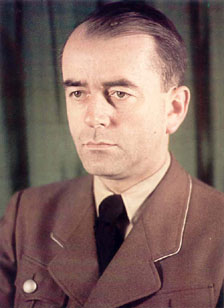
http://www.jzg23.de/images/Guncams/ww2_guncam_clip0001.mpeg

Hellfighter
You've got to wonder, if the Allies new there were such lethal Aces tearing holes in their sky fleets [114 bombers = a bit under 1000 skilled aircrewmen casualties/or captured!], would they send commandos and agents to track them down and knock them off! Speculation.......
FeezyWeezy
It was hard to figure out who killed who at most times. Sending comandos out to kill a individual is just...wrong. These are all normal soldiers that are doing the job that they are told to do. It would make more sense to send a SAS taskforce to, for instance NJG1. And kill thewhole lot..
But still.. I think doing this is extreamly risky.. you have to go far into enemy tertory. And there is a great chance anyway that these regular people get killed during the next periods by doing their job.Its like focusing efforts on a individual, sort of "blaming" him because hes just good at the job hes ment to do.I would putt effort into the people behind the scenes. The man in charge. The man that makes him shoot down bombers.

"It is war: if the enemy burns your house down, you go and burn one of the enemy's houses!" -
Juutilainen

About his record he has been noted to say:
"I did what I was told to as well as I could." - Häyhä


Its all: Kill or be killed...If you dont take down that enemy bomber, He'll be back next time for your house.
Take down the leaders, then the soldiers won't know what to do.


[/size]

Boris Ivanovich Kovzan

IPB Image

He was born in 1922. Boris Ivanovich, the native of our city they called as "man from legend". He 4 times rammed in air enemy planes within Great Patriotic war.

Since the first days of war, Kovzan Boris was in army and covered from enemy bombers Gomel city (Belorussia).

On October 29, 1941 Kovzan, having arrived in 42-nd fighters of air regiment, battled under Tula.

Here, for the first time in the battle practice, has accepted the decision to go on the collision. It was the unique chance to leave by the winner from fight and Kovzan has won. When the ammunition was finished, pilot has directed the fighter on "ME-5" and compartment tail part of it. Skillfully operating the damaged machine, he has made landing to air station. After some months in area Torghok, Kovzan have gone on collision second time.

For unprecedented courage and skill of the fight with an enemy Kovzan Boris was awarded with an order by Lenin. Battling on Northwestern front, in area Old Russa, Kovzan Boris twice applied collision.

At last impact, when both planes have scattered, heavy wounded pilot has allowed to open a parachute. After that fight, within 3 months Kovzan Boris was on treatment, and then was direct in 144 fighters brigade AAD.

In a strip of near rear, he battled to the enemy planes - scouts. Dews the battle account dropped down by him of planes. For bravery and courage shown in fights with enemy Kovzan is awarded with eighteen governmental awards.

On August 24, 1943 to him appropriated a rank of the Hero of the Soviet Union.

After war, Kovzan Boris has finished military-air academy and in a rank of the lieutenant colonel has continued a military service.

Until August 31, 1985 lived at city Ryazan, where has died and is buried.

He ended with a score of 28.


[size="1"]Ramming attack was a tactic in air combat. The goal is to either outright ram the enemy aircraft or to destroy its controls using either the attackers propeller or wing. It was often practised when pilot ran out of ammunition and was too eager to destroy an enemy, or his plane had already been damaged. A ramming attack is not the same as
kamikaze attack since the pilot stands a fair chance of surviving, though it was very risky. Ramming was used in air warfare in the first half of the 20th century, in both World Wars and in the interwar period.

Ramming was first used by the Russian pilot, Pyotr Nesterov on September 8, 1914, against an Austrian plane. That incident was fatal to both parties.

In World War II ramming (Russian: taran) became a legendary technique of VVS pilots against the Luftwaffe, especially in the early days of the hostilities in the war's Eastern Front. In the first year of the war, the Soviet machines were considerably inferior to the German ones and the taran was sometimes perceived as the only way to guarantee the destruction of the enemy. Trading an outdated fighter to a technologically advanced bomber was considered a good trade. In some cases, heavily wounded pilots or in damaged aircraft decided to perform a suicidal taran attack against air, ground or naval targets, similar to kamikaze (see Nikolai Gastello).

The first taran attack in World War II was carried out by the Polish pilot, Lt. Col. Leopold Pamuła on his damaged PZL P.11c on September 1, 1939, over Łomianki near Warsaw (taran is also a Polish word).

Nine rammings took place on the very first day of German invasion to the Soviet Union. About 200 (some estimates give the number closer to 500) taran attacks were made by Soviets between the beginning of Operation Barbarossa and the middle of 1943 when enough modern aircraft had been produced to make the tactic obsolete, even if Russian fighter pilots still are trained to perform it. Boris Kovzan survived the record of four ramming attacks in the war.


Three types of taran attacks were made:

Using the propeller to go in from behind and chop off the controls in the tail of the enemy aircraft. This was the most difficult to perform, but it had the best chance of survival.

Using the wing to cut off the wing or tail of the enemy aircraft. Some Soviet aircraft like Polikarpov I-16 had strengthened wings for this purpose.

Direct ram was the easiest to perform, but also the most dangerous.


More Masters of Ramming will come later. biggrin.gif
(and a bit more, I hope.. Wasn't much about Kovzan...sad.gif )


Hellfighter
QUOTE(FeezyWeezy @ 03/28/06 3:59pm) *
It was hard to figure out who killed who at most times. Sending comandos out to kill a individual is just...wrong. These are all normal soldiers that are doing the job that they are told to do. It would make more sense to send a SAS taskforce to, for instance NJG1. And kill thewhole lot..
But still.. I think doing this is extreamly risky.. you have to go far into enemy tertory. And there is a great chance anyway that these regular people get killed during the next periods by doing their job.Its like focusing efforts on a individual, sort of "blaming" him because hes just good at the job hes ment to do.I would putt effort into the people behind the scenes. The man in charge. The man that makes him shoot down bombers.

"........


Maybe some misunderstanding here.... It's really all about speculation...
[I edited out a blob here, lol]

1) Speculating.... Depending on where the Ace would be quartered, commandoes or SOE could be sent out to take out a guy who singlehandedly [ok Me110s had two aircrew] tookout the equivalent of several squadrons of bombers.... Allied Bomber aircrew morale was extremely shaken by such ordeals in their missions..... So speculation wouldn't be 'wrong' if the Allies knew they had a chance on getting such a lethal individual.

2]Quite a few 'select' Allied and Axis commando missions in WW2 were near-suicidal too- deep into enemy territory and extremely risky - operatives signing up into these forces knew very well if captured there fate would likely not end up in a POW camp - in one Brit commando raid, several captured commandos were put to death by air bubbles injected into their veins! So 'risky' for special forces in armies of WW2 days was not the exception.

3] Risky raids of WW2 would not be frowned upon as they would be in today's world - where political consequences of failure are far greater. Back then, the idea "all's fair in war" was not frowned upon. Even Churchill, upset by German Rocket bombings over England, had to be dissuaded by his staff for bringing up the serious idea of retaliating on German cities with Poison Gas!!!

4] You perhaps think I'm belittling these Ace's 'work'. My speculation was about being practical in reducing the slaughter such tenacious fighters can wreak. Noone's blaming soldier's for doing there 'job'.... it's war - understandably everyone's doing what they can to fulfil their duty! In a previous post about an Ace you detailed the vast amount of resources Stalin put into trying to get this airman in particular captured/killed. Being 'good' at killing while looked upon professionally sometimes by the enemy with grudging admiration, might not put off a special effort being made to take him out so that many comrades have a greater chance of returning home safely if that threat is removed. But I see how you maybe shifting my point though.... I feel the same way you do when I read about sieges throughout history where defenders doing a 'good job' defending against besiegers are more often than not slaughtered should the attackers finally break the defence - as in 'no quarter'- the attackers blame their retribution on the defenders for them not giving up easily.

ps,Feezy I know you got tons of articles lined up..... but anychance you can do SOEs [Special Operations Executive], male and female.
Hellfighter
QUOTE(FeezyWeezy @ 03/28/06 3:59pm) *

[size="1"]Ramming attack was a tactic in air combat. The goal is to either outright ram the enemy aircraft or to destroy its controls using either the attackers propeller or wing. It was often practised when pilot ran out of ammunition and was too eager to destroy an enemy, or his plane had already been damaged. A ramming attack is not the same as
kamikaze attack since the pilot stands a fair chance of surviving, though it was very risky. Ramming was used in air warfare in the first half of the 20th century, in both World Wars and in the interwar period.


Interestingly, I recently watched a Battle of Britain documentary... they had a segment with a female air-ground staff coordinator mentioning the dialogue she heard of Brit pilots in battle. She recalled an instance of a badly wounded Brit pilot making a kamikaze ram attack.
FeezyWeezy
Special Operations Executive

When Henri-Philippe Petain signed an armistice with Nazi Germany on 22nd June, 1940, the British government began to consider what it could do to help those French people who wanted to continue fighting. A meeting was held at the Foreign Office on 1st July and the following day Hugh Dalton, Minister of Economic Warfare, wrote to Lord Halifax, the Foreign Secretary, suggesting "a new organization to co-ordinate, inspire, control and assist the nationals of the oppressed countries who must themselves be the direct participants."

Lord Halifax passed the letter onto Neville Chamberlain and Winston Churchill and after much discussion it was decided to ask Hugh Dalton to implement the project. Churchill directive to Dalton was "now set Europe ablaze." The new organization became known as Special Operations Executive (SOE) and the staff were given an office at 64 Baker Street in London.

Colonel Colin Gubbins was Director of Operations and Training at SOE. Those recruited usually had considerable experience of the country they were to be sent to help the local resistance. Recruits were sent for initial training to Wanborough Manor near Guildford. Later they would be toughened up for the field by attending a commando course in the Scottish highlands. They were taught how to use guns and explosives, sabotage, wireless telegraphy, and how to live secretly in occupied territories. They also needed to master the techniques of unarmed combat and silent killing.

Some members of the armed forces were unhappy about this type of warfare. Air Chief Marshal Charles Portal, the chief of the air staff, wrote to a fellow officer: "I think that the dropping of men dressed in civilian clothes for the purpose of attempting to kill members of the opposing forces is not an operation with which the Royal Air Force should be associated. I think you will agree that there is a vast difference, in ethics, between the time honoured operation of the dropping of a spy from the air and this entirely new scheme for dropping what one can only call assassins."

In 1940 Colin Gubbins made contact with the commandant of the First Aid Nursing Yeomanry and arranged for her to provide personnel for the SOE. At first the women were used to produce passports, ration cards, and other forged documents for use in occupied Europe. They were also employed to transmit, encode and decode messages to and from the field.

SOE agents were sent to any country under the occupation of Nazi Germany including France, Belgium, Netherlands, Poland, Denmark and Yugoslavia. The SOE was extremely active in helping the French Resistance. The French Section of the SOE was led by Maurice Buckmaster. His deputy was Major Nicholas Bodington and Vera Atkins was put in charge of preparing the agents for the field.

In April 1942, Winston Churchill gave his approval for women in the SOE to be sent into Europe. It was argued that women would less conspicuous than men. In countries such as France women were expected to be out and around whereas the Gestapo were suspicious of men on the streets. Women were used as couriers and wireless operators. Women were never sent to Europe as circuit leaders although Pearl Witherington became leader of the Wrestler Network after the arrest of Maurice Southgate in May 1944. She organized over 1,500 members of the Maquis and they played an important role fighting the German Army during the D-Day landings.

During the Second World War the SOE sent 470 agents into France including 39 women. This included Jack Agazarian, Claude de Baissac, Lise de Baissac, Gustave Bieler, Yolande Beekman, Andrée Borrel, Francis Cammaerts, Peter Churchill, Madeleine Damerment, Henri Dericourt, Victor Gerson, Christine Granville, Virginia Hall, Noor Inayat Khan, Andrezej Kowerski, Cecily Lefort, Vera Leigh, Gilbert Norman, Sonya Olschanezky, Harry Peulevé, Eliane Plewman, Harry Rée, Lilian Rolfe, Diana Rowden, Odette Sansom, George Starr, Brian Stonehouse, Francis Suttill, Violette Szabo, Michael Trotobas, Edward Yeo-Thomas, Nancy Wake, Pearl Witherington and Yvonne Rudelatt.

SOE wireless operators took with them a short-wave morse transceiver that could send and receive messages. It weighed 30 pounds and fitted into a two foot long suitcase. Its frequency range was 3.5 to 16 megacycles a second. The main problem for the operator was that the transceiver needed seventy feet of aerial to function properly.

It was estimated that in towns it would take the Germans around 30 minutes to discover where the transceiver was being used. Where possible, operators worked in isolated areas. They were also under strict instructions to transmit briefly, at irregular intervals, at various wavelengths and from various places.

Each wireless operators was instructed to always spell certain words incorrectly. The reason for this was that if the Germans captured the operator and code books and tried to use the transceiver to trap other agents, the SOE in London would be able to discover what had happened and would warn all its agents in the field.

SOE agents were taught that once captured they must try to stay silent when interrogated by the Gestapo for 48 hours. During that time all the people who had been in contact with the arrested agent were supposed to move house and cover their tracks.

In 1942 the SOE decided to establish a new network in and around Paris. Called Prosper it was to be led by Francis Suttill. On 24th September, 1942, Andrée Borrel was parachuted into France to prepare the way for Suttill who arrived on 1st October. A wireless operator, Gilbert Norman arrived in November and a second operator, Jack Agazarian, arrived the following month.

On 22nd January 1943, Henri Déricourt, a former pilot in the French Air Force, arrived back in France. His main task was to find suitable landing grounds and organize receptions for agents brought by air. He worked mainly for the Prosper Network and over the next few months he arranged the transport by plane of over 67 agents.

Jack Agazarian became increasing concerned about the loyalty of Henri Déricourt and after being taken out of France on 16th June, he passed on these fears to Nicholas Bodington and Maurice Buckmaster. However, they were unconvinced and refused to recall Déricourt to Britain.

On 23rd June, 1943, three key members of the network, Andrée Borrel, Francis Suttill and Gilbert Norman, were arrested by the Gestapo. When Noor Inayat Khan discovered what happened she reported back the disaster to the Special Operations Executive in London.

The three agents were taken to the Gestapo headquarters at 84 Avenue Foch. Francis Suttill was tortured for several days and according to Ernest Vogt he eventually did a deal with the Germans. This included Suttill giving the Germans details of ammunition dumps in exchange for the promise that the people guarding them would not be killed. However, according to another German agent, Joseph Kieffer, it was Gilbert Norman who gave the Gestapo this information.

In July, 1943, Nicholas Bodington persuaded Maurice Buckmaster to let him go to France to find out what had happened. Jack Agazarian was recalled from leave and the two men were taken to France.

Messages from the wireless owned by Gilbert Norman were still being sent to the Special Operations Executive in London. Instructions were passed on to Bodington by the SOE to arrange a meeting with Norman at the address he had sent them. Bodington later claimed that he and Agazarian tossed to decide who should visit the address. Agazarian, who was convinced it was a trap, lost, and when he arrived at the address he was immediately arrested. Over the next few months Gilbert Norman, Francis Suttill, Andrée Borrel, Jack Agazarian and Noor Inayat Khan, were all executed.

A more successful circuit was the Jockey Network led by Francis Cammaerts. By the autumn of 1943, Cammaerts had established a network of small independent groups up and down the left bank of the Rhone Valley. He developed a secure system where although he knew how to get in touch with members of the group, they had no idea where he was living and could only leave messages for him in letter boxes (somebody with whom one could leave a message to be collected later by another person giving the right password).

Cammaerts's two main lieutenants sent by the SOE were Cecily Lefort and Pierre Reynaud. In September 1943 Lefort was arrested while visiting the house of a corn-merchant at Montélimar. She was tortured by the Gestapo but the system Cammaerts had set up enabled the Jockey Network to survive. On 6th July 1944 Lefort was replaced by another woman agent from Britain, Christine Granville.

By the time of the D-Day landings Cammaerts had built up an army of 10,000 men and women. His area of operations went from Lyons to the Mediterranean coast and to the Italian and Swiss frontiers.

It is estimated that around 200 agents lost their lives. Most of these were executed on instructions from Adolf Hitler in September 1944 and March 1945. Those who did not return included Jack Agazarian, Gustave Bieler, Yolande Beekman, Andrée Borrel, Madeleine Damerment, Noor Inayat Khan, Cecily Lefort, Vera Leigh, Gilbert Norman, Sonya Olschanezky, Eliane Plewman, Lilian Rolfe, Diana Rowden, Odette Sansom, Francis Suttill, Violette Szabo, Michael Trotobas and Yvonne Rudelatt.


Thorsteinn Jonsson

IPB Image

Thorsteinn Jonsson is Iceland's only ace! Born in Reykjavik in 1921, his father was Icelandic and his mother was English. He grew up in Iceland but as a young child traveled to England often for visits. Jonnson was an adventurous and high-spirited lad and at age 18 left boarding school.

He hitched a ride on a fishing trawler bound for England -- his goal was to become a fighter pilot. After two months working through the bureaucracy, he was permitted to join the Royal Air Force. Jonsson attended ground school during the Battle of Britain and then began flying training in October 1940. His first flight was in a DeHavilland Tiger Moth and he went on to complete advanced training in the Supermarine Spitfire. At first he was posted to a Hawker Hurricane squadron in Scotland as a sergeant but soon transferred to 111 Squadron near London to fly Spitfires. Jonsson was soon promoted to flight sergeant and saw his first combat flying sweeps over the English Channel and the coast of France.

Over France, the 111 Squadron was met by German fighter units including the famous "Abbeville Boys" who had been led by 104 victory ace Adolph Galland. In October 1942, his squadron shipped out to Gibraltar, and on 11 November, after the Operation Torch landings in North Aftrica, they deployed to an airfield in Algeria. In the next two weeks, Jonsson was credited with three Luftwaffe aircraft destroyed and one probable. He scored another victory in early 1943 and then was sent to Scotland for "rest" as an instructor in a training unit. Shortly, King George VI personally presented Jonnson with a Distinguished Flying Medal. In January 1944, he reported to 65 Squadron to again fly Spitfires, but the unit soon converted to the North American Mustang III. Jonsson would become an ace over Normandy in June 1944 when he downed two Focke Wulf 190s. During the war, Jonsson's victories included 8 aircraft destroyed, 1 probable, and 2 damaged.

http://www.loftleidir.com/ http://www.asstr.de/HTML/tf-fiw.jpg
http://www.icelandair.com/ http://www.boeing.com/randy/images/icelandair787_lg.jpg
http://www.cargolux.com/ http://thetrek.co.uk/images/Cargolux%20_%20Dacid.JPG

In 1946, Jonsson left the RAF and returned to Iceland. With Icelandic pilot license number 13, he joined Icelandair. In the late 1950s, he flew for Sabina in the Congo, but in 1960 returned to Iceland and flew for Loftleidir and Icelandair. Later, during the Nigerian civil war, he flew food and medicine on 413 perilous humanitarian missions into Biafra. After dodging Nigerian MiGs for a year and a half, he moved to Luxembourg and flew Douglas DC-8s and later Boeing 747s for Cargolux. He flew worldwide until March 1987 when he went into active retirement.

His books include Dancing in the Skies which relates his childhood and World War II experiences. His second book in Icelandic and a draft in English cover his years as an airline pilot. His works have all been bestsellers in Iceland.

IPB Image
Thorsteinn Jonsson in 2002

15 November 1942 was one of the most memorable days of Jonsson's life. "I scored my first victory, came very close to being blown sky high, and suffered my first, and only wound from enemy action." Jonsson's day began in his Spitfire with a dawn chase through the clouds and a shootdown of a German bomber. After lunch, a delayed action bomb, buried in the latrine, exploded just as he approached. In the afternoon, four German fighters strafed the flightline. Jonsson sprinted for a ditch, dove in, and cut his knee on a rusty tin can.


UNDEAD 1
before i played cod i played bf 1942. that was the only multiplaayer that had the same battle tactics as cod but had planes as well. i think united offensive is the best gameplay ww2 shooter but it needs planes. how can they make desert maps with out planes (el alimien ,gazala etc..) these articles ive read here reminds me of playing that game for some reason because you could fly the me109 ,spit,p51must,corsair and having the air support was crucial .if you had an idiot up there or a selfish player your team would get ownd.im suprised not that many people played bf42 or talk about it .i miss flying missions,hehe!


the maps in cod that are missing planes bigtime are -kursk (big time),BARB,smol ,pon and italy

cod2 -never make a desert map other than aberdeen with out planes!!!

FeezyWeezy
Matthäus Hetzenauer

Born on December 23rd 1924 in Steiermark, Matthäus Hetzenauer was a German sniper serving on the Eastern Front of the Second World War, and was credited with shooting 345 enemies. Hetzenauer trained as a sniper from March 27th through July 16th 1944, before being assigned to the 3rd Gebirgsjäger Division, issued both a K98 rifle with 6x scope and a Gewehr 43 rifle with 4x scope.

On November 6th 1944, he suffered head trauma from artillery fire, and was awarded the Verwundeten-Abz three days later.

IPB Image
Award given to soldiers that where injured.


Awarded the Ritterkreuz on April 17th 1945, Hetzenauer was captured by Soviet troops the following month, and eventually served 5 years in a Soviet prison camp.

His longest confirmed kill was alternatingly reported at 1000 or 1100 metres.

He died on either October or November 3rd 2004, after several years of deteriorating health.

[/size]

Other germans snipers, just like Mr. Hetzenauer, seem to be good at hiding... only the disputed König.


Anthony Beevor himself, probable one of the most educated men on the Battle of Stalingrad said this:

'I've been through the Soviet Ministry of Defense's archive in Podolsk and there is no record of such a duel.'


William Craig's book 'Enemy at the Gate: The Battle of Stalingrad' describes a sniper duel on Mamaev Hill and the Red October Plant in Stalingrad, in the fall of 1942. The fact is, Zeitzev himself never admitted this battle occurred. Soviet War Records never show that this battle occurred. The fact is, it didn't.

Think about it, if this SS-Sturmbannführer Koenig, it has been stated that he had almost 400 kills. Gefreiter Matthäus Hetzenauer, a German sniper, he had 345 confirmed kills, he was Germany's best sniper ever and Germany's highest scoring sniper of WW2. I think he died a few years ago.

Anyway, Hetzenauer received his Ritterkreuz when he got his 145th kill. It seems weird that a man with 400+ kills doesn't receive such an award and doesn't even exist on paper.

But, there is also the existence of a man named Thorwald. He supposedly was a SS-Obersturmbannfuehrer in the Waffen SS. There is also one little problem in this theory, HE DIDN'T EXIST EITHER. There is also no evidence to support his existence. The fact is, these men are high ranking officers. They are Majors and Colonels. Usually, a sniper in the field hardly ever excided the rank of SS-Oberstlieutenant. Having an Obersturmbannfuehrer or even a Sturmbannführer in the field of battle was extremely unlikely, even in the worst situations.


[size="3"]THE GERMAN SNIPERS

The following article first appeared in the official Austrian military publication called TRUPPSNDEINST (Troop Service) in the year 1967 and was written by an Austrian Army Officer, Captain Hans Widhofner. Among persons questioned were the two most proficient German snipers of the war with the comments of another good sniper added to obtain a well-rounded picture concerning the use of snipers in the German army.

Questions asked of the Snipers

Widhofner questioned three seasoned snipers individually. They are designated in the order A, B and C. All three were members of the Third Mountain Division of the former German Army. With respect to their person please note the following:

A. Matthais Hetzenauer of Tyrol fought at the Eastern Front from 1943 to the end of the war, and with 345 certified hits is the most successful German sniper.

B. Sepp Allerberger of Salzburg fought at the Eastern Front from December 1942, to the end of the war, and with 257 certified hits is the second-best German sniper.

C. HelMut Wirnsberger of Styria fought at the Eastern Front from September 1942, to the end of the war and scored 64 certified hits (after being wounded he served for some time as instructor on a sniper training course).

1. Weapons used?

A. K98 with six-power telescopic sights. G43 with four-power telescopic sights.

B. Captured Russian sniper rifle with telescopic sight; I cannot remember power. K98 with six-power telescopic sights.

C. K98 with 1.5-power sights. K98 with four-power telescopic sights. G43 with four-power telescopic sights.

2. Telescopic sights used?

A. Four-power telescopic sight was sufficient up to a range of approximately 400 meters, Six-power telescopic sight was good up to 1,000 meters.

B. Used for two years a captured Russian rifle with telescopic sight; yielded good results, Six-power telescopic sight mounted on K98 was good.

C. 1.5-power telescopic sight was not sufficient; four-power telescopic sight was sufficient and proved good.

3. What is your opinion on increasing the magnification of your telescopic sights?

A. & B. Six-power was sufficient. There was no need for stronger scope. No experience with greater magnification.

C. Four-power is sufficient in both cases.

4. At what range could you hit the following targets without fail?

A. Head up to 400 meters. Breast up to 600 meters. Standing Man up to 700-800 meters.

B. Head up to 400 meters. Breast up to 400 meters. Standing up to 600 meters.

C. Head up to 400 meters. Breast up to 400 meters. Standing Man up to 600 meters.

5. Do the ranges indicated by you apply only to you, i.e. the best snipers, or also to the majority of snipers?

A. & B. Only to the best snipers.

C. To me personally as well as to the majority of snipers. A few outstanding snipers could hit also at longer ranges.

B added: Absolutely positive hitting is possible only up to about 600 meters.

6. What was the range of the furthest target you ever fired at, and what kind of target, size?

A. About 1,000 meters. Standing soldier. Positive hitting not possible, but necessary under the circumstances in order to show enemy that he is not safe even at that distance! Or superior wanted to satisfy himself about capability.

B. 400 to 700 meters.

C. About 600 meters, rarely more. I usually waited until target approached further for better chance of hitting. Also confirmation of successful hit was easier. Used G43 only to about 500 meters because of poor ballistics.

7. How many second shots / Additional shots were necessary per ten hits?

A. Almost never.

B. One to two. Second shot is very dangerous when enemy snipers are in the area.

C. One to two at the most.

8. If you had a choice, what weapon would you use and why?

A. K98. Of all weapons available at that time it had the highest accuracy for permanent use, besides it did not jam easily. G43 was only suitable to about 400 meters. It also had inferior precision.

B. K98 was best. The G43 was to heavy.

C. The G43 would be good if it did not jam easily and its capacity was as good as K98.

9. Today if you had the choice between the K98 and a semi-automatic rifle that does not easily jam and has the same capacity as the K98, which weapon would you take and why?

A. Snipers do not need a semi-automatic weapon if they are correctly used as snipers.

B. Semi-automatic loader, if its weight does not increase.

C. Semi-automatic loader. Faster firing possible when attacked by the enemy.

10. Were you incorporated into a troop unit?

All three belonged to the sniper group of the battalion. C was the commander of this group. They numbered up to 22 men; six of them usually stayed with battalion, the rest were assigned to the companies. Observations and use of ammunition as well as successful hits had to be reported daily to the battalion staff. In the beginning, the snipers were called up cut of the battalion, as the war continued and the number of highly-skilled snipers decreased, they were often assigned and given their orders by the division. In addition, a few marksmen in each company were equipped with telescopic sights. These men did not have special training but were able to hit accurately up to about 400 meters and carried out a great deal of the work to be done by "actual snipers". These specially equipped riflemen served in the company as regular soldiers. This is why they could not achieve such high scores as the "snipers".

11. Strategy and Targets?

a. Attack:

A, B, C, Always two snipers at a time; one shoots, the other spots. Usual general order:- Elimination of observers, of the enemy's heavy weapons and of commanders, or special order, when all important or worthwhile targets were eliminated; for example! Anti-tank gun positions, machine gun positions. Etc. Snipers followed closely the attacking units and whenever necessary. Eliminated enemies who operated. Heavy weapons and those who were dangerous to our advance.

A added: In a few cases, I had to penetrate the enemies main line of resistance at night before our own attack. When our own artillery had opened fire. I had to shoot at enemy commanders and gunners because our own forces would have been too weak in number and ammunition without this support.

B. Attack during night:

A, B, C, As far as we can remember, no major attacks during night were conducted, snipers were not used at night; they were too valuable.

C. Winter attacks:

A. Clothed in winter camouflage I followed behind the front units. When the attack slowed down had to help by engaging machine gunners and Anti tank guns etc.

B, C, Good camouflage and protection against cold was necessary. No extensive ambushing possible.

b. Defense:

A, B, C, Usually on my own within company detachment; order fire at any target or only worthwhile targets. Great success during enemy attacks since commanders can often be recognized and shot at long range due to their special clothing and gear such as belts crossed on chest, white camouflage in winter, etc. As a consequence, enemy's attack was prevented in most cases. Shot the respective leaders of enemys attack eight times during one attack. As soon as enemy snipers appeared we fought them until they were eliminated; we also suffered great losses. As a rule, the sniper watched for worthwhile targets at the break of dawn and remained in position until dusk with few interruptions. We were often in position in front of our own lines in order to fight the enemy more successfully. When enemy knew our position, we were forced to remain without provisions or reinforcements at such advanced position. During alarm or enemy attack, a good sniper did not shoot at just any target, but only at the most important ones such as commanders, gunners, etc.

e. Defense during night:

A, B, C, Snipers not used during night; not even assigned to guard duty or other duties. If necessary he had to take position in front of own lines in order to fight the enemy more effectively during the day.

12. Did you score successful hits by moonlight?

A. I was often called to action when there was sufficient moonlight since reasonably accurate hitting is possible with a six-power telescopic sight, but not with point and rear sight.

B. C. No.

g. Delaying action:

A, C, In most cases four to six snipers were ordered to rear guard and eliminate any enemy appearing; very good results. Use machine guns for rear guard only in emergencies since snipers delayed enemy's advance by one or two hits without easily revealing his own position.

B. No actual use of snipers, actual sniping not possible in mobile warfare since anybody shoots at appearing enemy.

12. In what warfare could the sniper be most successful?

A. The best success for snipers did not reside in the number of hits, but in the damage caused the enemy by shooting commanders or other important men. As to the merit of individual hits, the snipers best results could be obtained in defense since the target could be best recognized with respect to merit by careful observation. Also with respect the numbers, best results could be obtained in defense since the enemy attacked several times during a the day.

B. Defense. Other hits were not certified.

C. Best results during extended positional warfare and during enemy attacks; good results also during delaying action.

13. Percentage of successful hits at various ranges?

Up to 400 meters A. 65 percent C. 80 percent

Up to 600 meters A. 30 percent C. 20 percent

Additional information: A. This is why about 65 percent of my successful hits were made below 400 meters.

B. Do not remember. Mass of hits were below the range of 600 meters.

C. Shot mainly within range of 400 meters due to great possibility of successful hit. Beyond this limit hits could not be confirmed without difficulty.

14. Do these percentages and ranges apply to you personally or are they valid for the majority of snipers?

A. This information is applicable to the majority of snipers as well as to the beat snipers, for: the majority of snipers could hit with absolute certainty only within a range of 400 meters due to their limited skills, the best snipers could hit with reasonable certainty at longer ranges; they in most cases, however, waited until enemy was closer or approaching the enemy in order to better choose the target with respect to its merit.

B. Information is applicable to all snipers known to me in person.

C. Information is applicable to myself as well as to the majority of snipers.

15. On the average, how many shots were fired from one position ?

a. Attack:

A, B, C. As many as necessary.

b. Defence from secure position:

A, B, C, One to three at most.

c. Enemy attack:

A, B, C, Depending on worthwhile targets.

d. Combat against enemy snipers:

A, B, C, One to two at most.

e. Delaying action:

A, B, C, One to two was sufficient since sniper was not alone.

B added: During own attack as well as enemy's attack, hits were not confirmed.

16. What else is especially important in addition to excellent marksmanship?

A: Besides the generally known quality of a sniper it is especially important to be able to outsit the enemy. The better "Tactician at detail" wins in combat against enemy snipes. The exemption from commitment to any other duties contributes essentially to the achievement of high scores.

B. Calmness, good judgment courage.

C. Patience and Perseverance, excellent sense of observation.

17. From what group of persons were snipers selected?

A. Only people born for individual fighting such as hunters, even poachers, forest rangers, etc without taking into consideration their time of service.

B. Do not remember. I had scored 27 successful hits with Russian sniper rifle before I was ordered to participate in sniper training course.

C. Only soldiers with experience at the front who were excellent riflemen; usually after second year of service; had to comply with various shooting requirements to be accepted in the sniper training courses.

18. In what sniper training courses did you participate?

A, B, C: Sniper courses at the training area Seetaleralpe.

C. I was later assigned to the same course as an instructor.

19. Was it advisable to equip the sniper with a double telescope? What magnification did the double telescope have?

A. 6 x 30 enlargement was insufficient for longer distances. Later I had a 10 x 50 telescope which was satisfactory.

B. Double telescope was equally important as rifle. No further information.

C. Every sniper was equipped with a double telescope. This was useful and necessary. An enlargement of 6 x 30 was sufficient up to a range of about 500 meters.

20. Would you prefer a periscope which allows observation under full cover?

A. Was very useful as supplement (Russian trench telescope).

B. No.

C. Was used when captured.

21. Were scissor stereo telescopes (positional warfare) used?

A, C. Yes, when available. Was used mutually by sniper and artillery observer.

B. No.

22. What type of camouflage was used?

A,B,C. I have never used a fake tree stump, but I have used camouflage clothing. Camouflage of my face and hands and camouflage of my weapon in winter. (White cover, white wrapping, white paint)

B added: For two years I used an umbrella which was painted to match the terrain. In the beginning I always camouflaged face and hands well. Later on, less often.

23. Did you use technical means to mislead the enemy?

A. Yes, stuffed dummies, etc.

B. Yes; for example, dummy position with installed carbines which could be fired by means of a wirepull.

C. No.

24. Did you use protective shields in positional warfare?

A, B, C. No.

25. What is your opinion on the use of tracer ammunition?

A, B, C. If possible, they should not be used at all in combat since they have easily revealed the position of the sniper. Tracer ammunition was mainly used for practice shooting as well as ranging at various distances. For this purpose every sniper carried with him a few tracer cartridges.

26. Did you use observation ammunition, i.e. cartridges that fired projectiles, which detonate upon impact?

A, B, C. Yes; upon impact a small flame as well as a small puff of smoke could be seen which allowed good observation of impact. By this method we could force the enemy to leave wooden houses, etc by setting tire to them.

Observation cartridges were used up to a range of about 600 meters; their dispersion was somewhat larger than that of heavy pointed cartridges (heavy pointed bullet).

27. How did you overcome side wind?

A. By my own judgment and experience. When necessary, I used tracer ammunition to determine wind drift. I was well prepared for side wind by my training at Seetaleralpe where we practiced often in strong winds.

B. By own judgment. We did not shoot when side wind was too heavy.

C. No explanation since snipers do not shoot with strong winds.

28. Can you recall the rules pertaining to your behavior when shooting at moving targets?

A, B, C: No; importance is own judgment and experience as well as fast aiming and fast firing.

29. Do you have any experience with armor piercing rifles?

A. Yes, several times I have fought against a "machine-gunner with a protective shield". I could hit small targets only up to 300 meters since dispersion was considerably larger than with K98. Besides, it was very heavy and clumsy and was not suitable as a sniper weapon. I did not use it against unarmored targets.

B, C. No.

30. What was the method by which your hits were certified?

A, B, C, By observation and confirmation by an officer, non-commissioned officer or two soldiers. This is why the number of certified hits is smaller than the actual score.

FeezyWeezy
QUOTE(UNDEAD 1 @ 03/29/06 6:06pm) *
before i played cod i played bf 1942. that was the only multiplaayer that had the same battle tactics as cod but had planes as well. i think united offensive is the best gameplay ww2 shooter but it needs planes. how can they make desert maps with out planes (el alimien ,gazala etc..) these articles ive read here reminds me of playing that game for some reason because you could fly the me109 ,spit,p51must,corsair and having the air support was crucial .if you had an idiot up there or a selfish player your team would get ownd.im suprised not that many people played bf42 or talk about it .i miss flying missions,hehe!


Well I think I could call myself one of the true BF '42 Aces of Europe.

CCBP Kayro

Kursk, I was flying a Yak 1

I had my aim on the stuka who was flying from the russian barn towards the Russian lumbercamp. Distance was 600m. So I ddint shoot. I let him go and turned above the lumber camp right.. flying directly over the unoccupied flad20mm. I spotted to my Right a Me-109 taking off and I noticed that to my left the stuka was dropping bombs on our russian T34s. so I turned on to the right untill I ended up left from where I first was. Lined up at the same hight as the low flying Stuka. I Had more speed than the stuka so he was easy pickings, I got at his 7 and shot a burst in his cockpit and engine.. He parashuted out and got sniped.

I was now flying towards the russian airflied and noticed the Me-109 to my left, over the lumbercamp tank spawn. I made a sharp turn to left and because I saw that he was out of range far time, I started to climb to avoid ground fire. Dropped some bombs at APC's that shot at me.. destroyed the APC and a Panzer IV. I climbed on and saw the ME-109 flying Directly underneat me.. going from the german airfield to the lumbercamp..the otherway I was going (I was going going from the lumbercamp tank spawn to the german airfield). I got my plane upside down and dived as fast as I could, making speed and ending right up behind the ME-109. (I made a looping) Opened fire from a distance of 70m. Like most pilots, when fired upon. they start to fly unpredictible, doing acrobatics. barrel rolls. But this Me, he made a sharp left, followed by a a long sharp right. Trying to outmanouver me. Meanwhile he we where going in a slight dive, and that while we where flying 30m above ground. I Had my aim fixed at the tail and fired. Missed. We now had made a 340 degree turn and now flew 15m above ground.

BOOOOM

His ME 109 embraced a tree near the Lumbercamp. I saw that the same fate would come to me, as I had been tailing him at the end at a distance of 40m. Pulling up wasnt a option, so I made a barrel roll. And I flew passed all the tree's while flying Vertical. Lived on to kill some more tanks.

After this dogfight I had to take a 50 minute break to get calm again. This was like 4 years ago or so so my memories can be vague at times.

This is just a example of the numberous of dogfights I had.


The Mustang was the best plane, very fast. The maps that it was in sucked.
The Spitfire was agile, sturdy and good overall.
The Me-109 was fast and good at killing, good overall.
The Yak 1 was Slow, Rusty and extreamly hard to fly. Crapped mainly.
The Corssair was slow, unpredictible. Disliked flying it.
The Zero, the plain I prevered to fly as the rival of the Zero was the Corssair. Fast Sturdy. Perfect handling.


I could always be found on EA 14, Coral Sea. Flying for the Japanese. Mostly together with my Wingman CCBP Joop (these days hes a member of C3ll, Mastercane)


Radiation
My people are not famous. Maybe in thier own respects. 1 Is my great uncle. His name was Charlie Aker. He was in the medical corps. He was in germany (not sure where). While in the medical corp, he was re-assigned or hidin by his commanders because at the time nazi snipers where targeting medical personel. He was re-assigned to an MP position. He guarded numerous german troops. As a young boy I used to ask him were they vicious and constantly escaping. he told me no. Most of them were just glad it was over. Charlie told me that one guy came into the hospital and had no teeth. He asked the guy what happened and he said that he was in a tank when it was hit. They bailed and encountered german infantry on foot. During a hand to hand fight he wrestled the nazi to the ground and bit into his hand. He said the nazi was in so much pain/adrenaline that he jerked his hand as hard as possible and pulled most of the americans teeth out as they were implanted in the nazi's hand. I take it to be the total truth. Charlie was not the kind to pull your leg or BS. He died of lung cancer on christmas eve a few years back... I miss him.

2nd. A close family friend of mine named Cannoy Rash. I cannot tell you any war stories from him as the one time I asked him about the war. He broke into tears, and it took almost an hour to calm him down. I do know that he was on the front lines of D-Day. I know that many of his close friends died in his arms. He was drafted. Mr. Rash's story is very sad. He was married for like 40years and deeply in love with his wife. She developed alzhiemers and he had to watch her slowly forget even who he was... You have no idea how bad I felt trying to help this guy deal with that... She eventually passed on. Cannoy is still making it. He is 82, and can barely get out of a chair. But he still manages to live. I often forget how fortunate that I am. And then I remember these people... They are unknown to most. But they are my heroes.

Sincerely,
FeezyWeezy
Klaus Barbie

IPB Image

Barbie was born in Bad Godesberg (now Bonn), Germany, and was educated at the Friedrich-Wilhelm Institute. He joined the SS in 1934, immediately after his graduation from the university, and became a member of the NSDAP in 1937.

In 1941, Barbie was posted to the Bureau of Jewish Affairs and sent to Amsterdam and later, in May 1942, to Lyon — there, he earned the sobriquet The Butcher of Lyon as head of the local Gestapo. He committed a number of war crimes, including the capture and deportation of 44 Jewish children hidden in the village of Izieu, and the torture murder of Jean Moulin, the highest ranking member of the French Resistance ever captured. All told, the deportation of 7,500 people, 4,342 murders, and the arrest and torture of 14,311 resistance fighters were in some way attributed to his actions or commands.

IPB Image

From 1945 to 1955, he was protected and employed by British, and then American, intelligence agents, who used his counter-insurgency skills to suppress the leftist resistance to the American and British occupations in Germany, France, Greece, and Italy.

In 1955, after the Americans and British were no longer in need of his services, Barbie, together with his wife and children, moved with American help to Bolivia. He lived in La Paz, Bolivia under the alias Klaus Altmann, where he became a drug lord and narcotrafficker. With Italian terrorist Stefano Delle Chiaie, he took part in the 'Cocaine Coup' of Luis García Meza Tejada, when a notoriously corrupt military regime forced its way to power in Bolivia in 1980.

He was identified in Bolivia as early as 1971 by the Klarsfelds (Nazi hunters), but it was only on January 19, 1983, that a new moderate government arrested and deported him to France.

His trial started on May 11, 1987, in Lyon – a jury trial before the Rhône Court d'Assises. In a rare move, the authorization was granted to film the trial, for its high historical value. The lead defense attorney was Jacques Vergès, who claimed that Barbie's actions were no worse than the ordinary actions of colonialists worldwide, and that his trial was selective prosecution making a difference between victims. The head prosecutor was Pierre Truche.

On July 4, 1987, Barbie was sentenced to life imprisonment for crimes against humanity, and died in prison of cancer four years later at the age of 77.


Herbertus Bikker "Beul van Ommen"

IPB Image

Almost 59 years after the death of Dutch resistance fighter Jan Houtman, the trial of 88-year-old former Nazi SS (Schutzstaffel) member Herbertus Bikker opened on September 8, 2003, in the German district court of Hagen. Bikker is accused of shooting the 27-year-old Houtman to death on November 17, 1944, on a farm in the Netherlands district of Dalfsen.


The trial sheds light on the brutal occupation of the Netherlands by Hitler's National Socialist regime and the terrible consequences for resistance fighters at the hands of both the military secret service and their helpers, Dutch collaborators. That so much time elapsed before Bikker was obliged to stand trial expresses the diffident attitude of German authorities to those responsible for Nazi crimes. The trial was repeatedly adjourned because of the health of the accused, who had not, as in other similar cases, been found from the outset to be unfit for trial.

Herbertus Bikker joined the Waffen SS [the "armed SS," the SS army that numbered 900,000 at its height] during the German occupation of the Netherlands, which lasted from 1940 to 1945. At the time of the offence he was employed in the regular police as a guard in the Erika correction and labour camp, in Ommen. Many camp inhabitants were workers who had resisted forced labour in Germany or who had participated in the resistance to Germany's occupation of the Netherlands.

Bikker belonged to a notorious strike force which made the prisoners' lives a misery. One of their tasks was to carry out raids in the surrounding apartment blocks. They carried out arbitrary arrests of people suspected of being resistance members. They threatened next of kin and plundered residences. They were also notorious for abusing and killing prisoners. Because Bikker was particularly infamous for hunting down underground fighters ("Onderduikers") he was known to camp prisoners as the "butcher of Ommen."

After the fall of the Nazi dictatorship in May 1945 and the liberation of the Netherlands, Bikker was initially sentenced to death in 1949 by a Netherlands court. After an appeal the sentence was altered to life imprisonment. On December 26, 1952, Bikker and six other convicted war criminals, all members of the Dutch Waffen-SS or the secret police, managed to escape from the prison in Breda. They fled over the German-Netherlands border and reported to a German police station. There they were told to pay a 10 deutsche mark fine for illegally crossing a border and were able to continue their escape unhindered. They received assistance in Germany from former SS members who were once again occupying influential positions.

The legal basis upon which authorities refused to extradite Bikker and other escapees to the Netherlands rested upon a "Fuhrer-edict" decreed in May 1943, which designated them to be German nationals. Thus, according to the German constitution of 1949, they could not be turned over to other countries. The "Fuhrer-edict" guaranteed German citizenship to all those who were members of Hitler's Nazi party or who were members of the German armed forces.

Bikker was summoned to appear before a Dortmund court in the mid-1950s, but the case was discontinued due to "lack of evidence." The Netherlands' courts were reluctant to hand over their evidence to the German courts because they distrusted the many Nazi judges who had continued in seamless fashion in their posts after the fall of the Third Reich.

Bikker lived undisturbed in Hagen in North-Rhine Westphalia for the next 50 years. It was only by virtue of Bikker's own boast of having shot Jan Houtman, in a 1997 interview with Stern reporter Werner Schmitz, that a lawsuit was finally undertaken. Describing the events on November 17, 1944, as he lined up and shot Houtman, a member of the resistance group "knokploeg," Bikker told Schmitz, "And then I gave him the final shot."

IPB Image

Some 10 years ago, the Dutch law journalist and Nazi hunter, Jack Koistra, traced Herbertus Bikker to his residence in Hagen. After this was reported on Dutch television, the minister of justice in The Hague demanded Bikker's immediate extradition—a move rejected by German authorities. In November 1995, German and Dutch members of anti-fascist groups along with a few surviving resistance fighters demonstrated outside Bikker's Hagen apartment, calling out, "Herbertus Bikker is a murderer." They were fined for taking part in a "demonstration without a permit."

The event brought the case to the attention of the Stern editors, Werner Schmitz and Albert Eikenaar, and it is due to their investigative journalism that Bikker again came before the courts. After the publication of the Stern interview in 1997, chief prosecutor Ulrich Maaß from the Nazi crimes central office began investigations at the state attorney's office in Dortmund.

It took another six years before the case commenced. In the meantime, some of the eyewitnesses to Jan Houtman's murder had died. Jan Houtman's widow had also died three years earlier. But an important witness, who had already provided written evidence five years earlier, was able to appear at the district court in Hagen on October 10, 2003, to testify.

Now 81 years old, Annie Bosch-Klink was well able to remember the events which occurred 59 years earlier on her parents' farm. She was then 22 years old and from the kitchen window saw how two members of the SS approached the farm. She was gripped by panic because her brother and his friend, active members of the resistance, were staying at the farm. Then she remembers one of the SS members suddenly breaking off from the other. He pursued the men who were fleeing and then she heard a number of shots. Her brother Jan and his friend, who had hidden themselves in a dugout in a horse stall, also watched as Bikker shot at Houtman, who lay wounded on the ground. Then they heard Bikker say, "Have you had enough? You won't get up again. You're really dead now."

Annie Bosch-Klink is able to recall the events so vividly because they remained imprinted on her memory throughout her life. After Houtman's murder, Bikker threatened her father, "I'll kill you as well," and "Clear off, I'll get you later." Her description of the events of November 17 clearly contradicts Bikker's defence, given in testimony in the 1950s, that he shot Jan Houtman in "the course of his duties" as he "attempted to escape."


Stickman
Years ago I had a girlfriend (who looked remarkably like H8treds avatar... i always think of here when I see it) whos father was a spitfire pilot in the Battle of Britain. She warned me early on that he did not talk about his experiences, so i never had the chance to hear any stories.

The WWII pilot I have always been most in awe of was Douglas Bahder. He rose to the rank of Group Leader in the Battle of britain, and shot down 38 planes before bailing out over france in, i think, 1942. He escaped several times before ending up in Colditz castle (where the Germans kepr their most troublesome prisoners) for the est of the war.
An impressive record by any standard, but here's the kicker:
Bahder lost both legs in an airplane crash years before the war.
UNDEAD 1
The Mustang was the best plane, very fast. The maps that it was in sucked.
The Spitfire was agile, sturdy and good overall.
The Me-109 was fast and good at killing, good overall.
The Yak 1 was Slow, Rusty and extreamly hard to fly. Crapped mainly.
The Corssair was slow, unpredictible. Disliked flying it.
The Zero, the plain I prevered to fly as the rival of the Zero was the Corssair. Fast Sturdy. Perfect handling.


I could always be found on EA 14, Coral Sea. Flying for the Japanese. Mostly together with my Wingman CCBP Joop (these days hes a member of C3ll, Mastercane)


[/quote]

I AGREE.my favorite was the me109 all the way but i did like the zero even with the bomber.i LOVED the german bomber on battle o britain. mustang was so fast i crashed alot .i think it was only on bocage-i usually played infantry . i played under the name swainzinshizin and at one point made it in the top 200 but thats if your a stats whore.i do remember joop i think,def rings a bell .the desrt battles were awesome i thought but with the release of secret wars and the over abundance of cheaters i moved on.i got to be a pretty nasty sniper on coral sea-usually with 60 + kills,the aa guns were a great bait!

FeezyWeezy
Lyudmila Mikhailovna Pavlichenko IPB Image

The greatest female sniper of all time was Lyudmila Mikhailovna Pavlichenko, an Ukrainian. She was born on 12 July 1916 in the small village of Belaya Tserkov (the name means "white church" in Ukraine. As a child, young "Lyuda" was a gifted student. She had an independent streak and was very opinionated. When she completed ninth grade, her parents moved to Kiev, the capital of Ukraine. She found work at an arsenal where she was employed as a grinder. She also joined a shooting club and developed her talents as a sharpshooter.

When the Germans attacked the Soviet Union on 22 June 1941, Lyudmila Pavlichenko was a 24-year-old student at Kiev State University, majoring in history. Like many of her classmates, she rushed to join the military to fight against the Germans. The recruitment officer eyed her in amazement. She looked like a model, with well-manicured nails, fashionable clothes, and hairstyle. Pavlichenko told the recruiter that she wanted to carry a rifle and fight. The man just laughed and asked her if she knew anything about rifles. She pulled out her marksmanship certificate and proved it. Then the recruiter tried to persuade her to become a field nurse, but she refused.

She joined the Soviet Army as a shooter, attached to the 25th Infantry Division. In August 1941, Private Pavlichenko scored her first two kills near the village of Belyayevka when her unit was ordered to defend a strategic hill. She worked with a spotter. Her weapon was a Model 1891/30 Sniper Rifle fitted with a P.E. 4-power scope. It was a 5-shot bolt action rifle which fired a 148 grain bullet at 2,800 feet per second, with an effective range of over 600 yards. Anyone who has ever fired a Moisin-Nagant can tell you that it kicks like a mule! Pavlichenko fought for over two and a half months near Odessa and recorded 187 kills. When the enemy gained control of Odessa, the Soviet Independent Maritime Army was pulled out and sent to Sevastopol on the Crimean Peninsula. In the fierce fighting, Pavlichenko was wounded by a mortar blast in June 1942. At this time, her score stood at 309.

The Soviet High Command ordered the wounded sniper to board a submarine and leave Sevastopol. She model who had to be saved. Less than a month later, she became the first Soviet citizen to be received by President and was a heroic role Mrs. Roosevelt at the White House. Afterwards, she toured various American and Canadian cities to talk about her experiences.

IPB Image
Jr. Lieutenant Lyudmila Pavlichenko was a guest of Eleanor Roosevelt at the White House in August 1942. She was a part of the USSR delegate to the International Student Service Assembly held in Washington, DC. When she toured Canada, the Winchester Company presented a special engraved rifle to her.


[/size]

Guards Major Lyudmila Pavlichenko never returned to the fighting. As an instructor, she trained hundreds of snipers by war's end. On 25 October 1943, she became a Hero of the Soviet Union. After the war, the Heroine returned to complete her studies at Kiev State University. From 1945 to 1953, she was a research assistant of the Chief HQ of the Soviet Navy. She participated in numerous international conferences and congresses. She was also active in the Soviet Committee of the Veterans of War. Lyudmila Pavlichenko died on 10 October 1974 at age 58 and is buried at the Novodevichiye Cemetery in Moscow.

IPB Image


IPB Image
Senior Sergeant Roza Shanina, with 54 confirmed kills (actual kills were usually very much higher), wearing the medal of the Order of Glory 2nd and 3rd Class. She was killed in 1944 it seems. Not much known about her it seems. (unless you know Russian, than I might know some sites) (she looks HOT tongue.gif )


The Soviet women's contribution to their country's all-out battle for survival was heavily embellished by Stalin's propaganda machine, with the intention of both rallying the Russian people and persuading his British and American allies to open a second front in Europe. A celebrated girl-sniper, who had reportedly shot no fewer than 309 German soldiers while fighting with the Red Army on the Dnieper Front, was sent on a well-publicized tour of the United States.

Throughout the summer of 1943, American newspapers and magazines featured the heroic exploits of other Soviet military heroines, giving the impression that women and men were fighting alongside one another all along the eastern front. The reality was less spectacular, if no less heroic, for those individual women were not officially in front-line Red Army units but were guerillas operating behind the German lines. Nor, as the testimony of some of the veteran female pilots reveals, had the Soviet military come to terms with the female warriors in its midst.

'We were to have equality in every possible sense, though in reality we had to struggle for that in some cases when we got to the front,' recalled one of the woman pilots. None of them faced a greater initial resistance than a stunning blonde with grey eyes and wooing smile called Lydia Litvyak. The commanding officer of the unit to which she was initially posted near Stalingrad in August 1943 refused to let her fly with his men and ordered her to seek an immediate transfer. But Lieutenant Litvyak used her considerable charm to plead for just one chance to prove her combat skill. The sceptical Red Air Force commander could not resist, and Lydia was given a plane to show what she could do. After a dogfight in which she skilfully out-manoeuvred a German to share the 'kill' of a Messerschmitt 109, Lieutenant Litvyak removed all doubts about a woman's ability to fight in combat. She was welcomed to a permanent place in the squadron.

Her male comrades, however, were probably behind one practical joke which terrified Lydia's female wing-mate. While on patrol, ten thousand feet above the river Don, she discovered a mouse. 'I know it sounds crazy – a fighter pilot frightened by a mouse but I'd always had this fear of mice,' Olga Yemshokova recalled years later. 'And particularly now it was sitting on my lap looking up at me, in that tiny cockpit.' She admitted she 'could feel her flesh creeping' as she opened the cockpit and flung the little furry creature out into the slipstream.

During the next ten months, Lydia Litvyak led a charmed life as she out-flew and out-fought German pilots over the eastern front to become a Soviet fighter 'ace' as well as the focus of romantic rivalry between many of the men who flew with her. But Lydia left no-one in any doubt that she had fallen in love with the handsome Lieutenant Aleksey Solomatin, with whom she had flown 'tail' in her first combat mission. Such personal relationships were strictly discouraged in the mixed Red Air Force regiments. Women were deliberately quartered in a distant part of the airfield, even if this meant they had to live in converted cowsheds. But no regulations could prevent many of the female aircrew from forming emotional attachments with the men with whom they shared the dangers of battle.

'Lydia told me that it was agony up there sometimes when Aleksey was being attacked. But of course it gave each of them an incentive to fight really well,' remembered her mechanic, Ina Pasportnikova. 'Far from their love for each other affecting their concentration, I think it helped. Lydia had always shown the sort of aggression you need to be a good fighter pilot. But her love for Aleksey was the thing that turned her into a killer.' Lydia Litvyak survived a burst of German cannon fire in which she sustained serious leg wounds. The encounter left her with a limp and sharpened her killer instinct, which hardened into a driving obsession after Aleksey Solomatin died in a crash. Shortly afterwards she claimed her tenth victim, a famous German 'ace'. He had the misfortune to survive to be confronted with the pilot who had ended his career. The Luftwaffe hero refused to believe he had been out-fought by a woman until Lydia icily explained the manoeuvres in the action that had brought him down. 'The German's whole attitude, even his physical appearance, changed,' reported an eyewitness to the confrontation. 'He was forced to concede in the end that no-one except the pilot who had beaten him could possibly have known, move by move, exactly how the fight had gone. There was no question of saluting the victor. He could not meet her eye. To have been shot down by a woman was more than he could bear.

Lydia Vladimirovna Litvyak
Лидия Владимировна Литвяк
"White Rose of Stalingrad"


IPB Image

Born in Moscow August 18, 1921, she was keen on aviation from her youth. At 14 she entered an aeroclub, and at 15 flew an aircraft for the first time. In the late 1930s she received her flight instructor licence.

After the German attack on the Soviet Union in June 1941, she tried to voluntarily join a military aviation unit. At last, she managed to get enlisted in the 586th Fighter Regiment (586 IAP), formed by Marina Raskova from female pilots (to do so, Lydia exaggerated her pre-war flight time, to 100 hours of flight, which was a minimum limit to get enlisted).

IPB Image

She flew her first combat flights in the summer of 1942 over Saratov. In September, she was assigned, along with other women (among others, Katya Budanova), to the 437th IAP, fighting over Stalingrad. On September 13, 1942 she shot down her first aircraft — a Junkers Ju 88 bomber, and a fighter plane. In the following months she shot down several further aircraft, all while flying Yak-1 fighters. In late 1942 she was moved to the 9th Guards Fighter Regiment (9 GIAP), and in January 1943 to the 296th IAP, renamed later into the 73rd Guards Fighter Regiment. On February 23, she was awarded with a Red Star order. Two times she was forced to land due to battle damage, and she was also twice injured (on March 22 and July 16, 1943). She was made a 2nd Lieutenant. In February 1943 she married a fighter ace Aleksey Solomatin, flying in 73rd GIAP, who was killed in June 1943. Lydia became a famous press hero, but she also was physically and mentally worn out.

IPB Image

On August 1, 1943, Lydia's Yak-1b fighter was shot down during combat, and she went missing. She was 22 years old at that time. The authorities suspected she might have been captured, therefore they decided not to award her with a title of Hero of the Soviet Union. Only in 1979 it was found that her aircraft fell near Dmitrovka, a village in Shakhterski district. She had been killed by a head wound (although some reports indicate she had actually been able to crash-land, but had been pinned by the wreckage), and had been buried anonymously in a common grave in 1969. After further verification, on May 6, 1990, USSR President Mikhail Gorbachev posthumously awarded her with the title "Hero of the Soviet Union" and promoted her to a full lieutenant.

There are different data as for Litvyak's victory score in different publications, with no official data. Most often 11 individual kills and 3 team kills are quoted, but also 8 individual and 4 team, or other numbers. She also shot down an observation balloon on May 31, 1943. She was awarded with the Order of the Red Banner, Order of the Red Star, and Order of the Patriotic War (twice).

She was also known as the White Rose of Stalingrad. A play about her, White Rose, was performed once in the Belgrade Studio Theatre in Coventry.

http://www.soviet-awards.com/digest/litvyak/litvyak1.htm


[size="1"]More Russian woman will folow biggrin.gif


This is a "lo-fi" version of our main content. To view the full version with more information, formatting and images, please click here.
Invision Power Board © 2001-2026 Invision Power Services, Inc.